Search

Urban Food Garden

URBAN FOOD GARDEN SEASON SUMMARY – Autumn 2026

Season summary for my food garden in Ballarat (Victoria), Autumn, 2026.  This is mainly of relevance to food gardeners in the Ballarat area, but it might be a useful comparison for those living further afield.

weather summary

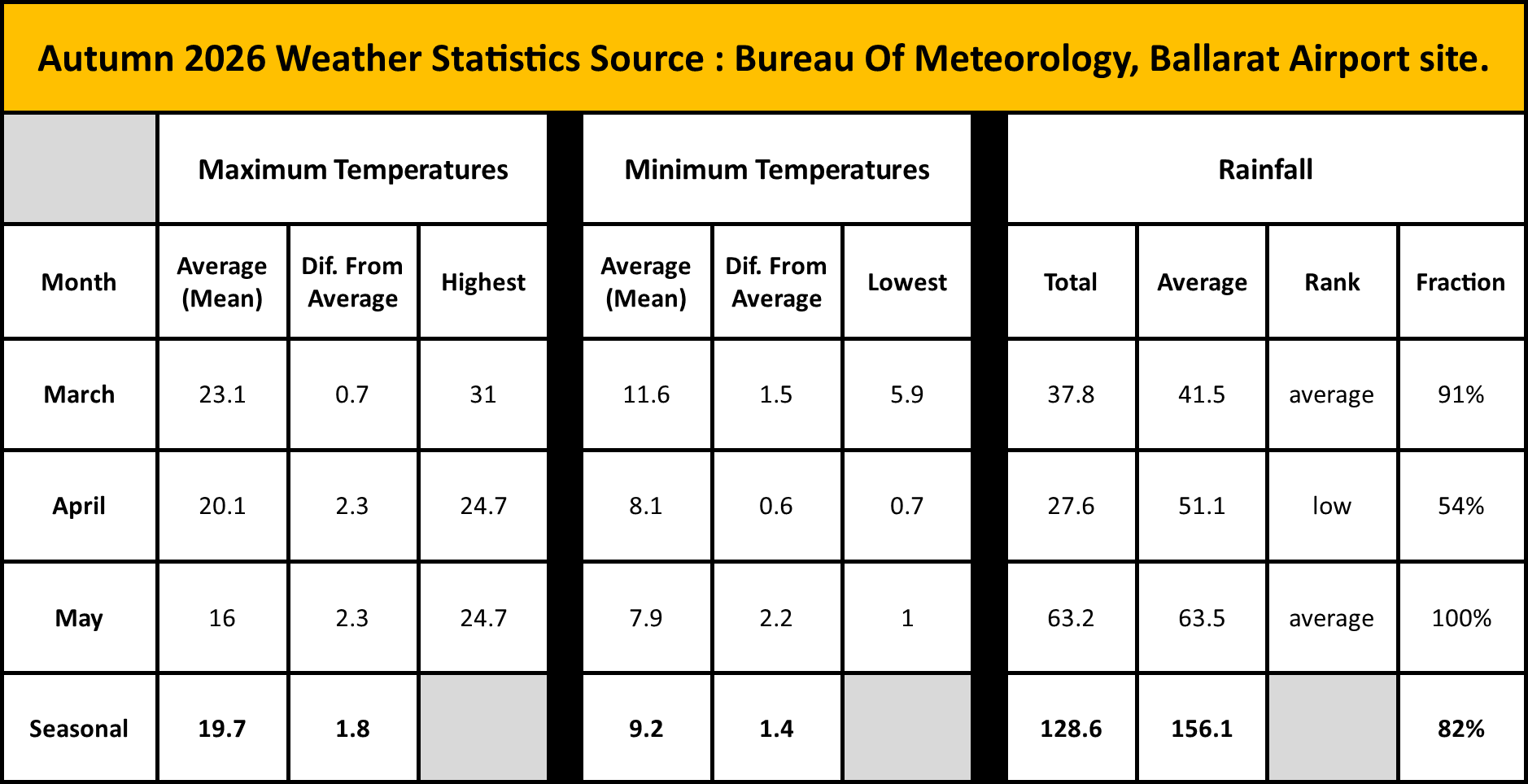
The average maximum temperature for March was close to average but April and May’s temperatures were both 2.3 °C above average, which was very warm.  As a result the overall autumn temperature was 1.8 °C above  average.    The minimum average temperature for autumn was 1.4 degrees above average.   There was a very light frost on the 18th of April, but it did little damage to frost sensitive plants,  and also a light frost on the 2nd of May.  However this is in sharp contrast to the previous autumn when we had six frosts, including two heavy ones.

The rainfall was 82% of the average rainfall for autumn, April having the lowest rainfall, coming in at just 54% of average.

The official weather statistics for autumn as recorded by the Bureau of Meteorology’s  Ballarat airport site.    Click HERE to see a higher resolution PDF of this weather chart. 

GARDEN
vegetables

The combination of above average temperatures (higher evaporation rates) and below average rainfall meant that I continued to water the vegetable patch well into May, which is the latest that I have ever had to water in autumn.  And the much warmer than average temperatures meant that I was till harvesting warm season vegetables (such as tomatoes, eggplant and capsicum) for longer than usual.  There has been some successes and minor failures, but overall the vegetable  garden has been very productive this autumn with few pest issues and no disastrous failures.

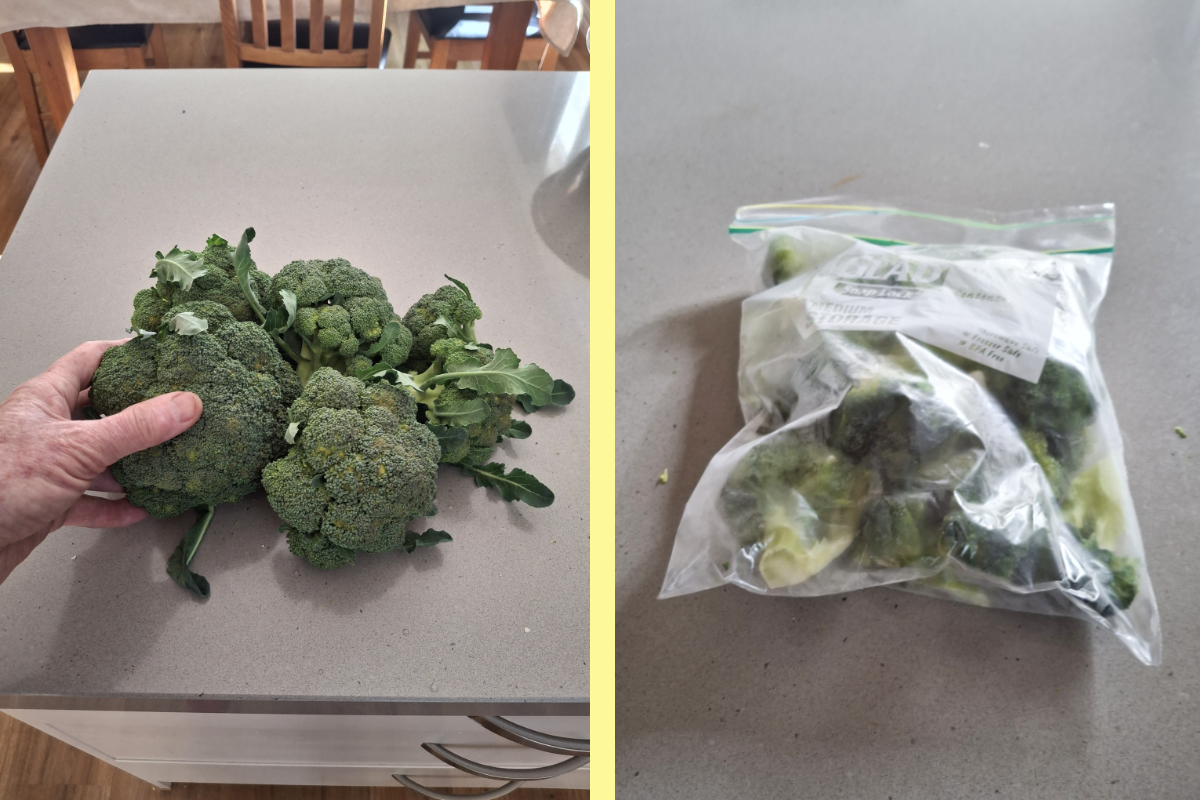
The winter brassicas that were planted  in late Summer and early Autumn came on earlier than usual, resulting not only in a much earlier crop of broccoli than usual (started harvesting broccoli heads on the 14th of May) but a surge in the number of  broccoli heads ready to pick.  As a result I have had to blanch and freeze a lot of them, more than I have ever done in the past.

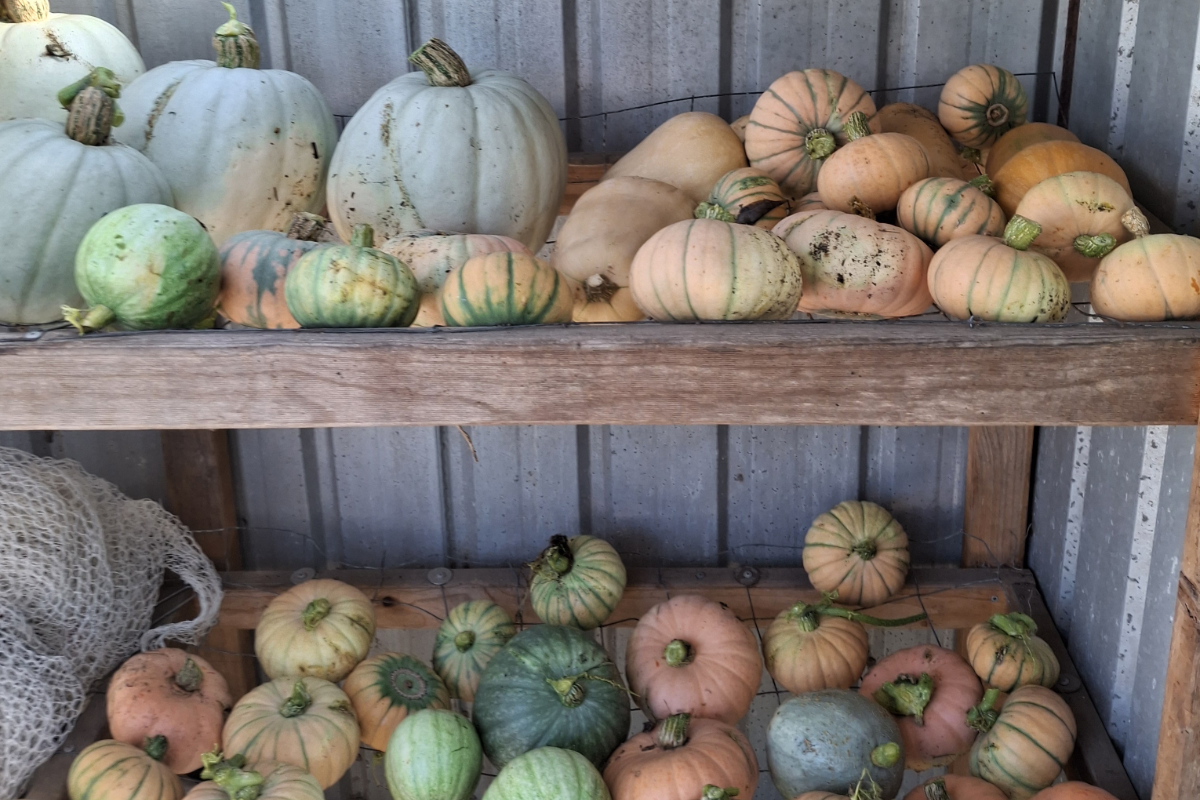
This autumn we harvested 52 pumpkins from four Grey Crown and three butternut pumpkin plants, more pumpkins than we have ever gotten in the past.  On paper this sounds tremendous but the seeds of both pumpkin varieties (seeds saved over a number of years) had crossed, resulting in some odd colours and the Grey Crown pumpkins being much smaller than a typical Grey Crown pumpkin.  So while the number of  pumpkins was up the mass of pumpkin flesh was probably not so spectacular.

Due to the pumpkins having crossed I will throw out all my saved pumpkin seeds and buy new seeds to plant next season.

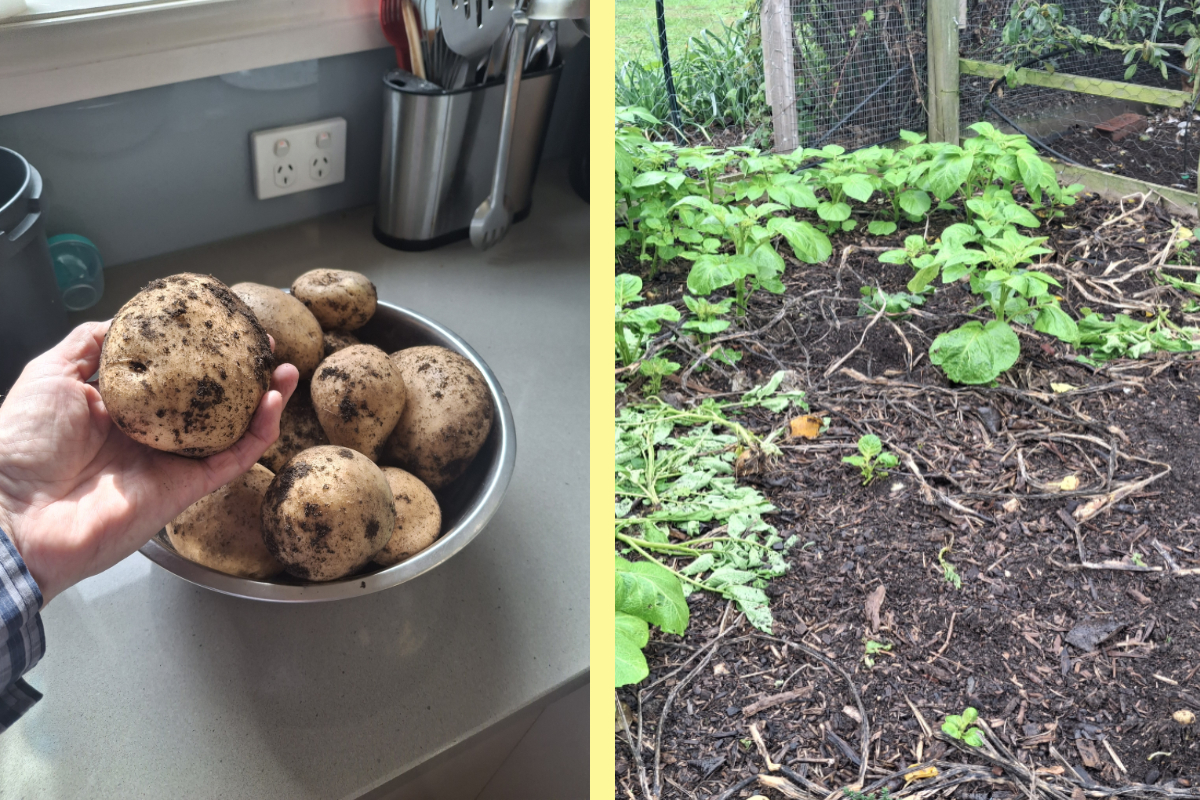
This year I moved my pumpkin patch (it had been in the same spot for a good 15 years) to a new location.  LEFT PHOTO: Some of the potatoes that I have harvested.  I began harvesting them on the 6th of March, the variety is Sebago and the average size of the potatoes has been good.  RIGHT PHOTO: Normally the potatoes will not start to sprout until mid-August but when there has been an unusually warm autumn and the ground is wet they can begin to sprout in the autumn, as was the case this year.  Normally I would lift the potatoes sequentially row by row but  this autumn I have had to pick the ones that are sprouting the most, resulting in a random rather than a sequential harvest pattern.  This early sprouting will also mean that the potato season will be shorter than usual and the quality of the potatoes may not be as good.

greenhouse vegetables

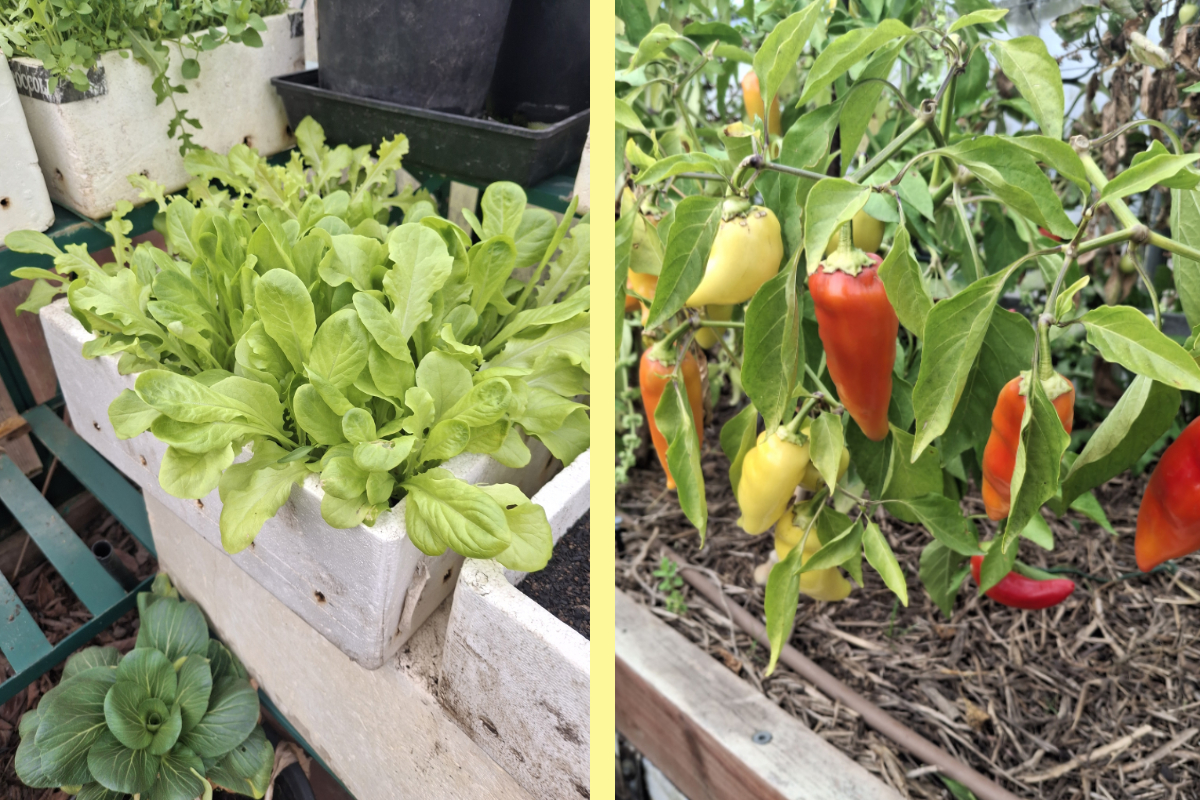
Both greenhouses were very productive this autumn, if anything they were too successful as the capsicums, chillies and eggplants continue to produce fruit well into the season, which delayed my winter  greenhouse plantings.

LEFT PHOTO: Greenhouse stepped boxes and pots (vegetables that are planted  in boxes and pots regularly at four to six week intervals) have done well this autumn.  RIGHT PHOTO: My greenhouse grown banana capsicums have done particularly well.

Fruit trees

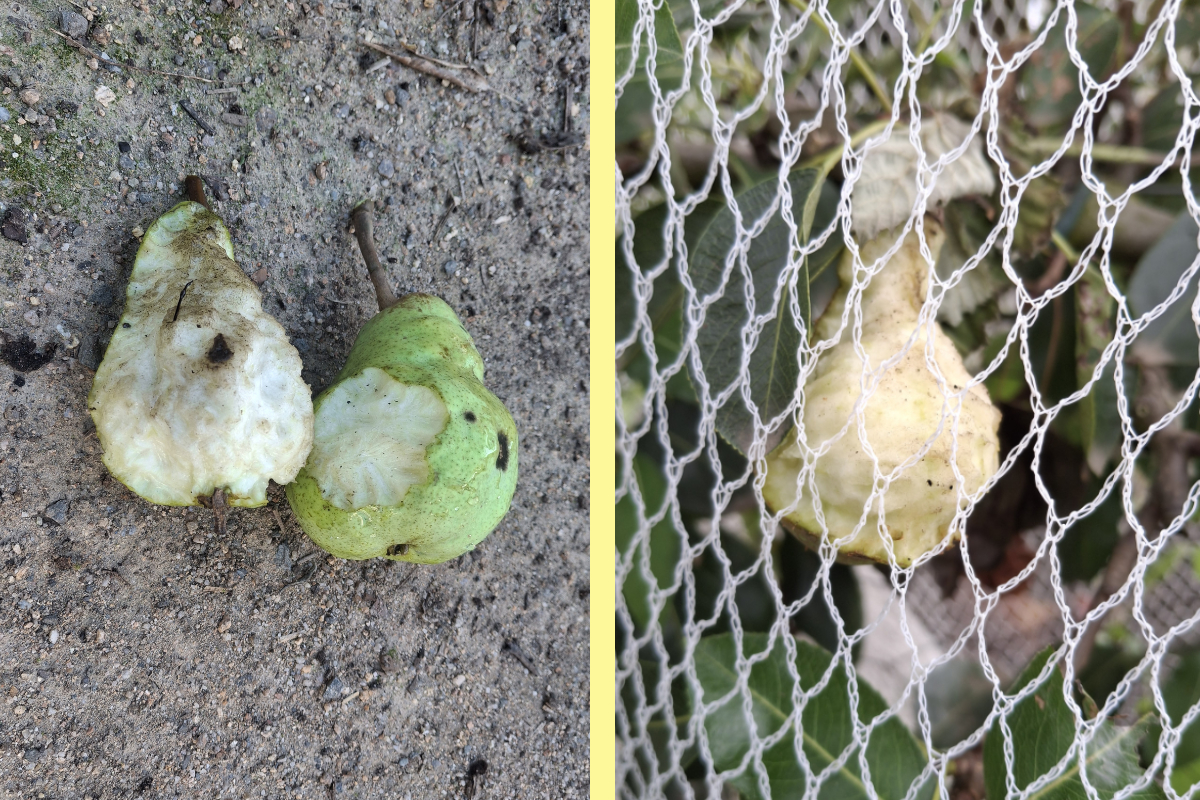
The next Chinese year if the Rat is due in 2032 but to me the year of the rat is this year as I have never experienced such a bad rat problem.  Except for a couple of trees on our driveway every pear and apple tree experienced some rat damage and three small espaliered apple trees had their entire crop of apples eaten.   For most of the rest of the trees I had to harvest the fruit prematurely just to get any harvest at all!

LEFT PHOTO: Rat damage to Packham pears.  You can tell it is caused by rats as the cut marks are rounded, birds leave deeper jagged marks as they peck at the fruit.   RIGHT PHOTO:  An almost completely stripped Packham pear under netting, while netting fruit trees is effective against birds it is almost completely useless against rats as they can wriggle through the tiniest of gaps.  If anything it helps the rats as it protects them from predators whilst under the net.

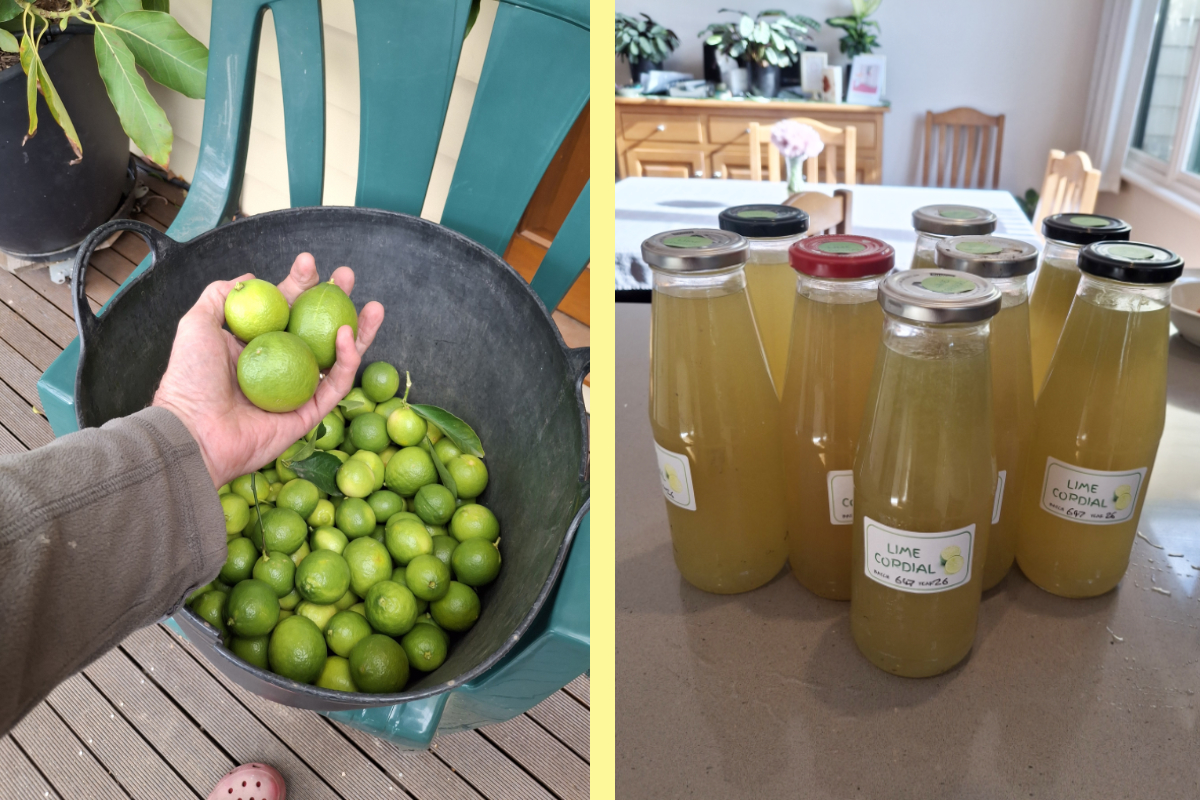
LEFT PHOTO: This year’s main harvest of Tahitian limes that were harvested on the 18th of May, while the harvest wasn’t as big as last year we still got a sizable crop, and thankfully no damage to the fruit caused by rats.  RIGHT PHOTO: Most of the crop was turned into lime cordial with the remainder frozen as ice blocks to be used after the remaining fresh limes have given out in a couple of months’ time.

chickens

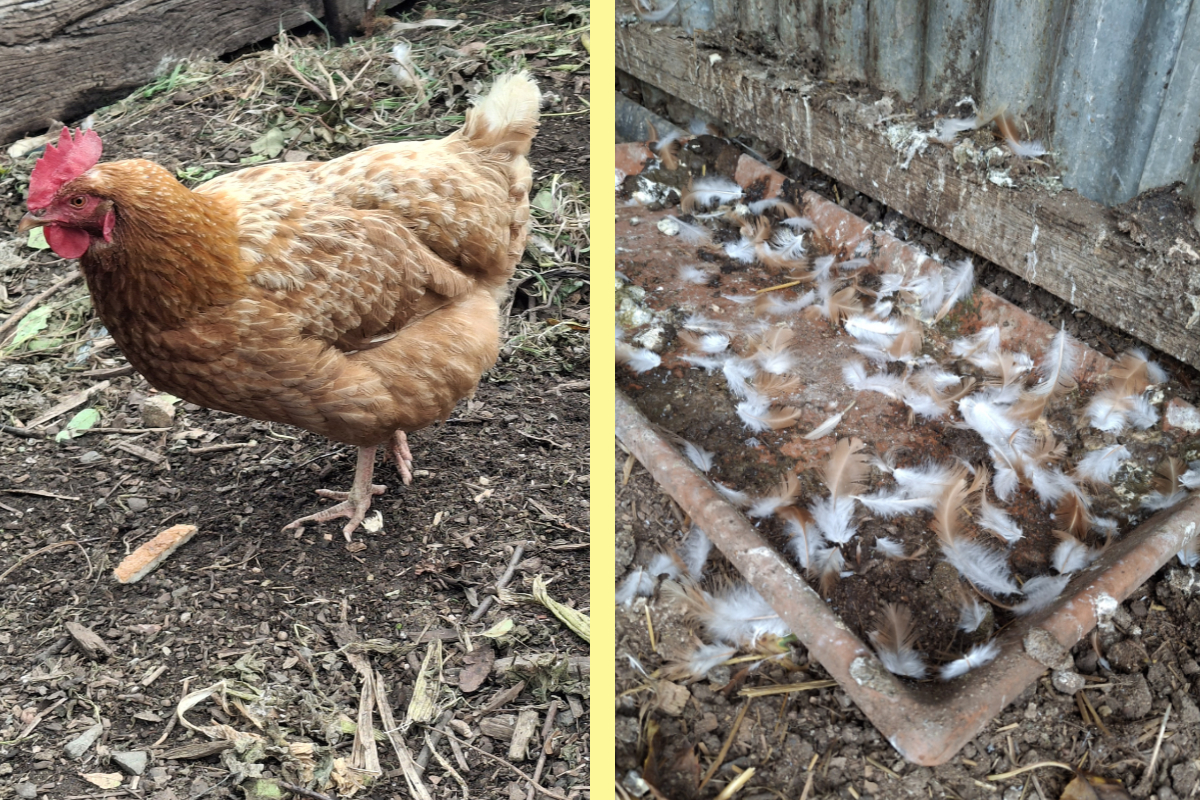
Egg production has crashed this autumn, collecting just 92 eggs (an average of one egg per day from four hens) with fewer eggs each successive month.  In one sense this is understandable as the hens are around three years old, but I didn’t expect such a steep drop.  Though admittedly they appear to be experiencing a heavy moult, egg production may pick up slightly after the moult has ended.  

LEFT PHOTO: One of  our hens, no health issues to speak of.  RIGHT PHOTO: Moulting feathers under their roost.

RELATED POSTS