Building a wooden raised vegetable bed frame is cheaper than buying a readymade raised bed and is a relatively simple exercise, but for those unsure about how to go about building one below is a step by step guide on how to do it.
Materials needed
- EIGHT 100 MM BUGLE BATTEN SCREWS OR 125 MM GALVANISED BULLET HEAD NAILS
Other types of screws can be used but I have found bugle batten screws to be ideal as they are robust enough not to break under tension and sit flush with the timber, no unsightly knobs. - 2 x 300 x 50 mm AND 1 200 x 50 mm LENGTHS OF TREATED PINE OR HARDWOOD
Note that these lengths are guidelines only, the actual lengths of the timber used will depend on the length and width of the raised bed that you want to build.
Equipment needed
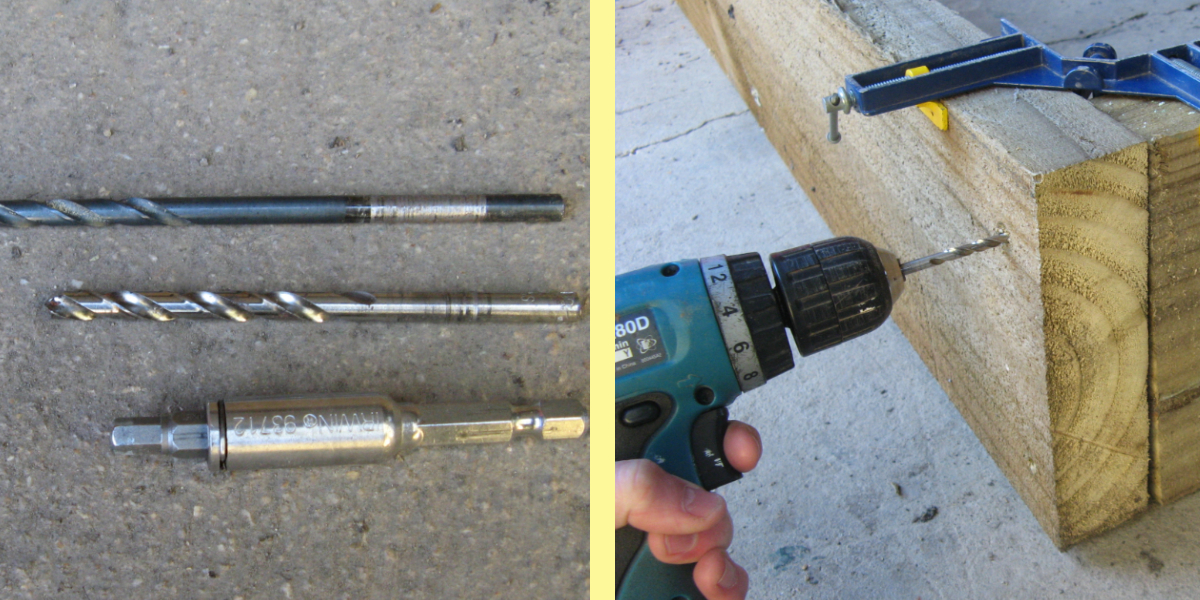
- 4.5 OR 5 MM DRILL BIT
Preferably a long length drill but the standard length is adequate. - HEX SCREW BIT
Only if using bugle batten screws. - 90 DEG. ANGLE CLAMPS
One is adequate but four will make putting the frame together easier. - POWER DRILL
- CIRCULAR OR HAND SAW
- SET SQUARE
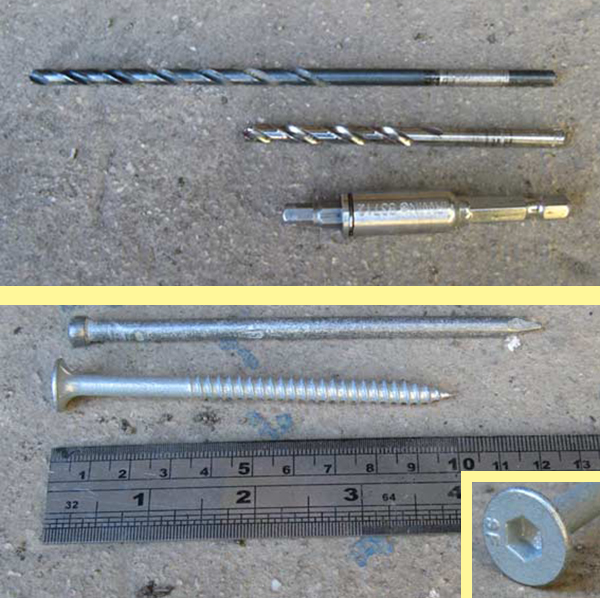
TOP PHOTO : Long drill bit, standard 5 mm drill bit, and Hex bit designed to screw in bugle batten screws.
BOTTOM PHOTO: 125 MM galvanised bullet head nail and 100 mm bugle batten screw with an inset showing the actual head. Both are suitable for securing 50 mm wide landscaping timbers.
CUT THE FOUR PIECES OF TIMBER TO THE DESIRED LENGTHS FOR YOUR RAISED BED
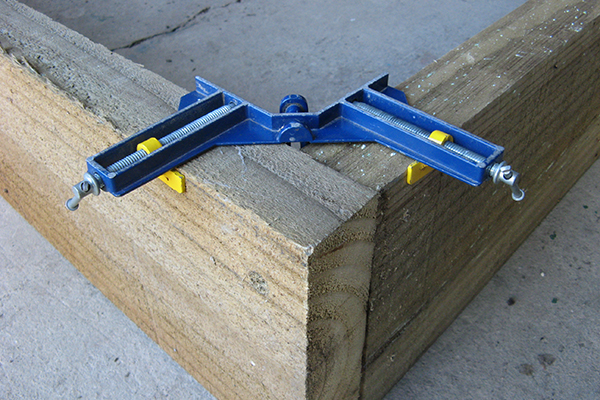
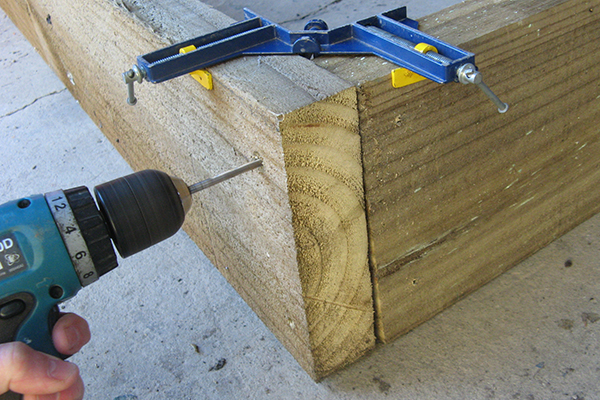
ON A FLAT PIECE OF GROUND CLAMP THE CORNER OF TWO PIECES OF TIMBER TO FORM THE FRAME
I prefer to make my frames on our garage floor then move them as a single piece to where I want them to be placed. Though if the land is flat where you want to build the raised bed it can be made on site.Clamps are relatively cheap and make a useful addition to a handyperson’s toolbox. Four clamps are desirable but a frame can be put together using just one clamp in sequence.
DRILL TWO PILOT HOLES AT EACH CORNER
Bugle batten screws are self-drilling and nails can be hammered in without drilling pilot holes but I have found that screws and nails can be applied more accurately if you drill pilot holes first. Though make sure that the drill used has a smaller diameter than the bugle batten screws or nails used.
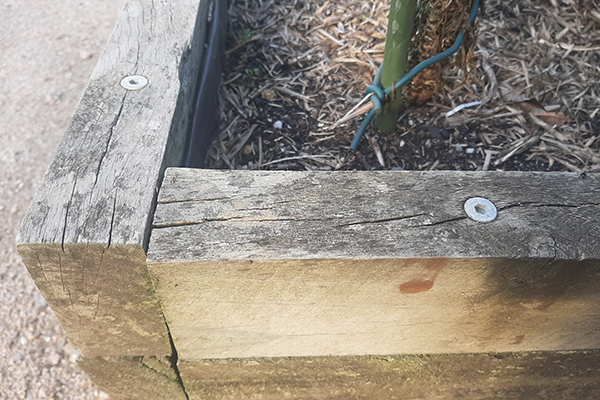
DRILL OR NAIL THE ENDS TOGETHER USING THE PILOT HOLES AS GUIDES
Once the ends have been secured the clamps can be removed.
The maximum length of landscaping timbers is three metres, so if you want to make your raised bed longer than three metres you will have to join two lengths together. There are two basic ways to do this.
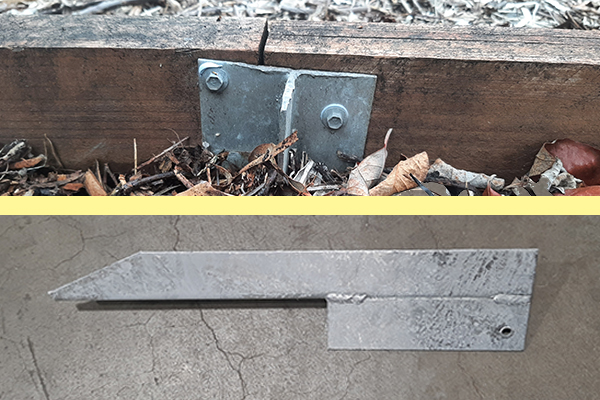
- STEEL SLEEPER PEGS
Sleeper pegs make it relatively easy to attach two sleepers together. To attach sleepers to a sleeper peg drive the peg into the ground where the sleepers are to be joined and simply screw the two ends to the peg. There are a variety of sleeper pegs on the market of different lengths and heaviness. The main disadvantage of sleeper pegs is that they are expensive. - LANDSCAPE TIMBER OFFCUTS
A cheaper alternative to sleeper pegs is to use landscape sleeper offcuts. The offcuts need to be about 60 cm long (40 cm of the offcut sticking into the ground) to ensure that the sides do not bow out under the pressure of the soil in the raised bed. The main disadvantage of using offcuts is that they are more conspicuous and take longer to put in place as holes have to be dug before putting them in.
If you want to make a bed higher than 200 mm then simply make two identical shaped frames and nail or screw them together. To secure a 200 mm high wooden frame to one below use 250 or 300 mm bugle batten screws or 300 mm heavy duty landscape nails.
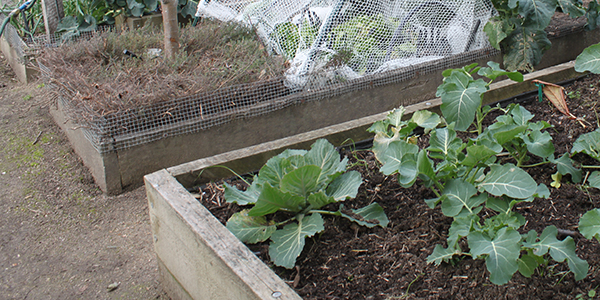
A wooden raised bed that has had its height increased by 100 mm. It has been secured to the lower section using 150 mm bugle batten screws.
These instructions should only be seen as a guideline; the design I used could and should be varied depending on your raised bed needs and available materials. But hopefully they will give you some useful tips on how to build your own raised wooden beds.