When setting up a raised vegetable bed on a lawn it is important to remove all traces of that lawn so that invasive grasses (such as couch) do not infest the new bed. This page offers step by step instructions on how to do this without having to dig up all the grass.
The photos on this page were taken for demonstration purposes only. A raised bed would normally be longer and made from thicker timber than the one photographed. However these photos do show the method I used to successfully set up my raised beds on lawn, they were set up prior to digital cameras being available so I did not take any photos. However the steps listed below do faithfully match how I originally set up my beds.
- ASSEMBLE THE RAISED BED FRAME AND PLACE IT WHERE YOU WANT THE BED TO GO
Raised bed frames can be made out of metal or wood. The photos used here are based on a wooden raised bed frame, for information on how to build a wooden raised bed frame see Building A Wooden Raised Bed Frame.
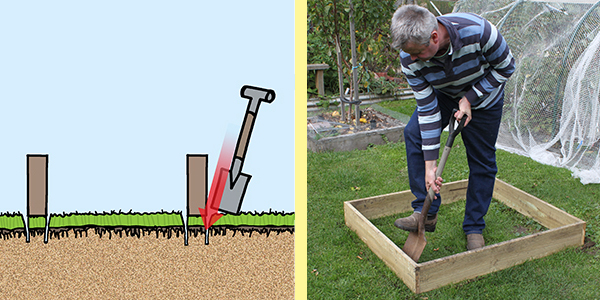
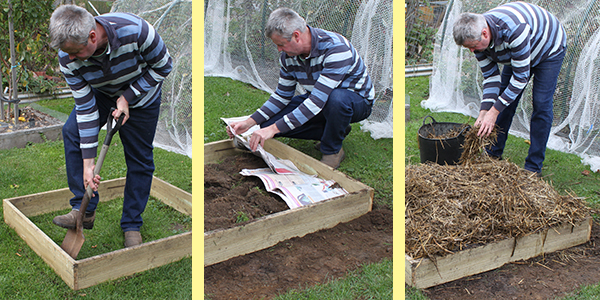
- WITH A SPADE CUT THE OUTSIDE EDGE OF THE FRAME TO A DEPTH BELOW THE LEVEL OF THE ROOTS OF THE GRASS
This is normally to a depth of about 5 cm. - REPEAT THE PROCESS ON THE INSIDE EDGE OF THE FRAME
- TEMPORARILY REMOVE THE RAISED BED FRAME TO EXPOSE THE CUT LINE
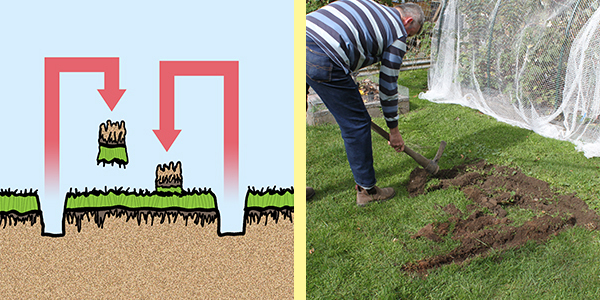
- WITH A MATTOCK OR HOE DIG OUT THE CUT SECTION TO THE DEPTH OF THE SPADE CUT
This should be to a depth below the root structure of the grass (about 5cm deep), if the roots are deeper than that you will need to dig the trench deeper. - PLACE THE DUG OUT CLODS WITH THE GRASS TOPS FACING DOWN IN THE RAISED BED AREA.
- REPOSITION THE RAISED BED FRAME IN THE NEWLY DUG TRENCH
- IF THE FRAME IS SITTING ON SLOPING GROUND THEN DIG THE HIGH SIDE OF THE TRENCH DEEPER TO MAKE THE TOP OF THE FRAME SIT LEVEL
Do not make the low side shallower as this will give an entry point for weeds such as couch to get in.
- WITH A SPADE CUT AN EDGE WHERE YOU WANT THE PATH TO GO TO A DEPTH OF ABOUT 5 CM, THE SAME AS YOU DID FOR MARKING THE BASE OF THE FRAME IN STEP 2.
- DRIVE THE BLADE OF THE SPADE IN AT A LOW ANGLE AND PEEL THE GRASS UP IN SECTIONS
In doing so you should create sections of grass that resemble instant turf. - FLIP THE PEELED CLODS OF GRASS UPSIDE DOWN INTO THE BED
Try to spread these clods in an even manner so as not to create mounds.
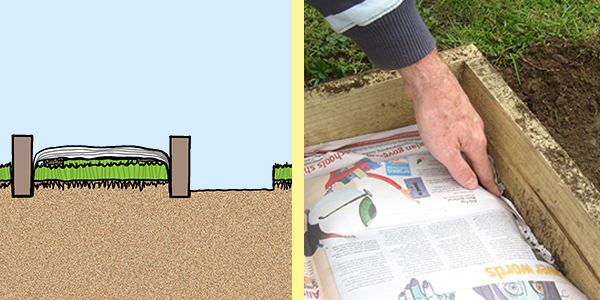
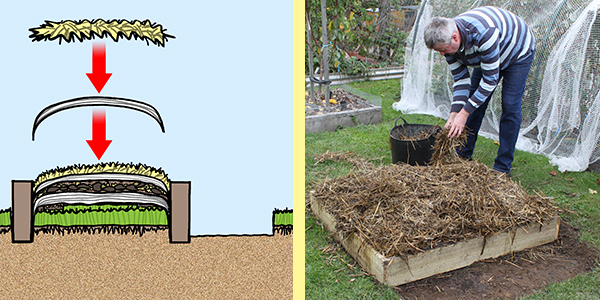
- COVER THE BASE OF THE BED WITH SEVERAL SHEETS OF NEWSPAPER, TUCKING THE NEWSPAPER IN TIGHTLY AT THE EDGES. Cardboard can also be used.
BUILD THE BED UP WITH A MIXTURE OF GOOD QUALITY SOIL, COMPOST, STRAW, PEA STRAW AND LUCERNE
Any combination is fine. It’s best to use what is cheapest and easiest for you to get. The balance of the soil can be adjusted in the first couple of seasons, the important thing is to use plenty of organic matter that will break down into good soil. Animal manures, sand and a little rock dust can also be added but this is not essential.PILE THIS MIXTURE UP TO ABOVE THE TOP OF THE RAISED BED’S SIDES, TRAMPLING IT DOWN AS MUCH AS POSSIBLE
It needs to be built up above the top of the sides as, being made up of a lot of loose organic material, the mixture will subside as it turns into compost.
- COVER THE TOP WITH FOUR OR FIVE SHEETS OF NEWSPAPER THEN TOP OFF WITH A LAYER OF STRAW.
Pile the straw a good 10 cm above the top of the sides of the raised bed. When first filled the bed might be full to the brink but within a couple of months it will settle to below the top of the frame as the loose organic matter breaks down into compost.
This second layer of newspaper (the first layer being placed over the turned sods below) is there as an extra barrier and to stop any weed seeds in the mulching materials used to fill the bed from sprouting.
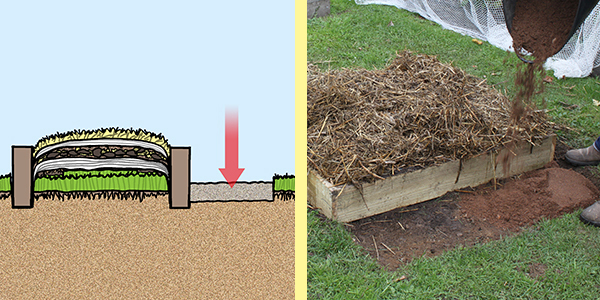
COVER THE PATH WITH GRAVEL UNTIL IT IS LEVEL WITH THE SURROUNDING GRASS
There are several types of gravel available in Australia, but whatever you use it must pack down to create a hard surface once it settles. My preference is to use granite sand as it is cheap and packs down to a particularly hard surface. It needs to create a hard surface to stop couch grass runners growing through it.Ideally the path should surround the raised bed, but if it doesn’t you need to use an alternative barrier to keep invasive grasses out. For more information see Keeping Couch Grass Out Of Vegetable Beds.
- LEAVE THE BED FOR AT LEAST FOUR MONTHS TO ALLOW THE LOOSE ORGANIC MATTER (STRAW, PEA STRAW ETC.) TO BREAK DOWN AND ALL THE GRASS TO DIE
- REGULARLY MONITOR THE BED FOR SIGNS OF EMERGING GRASS SHOOTS
The grass in the bed should die due to the inability of its shoots to penetrate through the cover to the sunlight. However If any shoots do break through then carefully dig down to find the base of each shoot and remove it. For more information on removing invasive grass shoots see Removing Couch Grass. - TURN THE BED IN WITH A FORK AND PLANT OUT
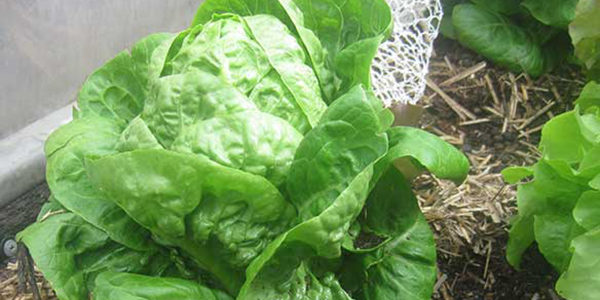
Once you are sure that the grass is all dead you can turn the bed with a fork and plant it out. The first crop planted should be seedlings or large seeds as the mixture in the bed will still be high in coarse organic matter which fine seeds will struggle to germinate in.
My original raised beds were set up on a grass lawn that contained couch grass but was not entirely made up of couch, if your lawn is entirely made up of couch grass you may need to dig deeper than 5cm. The important thing is to sever all couch roots heading from the lawn into where the raised bed is being set up, if this is not done then these unsevered roots will supply energy to plants in the bed, which will negate the smothering effect.