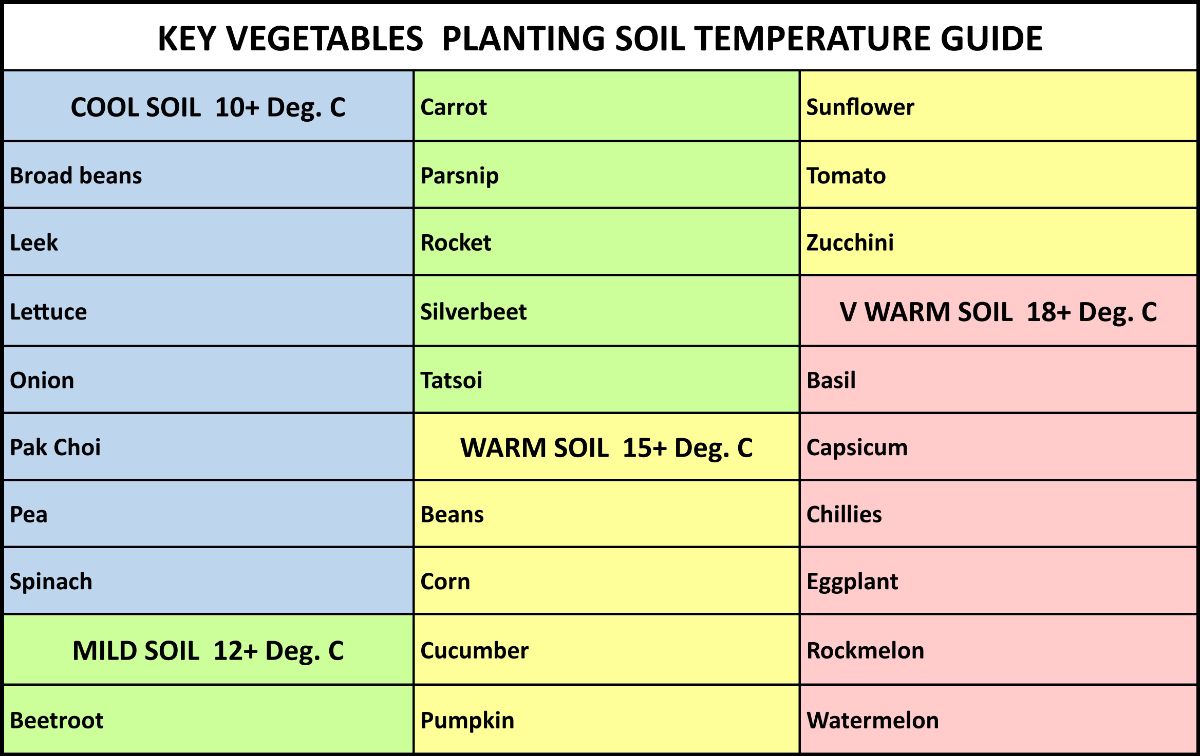
When it comes to planting vegetable seeds and seedlings the most important thing to consider is the temperature of the soil. This page explains why soil temperature is important, as well as offering a printable Key Vegetables Planting Soil Temperature guide.
Soil is slower to warm up and cool down than air. One or two warm days in early spring is not enough to raise the soil temperature significantly; it takes several days in a row of warmer daytime and nighttime temperatures to do that.
If you plant seeds that require high soil temperatures into cool soil there is a high chance that they will fail to germinate. At best the germination process will be delayed, but more likely the seeds will rot in the ground. Seedlings that require warm soils to thrive will put on little or no growth if they are planted into cool soil. They will not get going until the soil warms up, but in the meantime the seedlings will be vulnerable to attack by slugs and snails.
The key indicator that the soil temperature has reached 15+ Deg. C in spring is when the lawn grass begins to grow vigorously. In Ballarat (where my garden is) this usually happens around the second or third week of October, though of course this will vary depending on where you live. However in recent years the time when grass begins to grow vigorously can occur as early as the end of September, probably due to global warming.
The most accurate way to tell the soil temperature is to use a soil thermometer, though you can also get a good indication by simply sitting on the grass, if your backside feels cold then it is too cold to plant warm season crops.
The seeds and seedlings that require warmer soil temperatures (yellow and red on the soil temperature guide) are also the ones that are frost sensitive. So regardless of what planting guide you are using, these vegetables should not be planted in the ground until after the risk of the last frost in your area has passed.
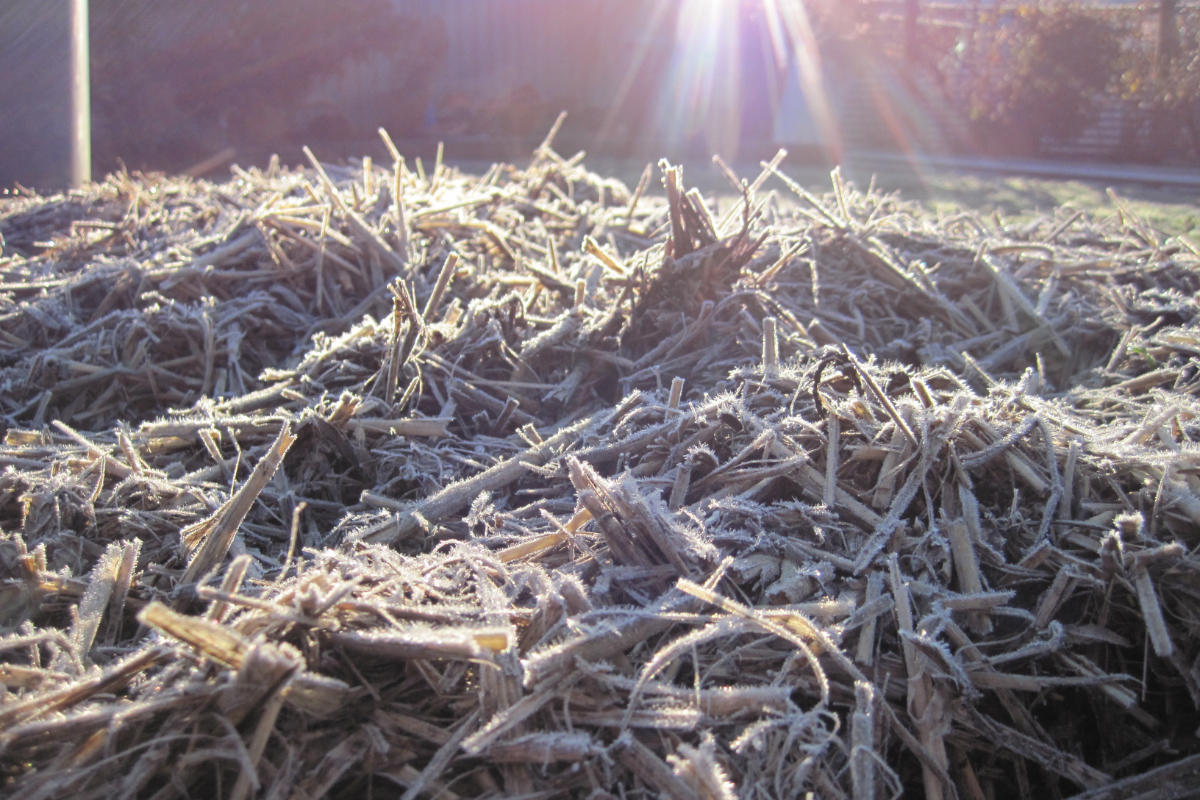
Frost on a mulched vegetable bed. It is useful to note the dates of when the first and last frosts occur in your garden as they are the marker points for growing warm season vegetables as such vegetables are also frost sensitive.
To download a printable PDF of this Vegetable Planting Soil Temperature Guide click HERE.


