While small slugs and snails often remain within the boundary of a vegetable patch larger ones usually travel to the vegetable patch at night, returning to nearby cover before the light of day. There are a number of ways gardeners can deter these larger snails from travelling to and from their vegetable patch, this page explores some of those options.
This page is part of the DETER section of my Three Ds Pest Control program, which is a gradual three stage approach to protect vegetables from pests that is designed to minimise the use of pesticides. DETER is when you take action to deter pests from eating your vegetables without actually killing them. Only after deterrence methods have failed do you progress to actively killing the pests, labelled as DEFEND. For an overview of the Three Ds Pest Control program see PEST CONTROL: The Three Ds.
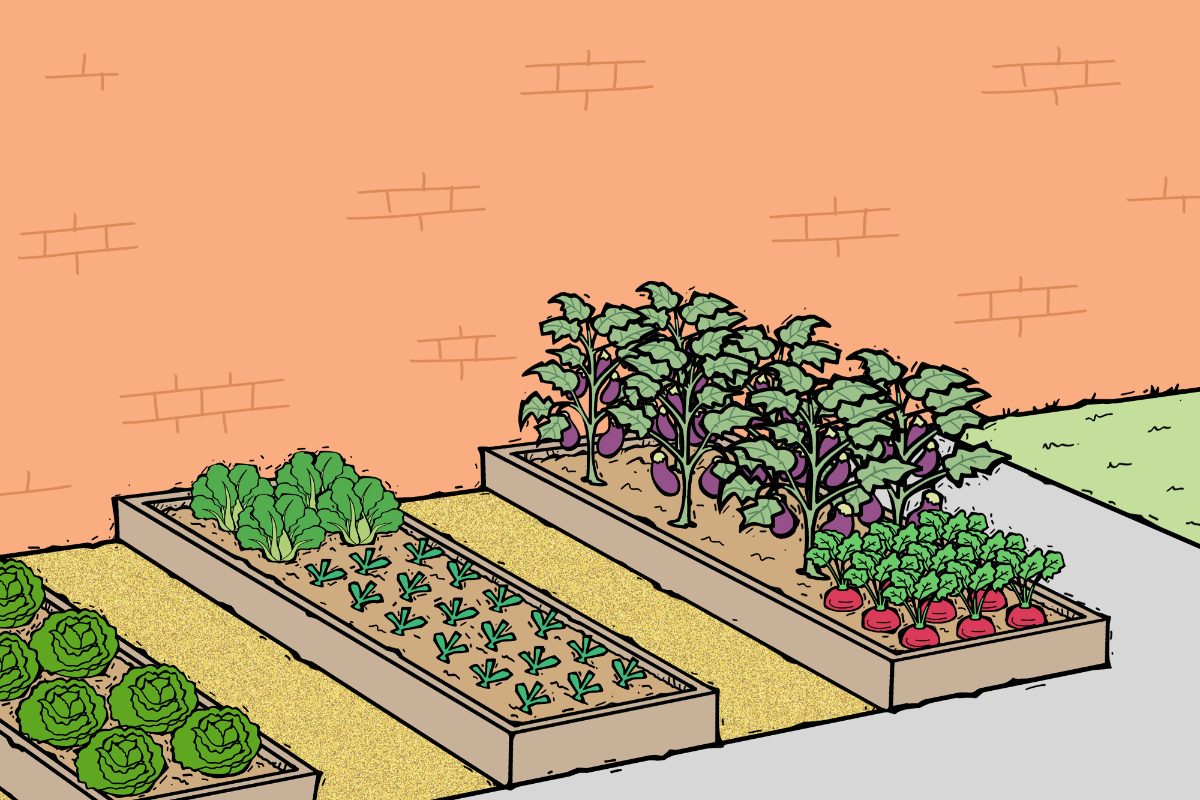
A high fence or the side of a house is an impermeable barrier against slugs and snails. If you can butt your vegetables beds against such a wall then this will stop slugs and snails from entering from that direction.
An added bonus is that if the wall is made of brick or concrete it will act as a heat bank, radiating heat during the day and giving off stored residual heat at night. Heat loving plants such as tomatoes, eggplants and capsicums will grow faster and fruit for longer when grown up against such walls.
A brick wall is an ideal barrier against large slugs and snails. It also acts as a heat bank.
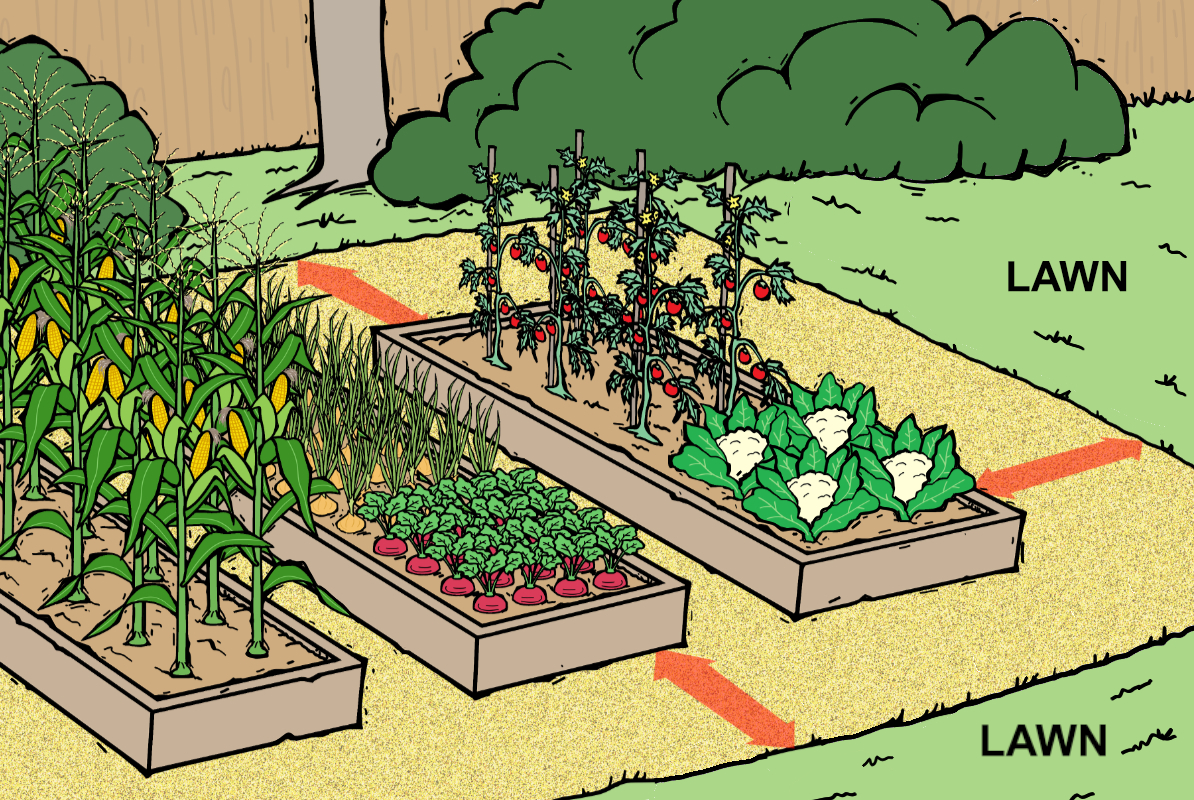
Slugs and snails find it harder to cross a gravel path as they have to generate more mucus to lubricate their foot then they would crossing lawn. Though this is of limited value when paths are wet they dry out more quickly than lawn and when dry the gravel’s sharp edges are a deterrence to slugs and snails. A path surrounding your vegetable patch will act as a barrier that will reduce the number of slugs and snails entering the patch.
While slugs and snails can travel across lawn more easily than they can a gravel path a lawn offers no cover for them during daylight hours, necessitating them to travel further to find cover.
Slugs and snails find it harder to cross a gravel path as they have to generate more mucus to lubricate their foot and lawn offers little cover for large slugs and snails.
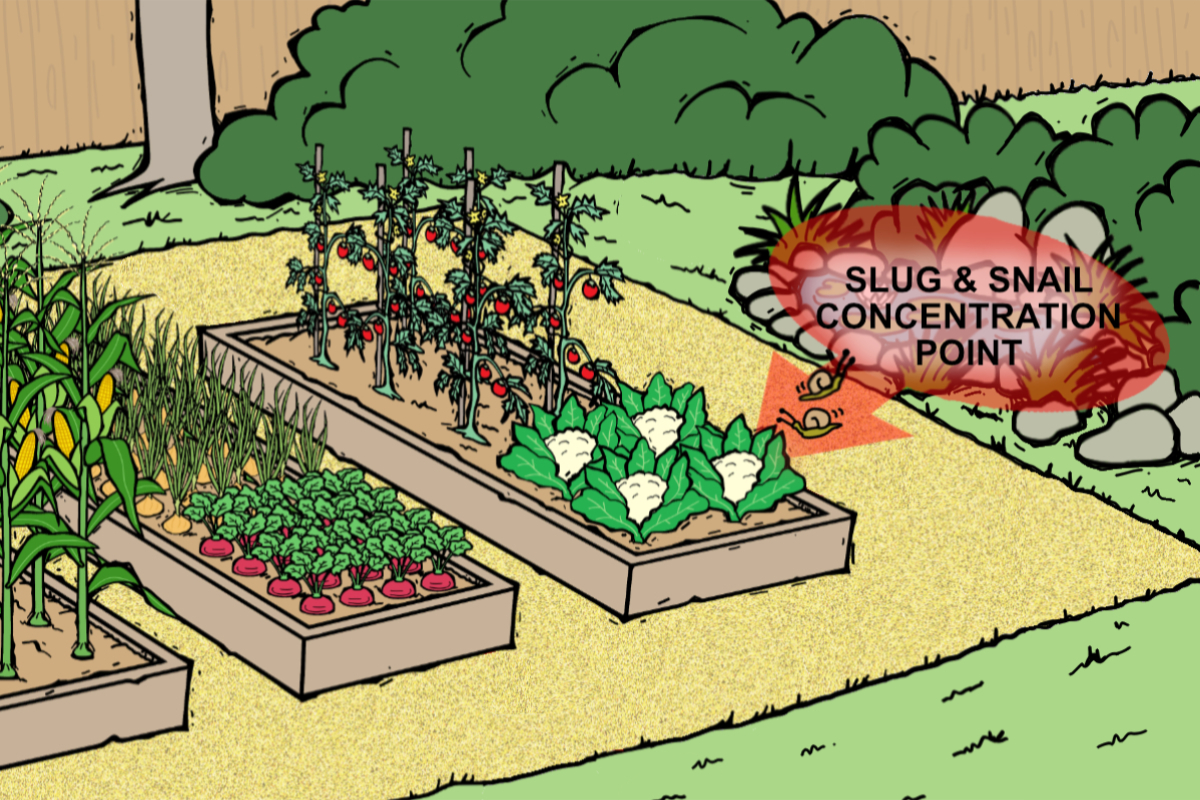
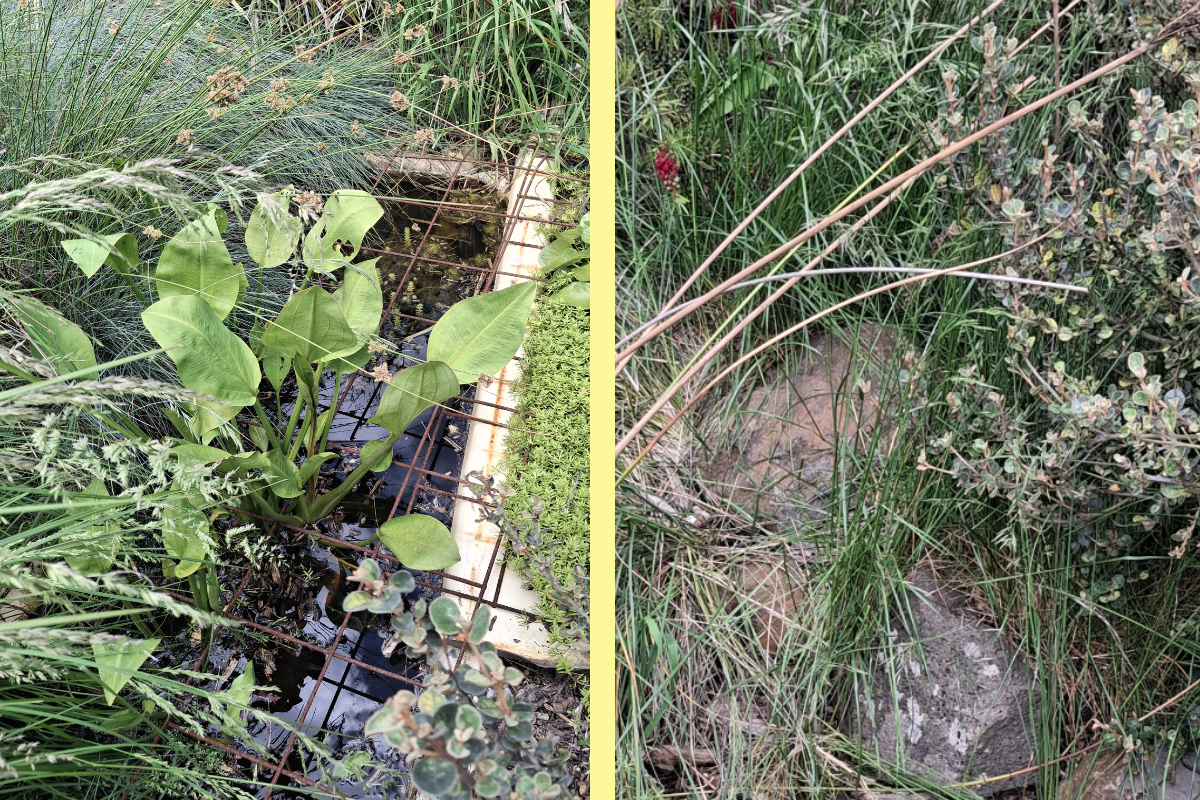
While a garden pond offers greater biological diversity it attracts slugs and snails as they need to regularly rehydrate their mucus laden bodies. This is particularly so during dry weather. Any garden pond should be sighted well away from the vegetable patch as it will inevitably become a concentration point for slugs and snails.
Any garden pond should be sighted well away from the vegetable patch as it will inevitably become a concentration point for slugs and snails.
A rockery offers excellent cover for a range of wildlife, which makes having a rockery in your garden a positive thing as it increases biodiversity. However it will also provide good cover for slugs and snails. As such rockeries should be sighted well away from your vegetable patch.
A bathtub pond (LEFT) and part of a rockery (RIGHT) in my garden. Both of them are sighted well away from my vegetable patch.