Season summary for my food garden in Ballarat (Victoria), Summer, 2025-26. This is mainly of relevance to food gardeners in the Ballarat area, but it might be a useful comparison for those living further afield.
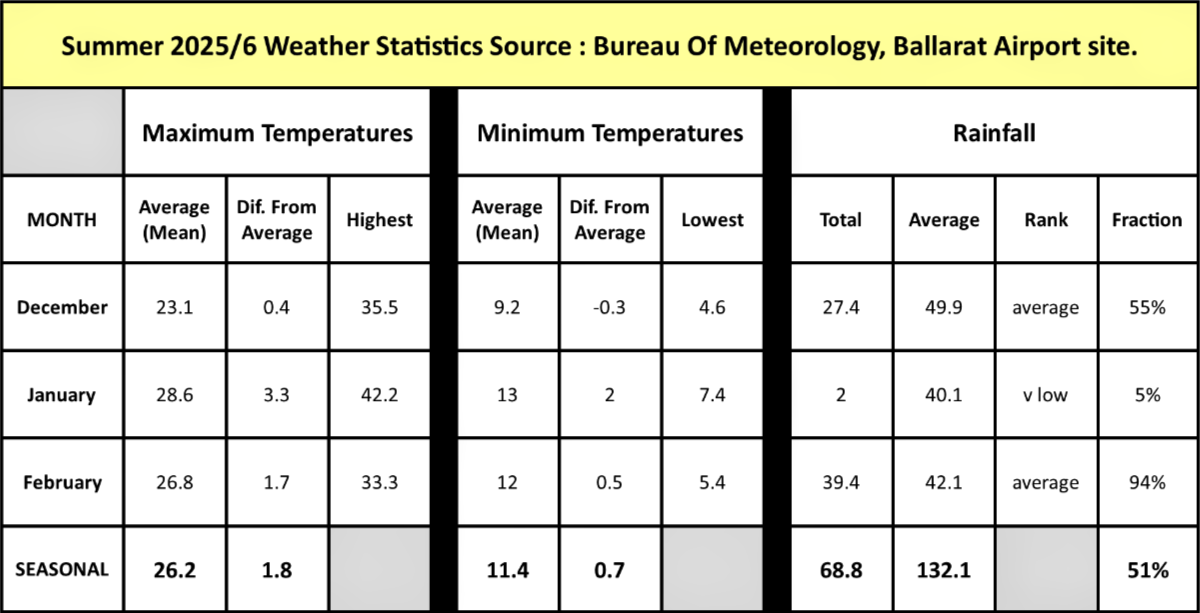
This summer had a similar pattern to last summer with temperatures well above and rainfall well below average. At just .4 °C above the maximum and -.3 below the minimum temperature December was relatively cool, but January was a scorcher, with a maximum temperature of 3.3 °C above average. Overall the maximum average temperature for summer was 1.8 °C above average.
But perhaps the biggest adnominally was the rainfall, coming in at just 51% of average rainfall for summer, largely driven by the rainfall being almost zero in January.
The official weather statistics for Summer as recorded by the Bureau of Meteorology’s Ballarat airport site. Click HERE to see a higher resolution PDF of this weather chart.
vegetables
This summer’s vegetables took longer than usual to get going and the overall yield was down in comparison to last summer. I think this was because of two reasons:-
- November’s average temperature was well below (November being the time to plant summer crops such as corn, pumpkin, capsicum and eggplant) and while December’s maximum temperature was slightly above average the minimum temperature was lower than average. Lower than average overnight temperatures will slow the growth of these summer crops as they need consistently warm soil to thrive.
- The hotter than average temperatures and the well below average rainfall meant that a lot of watering was required and at times I did not give the vegetables enough water, which I think was a significant factor in reducing the overall yield.
Those that had a lower than usual yield included eggplant, bell capsicum, tomatoes and bush beans. What produced a good crop was banana capsicum, corn and climbing beans. Though all of the vegetables I grew were late in maturing. The worst producing vegetable was my silverbeet with five of the six plants I planted going straight to seed.
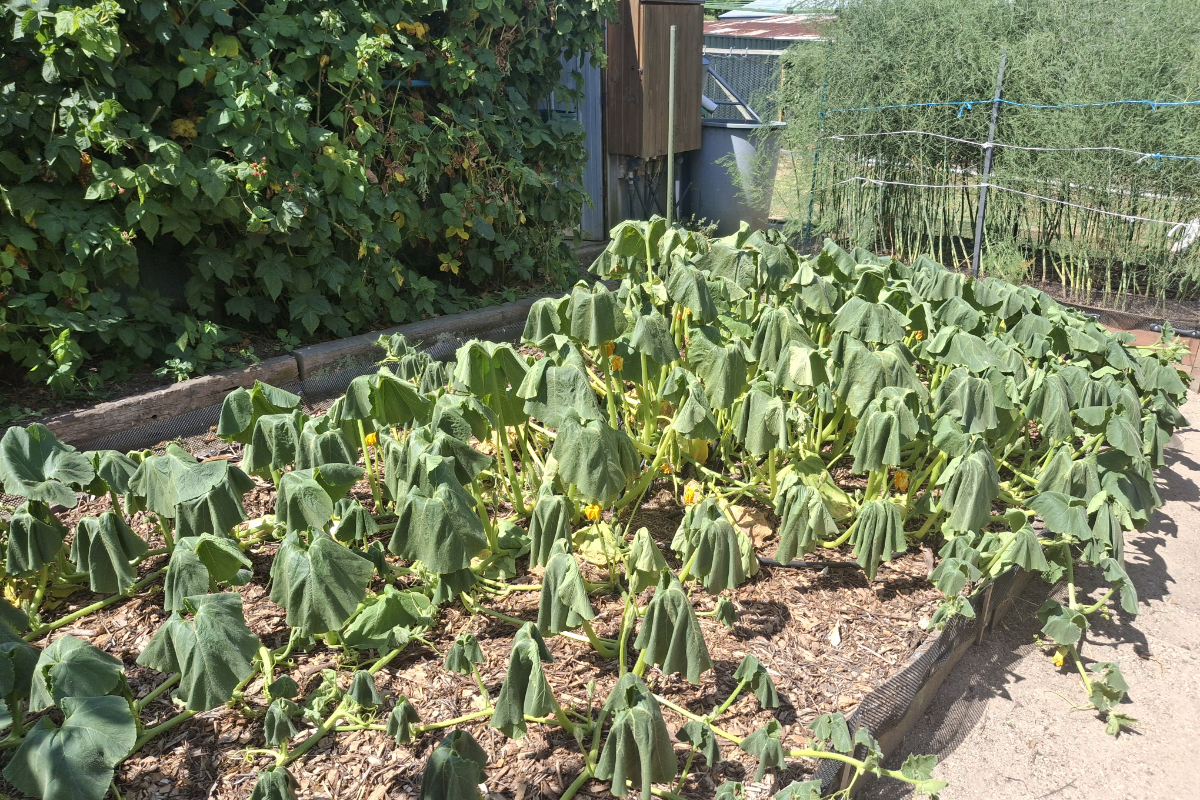
Pumpkin plants wilting in my main pumpkin patch. The above average summer temperatures and well below average rainfall put added stress on a wide range of vegetables in my garden.
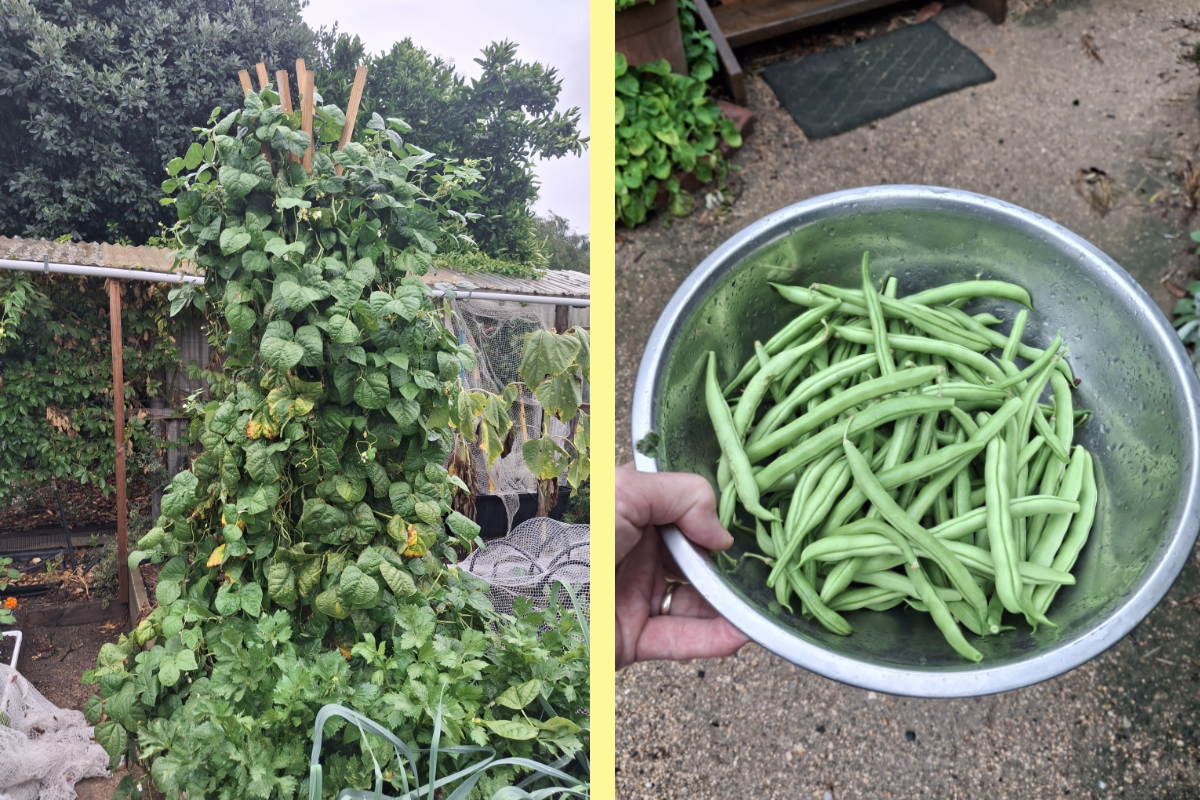
LEFT: Climbing beans on a teepee beanpole structure. RIGHT: One of several bowls of climbing beans that I harvested. My climbing beans performed much better than by bush beans.
greenhouse vegetables
The vegetables I grew in my two greenhouses have mostly done well. The bell capsicum harvest was down on last year’s crop but the banana capsicums are doing extremely well. The worst performing greenhouse crop has been my bell eggplants, but this is mainly due to three of the plants being diseased and producing almost nothing.
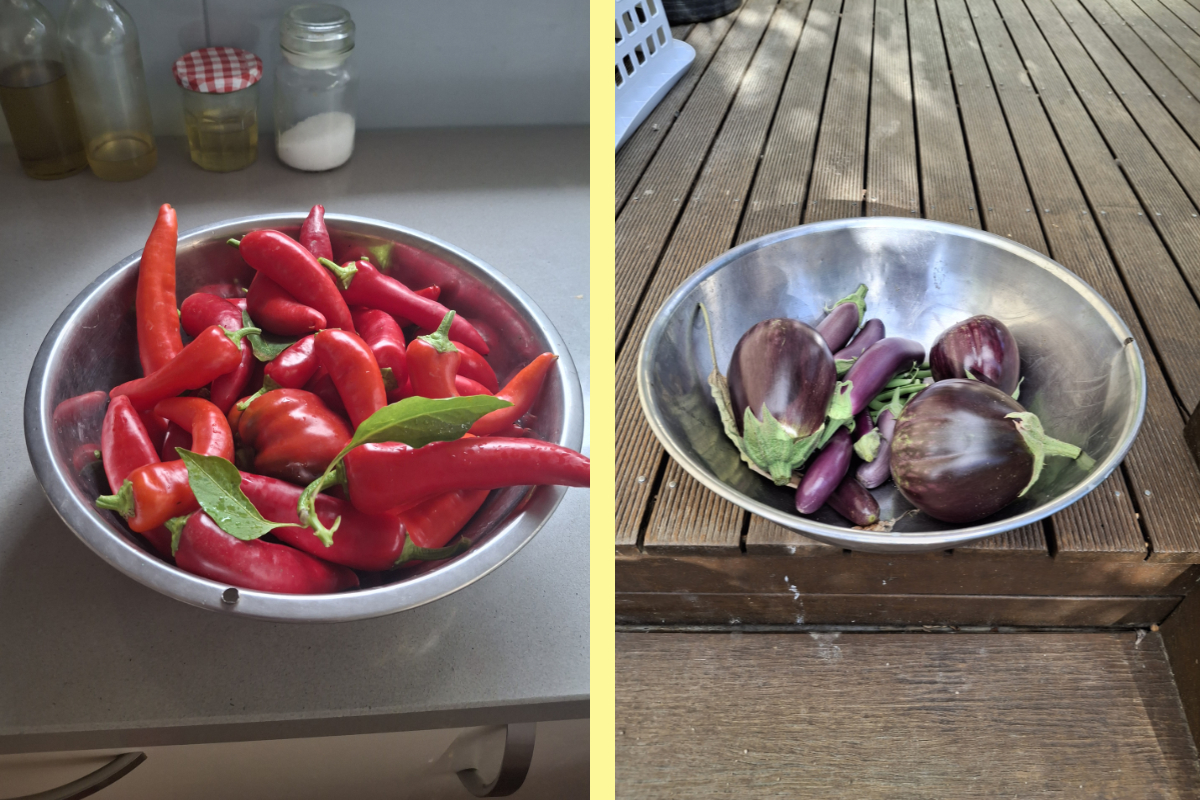
LEFT: Banana capsicums (with a couple of bell capsicums) harvested from my main greenhouse. RIGHT: Some of the eggplants that I harvested this summer.
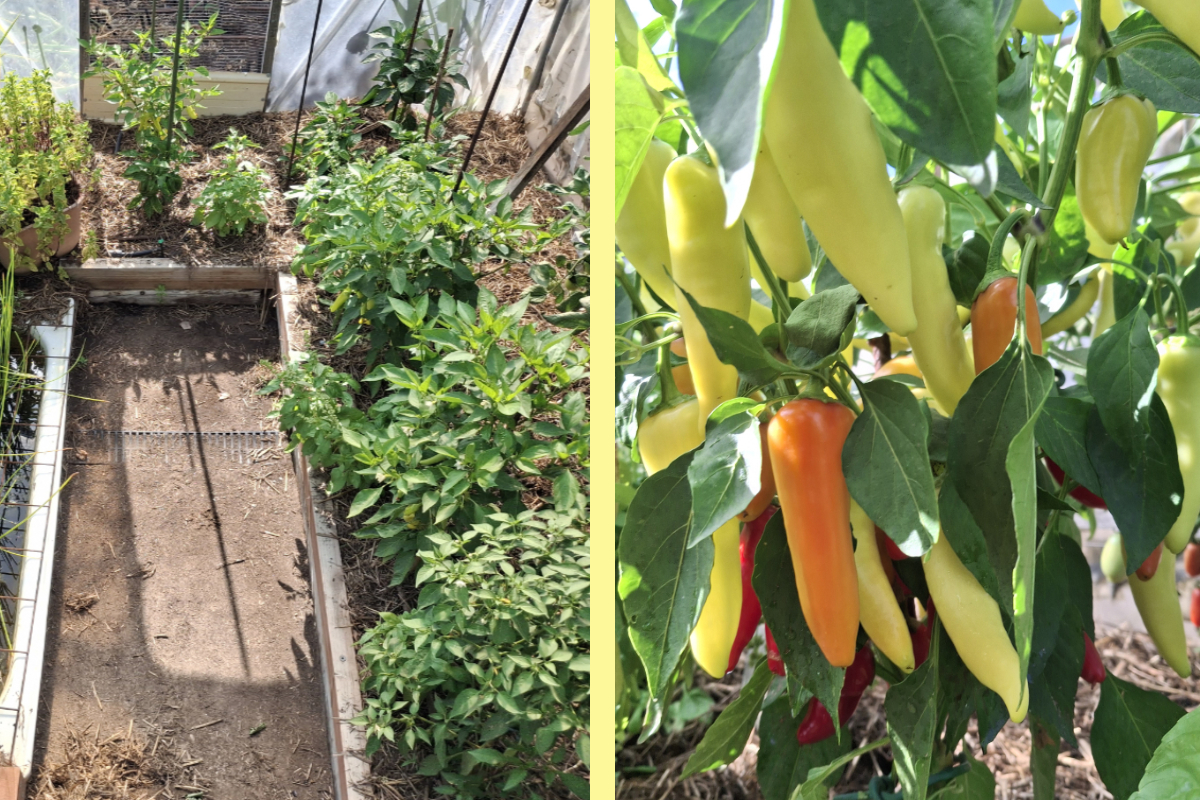
LEFT: My main greenhouse in mid-summer. RIGHT: Heavily laden Banana capsicum plant. Banana capsicums are yellow when developing but turn red when fully ripe, though they can be eaten at both stages.
Fruit trees & berry bushes
My fruit trees also have had a later than usual season this year. Normally I would have begun to bottle fruit from some of my apple and pear trees by late February but as of early March I have yet to bottle a single piece of fruit. But not only is the fruit season late many of the fruit trees have much lighter crops on them. The worst performing trees have been my stone fruit, the cherry crop was light and the plum and peach crops were tiny.
The raspberry and strawberries have been excellent this year, helped on by liberal doses of liquid fertiliser made out of crumbed chicken manure. However the Loganberry crop was well down and I hardly got a single blueberry.
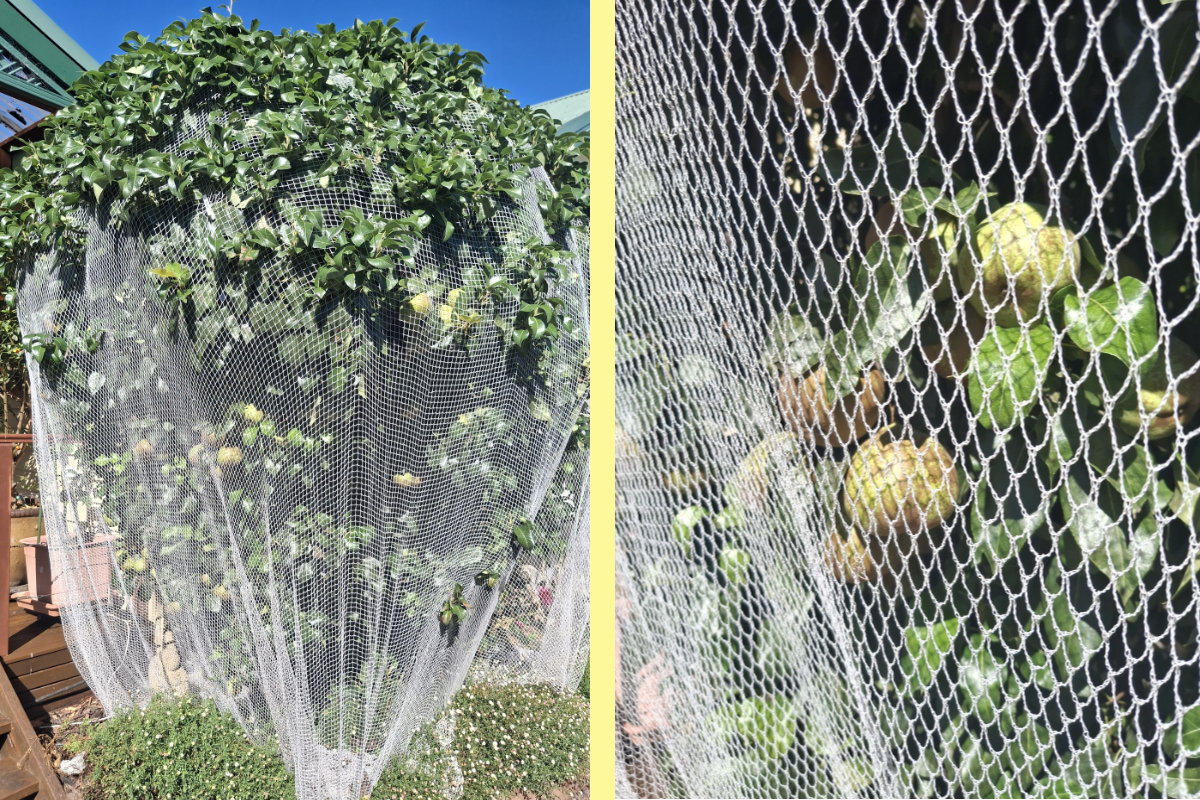
The best performing fruit tree this year was my Pyvert pear which has a good crop on it.
chickens
There has been a big drop in egg production, this summer I recorded just 2.8 eggs per day from five chickens whereas last summer I was collecting 4.1 eggs per day. However this drop in egg production is understandable as my hens are now well into their third year. Though this figure is a little skewed as I put down one of my hens in late January due to it getting a severe case of cloacitis (a common fungal yeast infection characterized by a foul-smelling, thick, white discharge around the vent). I could have tried to treat it but I felt that the illness was too severe and this chicken has been the weakest bird in the flock throughout its life.
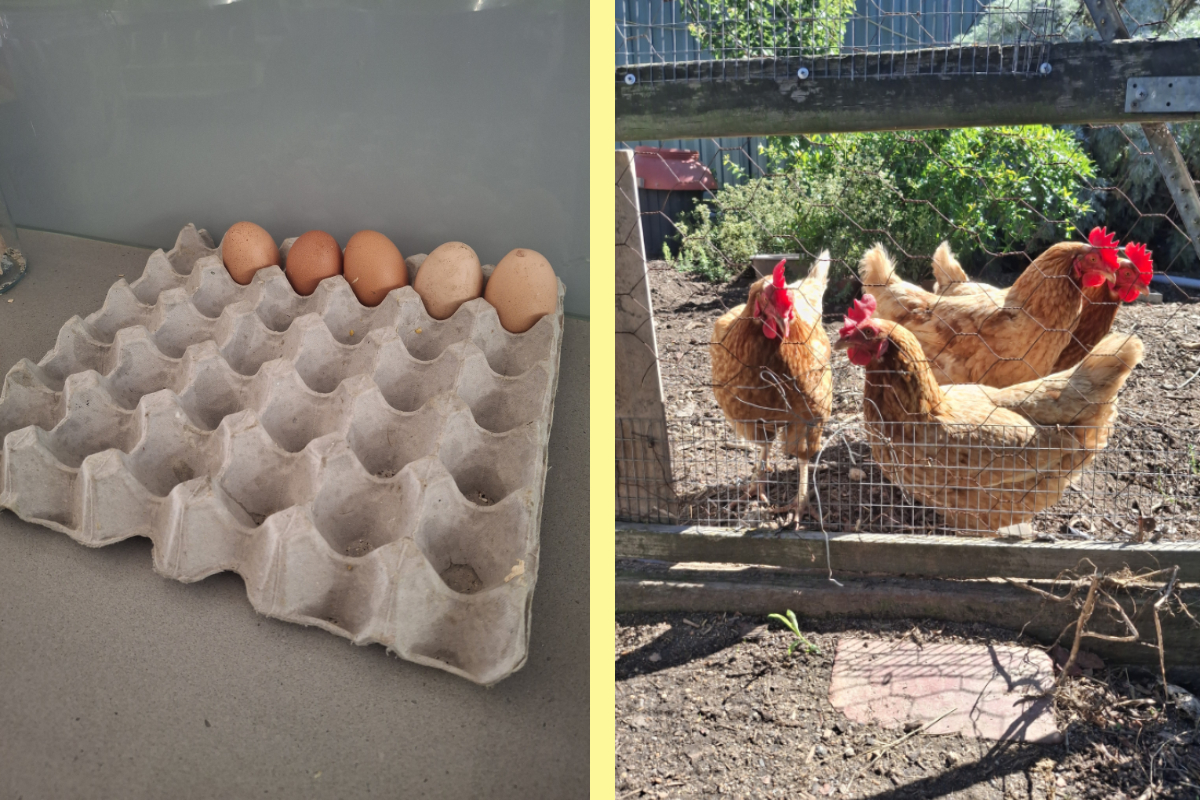
LEFT: Our somewhat depleted egg stocks due to the hens’ egg production slowing down and the loss of a hen. RIGHT: The remaining four hens, while they are well into their third year they are still in good condition.