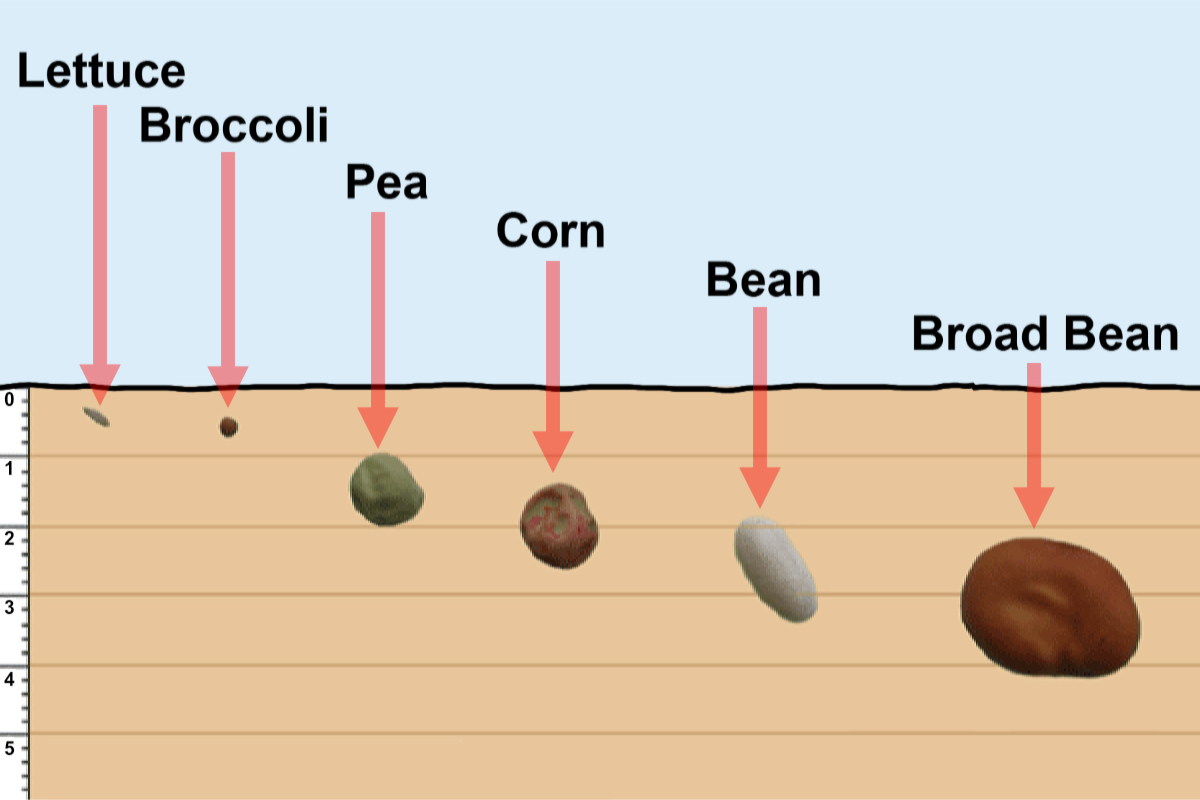
All seed packets come with instructions on how far apart and to what depths they should be planted. While these instructions are a good starting point there are some basic principles that can be applied to help you determine the best depths and distances to plant vegetable seeds.
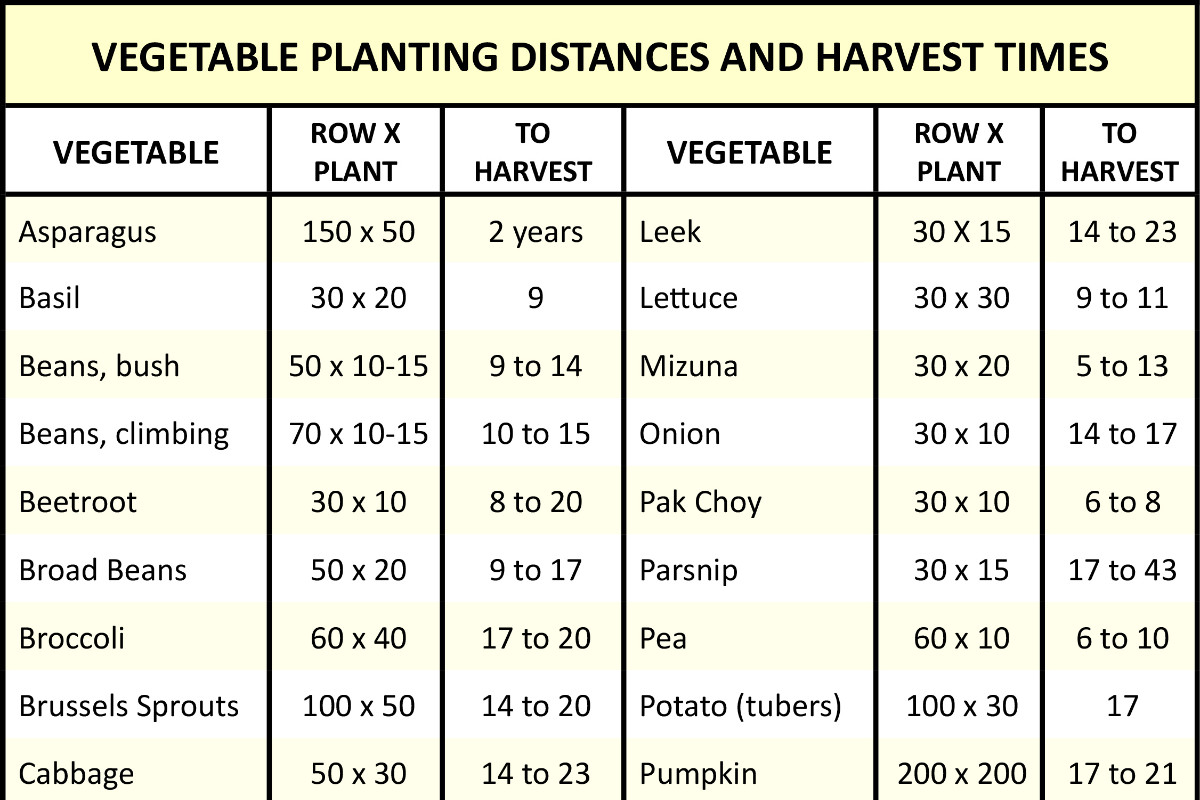
There are recommended planting distances for vegetables within a row and between each row. Plant too far apart and you will be wasting valuable garden space but planting seeds closer together than recommended increases the risk of pest and disease problems if they are not thinned out as the young plants grow.
Planting depths for some of the more common vegetable seeds.
There are recommended planting distances between vegetables and between rows of vegetables to maximise productivity. Plant too far apart and you will be wasting valuable garden space but planting seeds closer together than recommended increases the risk of pest and disease problems if they are not thinned out as the young plants grow.
Note that recommended seed planting distances will differ slightly between various planting guides, so it is useful to consult several guides to help you work out the planting distances that suit your style of gardening. Click the link below to download the planting distances guide that I have compiled.
To download a printable PDF of this guide click HERE.
It is better to plant more seeds then required in a given area then thin them out to your intended spacings for mature plants when the seeds have reached the seedling stage. I often plant seeds at half the recommended planting distances. The reason for doing this is that if some of the seeds fail to germinate or are eaten by pests there will usually be enough survivors to cover any that are lost.
Some vegetables, such as Brussels sprouts, do not do well when planted closer together than the recommended distance as this tends to reduce the size of the sprouts. Others, such as tomato plants, can have fruit ripening problems as crowding tomato plants restricts airflow in the immediate area. A summer breeze brings warmth and warmth is a key factor in the tomato ripening process.
All vegetables planted closer together than the recommended distances are more susceptible to fungal diseases as fungus does best when leaves are moist and there is no breeze. When wet leaves dry more quickly when there is a breeze, planting vegetables closer together restricts the airflow around them more than ones planted with more space around them.
Other vegetables can be planted closer together than the recommend distances. For example; planting cauliflower plants closer together usually results in smaller cauliflowers, a good practice if you only want small cauliflowers.
Lettuces can be planted very closely together and harvested as tiny picking lettuces. This is a good practice in summer when mature lettuces often take on a bitter flavour.
Some vegetables can have their spacing reconfigured to adapt to confined spaces. An example of this is corn. Traditional distances for planting corn vary from 20 to 25 cm apart with 60 to 100 cm between rows. However, these distances do not fit the dimensions of a typical raised bed, (around one metre wide). By planting corn with 35 cm between plants in a triangulated pattern I have been able to successfully grow corn within the confines of a raised bed. For more information see: Planting Corn In A Raised Bed.


