
Search

Urban Food Garden

Growing Pumpkins Using The Mound Method

For pumpkin seeds to germinate and pumpkin seedlings to flourish they need to be planted in well drained warm soil.  One of the best ways to do this is plant them using the mound method.  This post explains how to plant pumpkins using the mound method and its variant, the brick mound method.

When to plant pumpkins

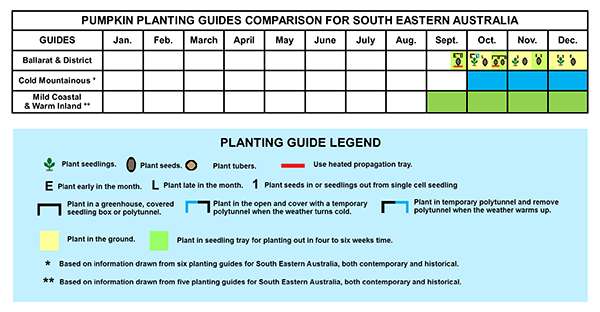
Plant pumpkins after the threat of frost has passed.  When the threat of frost has passed depends on the climate zone your garden is in as well as local climate variations within that zone.  As there is a wide climate disparity even within zones it is best to seek advice from experienced vegetable gardeners in your local area as to when you can safely plant.  Below are the recommended pumpkin planting times for the climate zones in South Eastern Australia.  The Ballarat & District zone being a more accurate subset of the Cold Mountainous zone.

Pumpkin planting guides comparison chart in South Eastern Australia.  To download a printable version of the chart, click HERE.

Growing pumpkins using the mound method

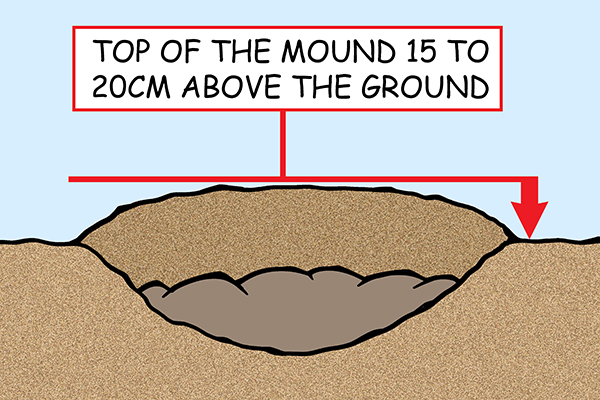
The mound method involves building a mound of soil about 90 cm wide and 15 to 20 cm high which pumpkin seeds or seedlings can be planted in.

The advantages of the pumpkin growing mound method

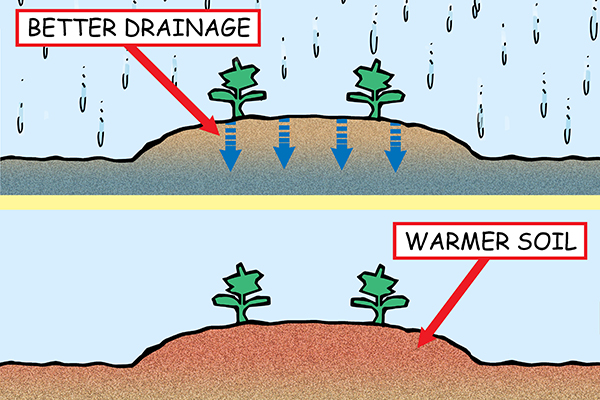
When soil is mounded up it drains better than soil at ground level.  It is also warmer due to the soil being more exposed to sunlight.  Nothing kills germinating pumpkin seeds quicker than cold sodden soil.

The advantages of the mound planting method.

Siting pumpkin mounds

As most mature pumpkin plants need a minimum of two square metres of space it is best to site pumpkin mounds in a place where the pumpkins can spread, which is usually away from the vegetable patch in other parts of the garden.  Though it is useful to move the mounds around from year to year to ensure that pumpkins are not planted in the same place in consecutive years.

digging and preparing the hole
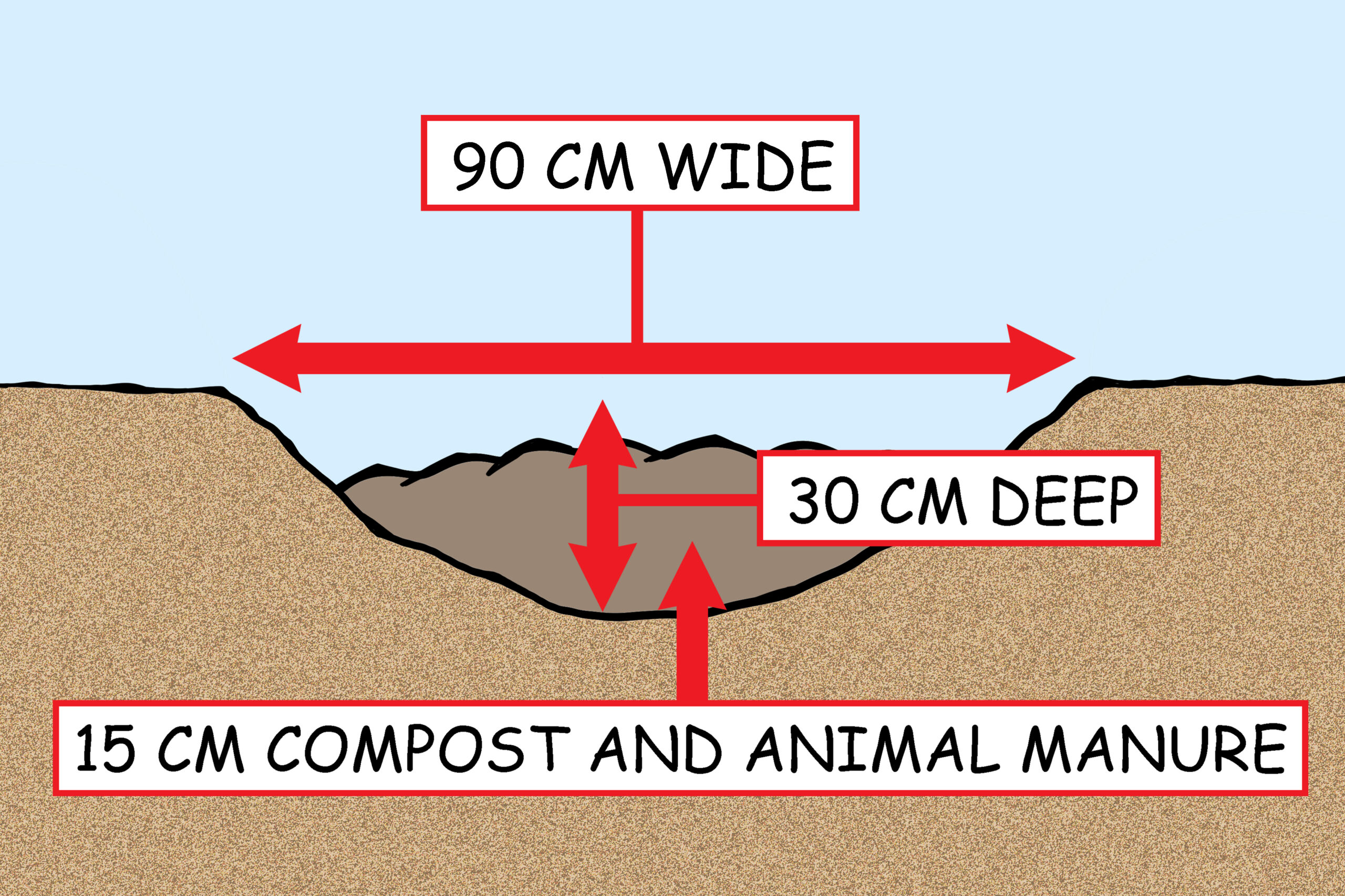
  • DIG A HOLE APPROXIMATELY 90CM WIDE AND 30 CM DEEP AT THE CENTRE


  • FILL THE BOTTOM WITH COMPOST AND ANIMAL MANURE TO A DEPTH OF 15 TO 20 CM
Building the mound
  • FILL THE HOLE WITH THE EXCAVATED SOIL TO A HEIGHT OF  ABOUT 15 TO 20 CM ABOVE GROUND LEVEL
    Extra soil may be needed to get the mound to the right height. The soil can be partially mixed with the compost below and extra compost and manure can also be added to the mounded soil above ground.
Extra additives
  • ADD SAND
    A shovelful of sand can be added when building up the mound to make the soil more friable.  This is especially useful if the soil is heavy.  The more friable the soil the better the drainage.  Sand can also be sprinkled on top of the mound as it absorbs heat more readily than soil.
  • FERTILISE WITH DECOMPOSING CARCASSES
    In place of compost and manure you can use fish guts and heads or a chicken or other such small animal carcass.  Pumpkin plants are heavy feeders and will thrive when given a concentrated dose of fertiliser  in the form of fish guts or a chicken carcass.  
Planting out
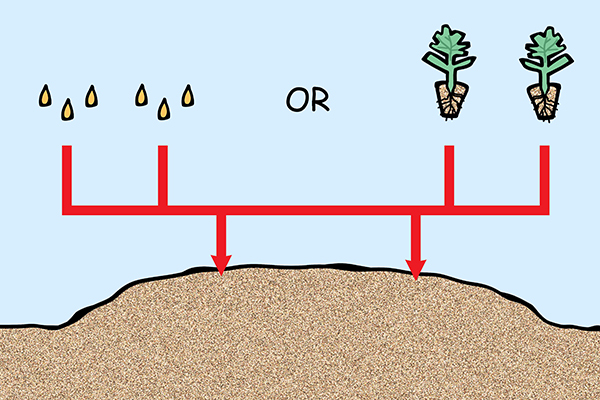
  • SOW TWO LOTS OF 3 TO 4 SEEDS AT TWO POINTS ON THE MOUND
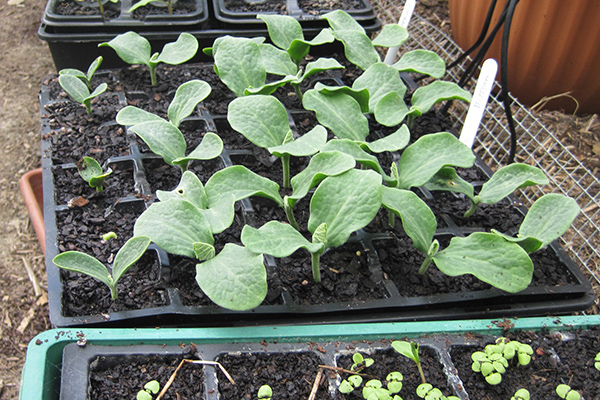
    At each point the seeds should be sown about 5cm apart in a triangulated pattern.  Seedlings can be planted instead of seeds, though as pumpkin seedlings react badly to having their roots disturbed it is best to grow them in a single cell seedlings tray.   For more information on growing seedlings in single cells seedling tray see: Using Single Cell Seedling Trays To Grow Seedlings.

    The ground around the mound can be covered with mulch but do not put mulch on the mound itself as mulch insulates the soil below it from the sun’s rays.  For more information of the properties of mulch see Advantages And Disadvantages Of Mulching Vegetable Beds.

Sow two lots of 3 to 4 seeds at two points on the mound or plant two seedlings that have been grown in a single cell seedlings tray.

Pumpkin seedlings that have been grown in a single cell seedlings tray.

Post planting management
  • LIGHTLY WATER THE SEEDS IN
    But only if the soil is dry and the temperature warm.  If not than wait until the seedlings sprout before watering.  This is because pumpkin seeds can rot when exposed to cold wet conditions.
  • PROTECT THE MOUND FROM SCRATCHING BIRDS
    For details on how to protect your mound from scratching birds see PEST CONTROL: Birds.
  • THIN THE  EMERGING SEEDLINGS TO THE TWO STRONGEST SEEDLINGS


  • WATER WITH LIQUID FERTILISER
    The growing seedlings can be helped along with an occasional dose of diluted liquid fertiliser, though this is not absolutely necessary.

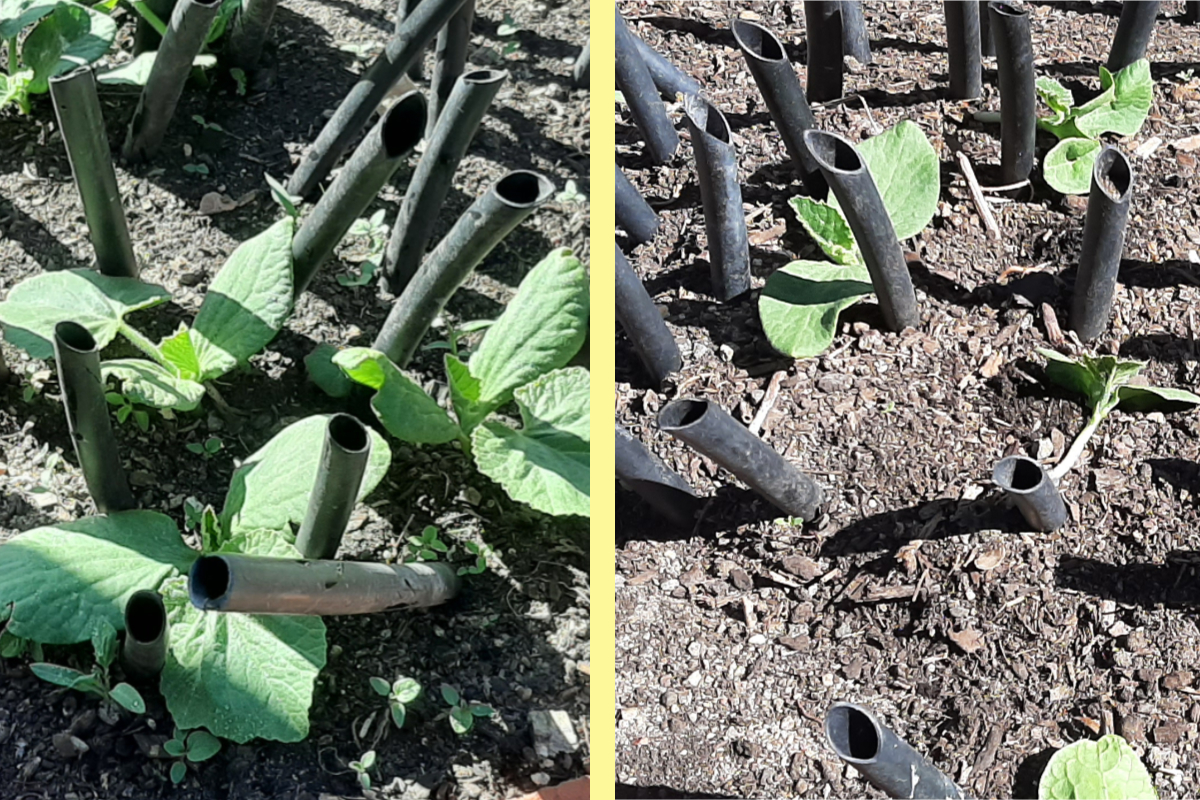
LEFT: Three pumpkin seedlings in a group.  RIGHT: After the group has been thinned to the strongest seedling.  The pulled out seedlings are left as decoy seedlings for slugs and snails, which will usually target these pulled out seedlings first.

Growing pumpkins using the brick mound method

The brick mound method involves placing bricks around the edge of the mound as support for the mound and to offer extra warmth.   It is the method that I prefer to use for growing pumpkins.

The advantages of the brick mound method

The problem with the mound method is that heavy rain can wash parts of the mound away and when being watered much of the water will flow down the sides of the mound and away from the growing seedlings.

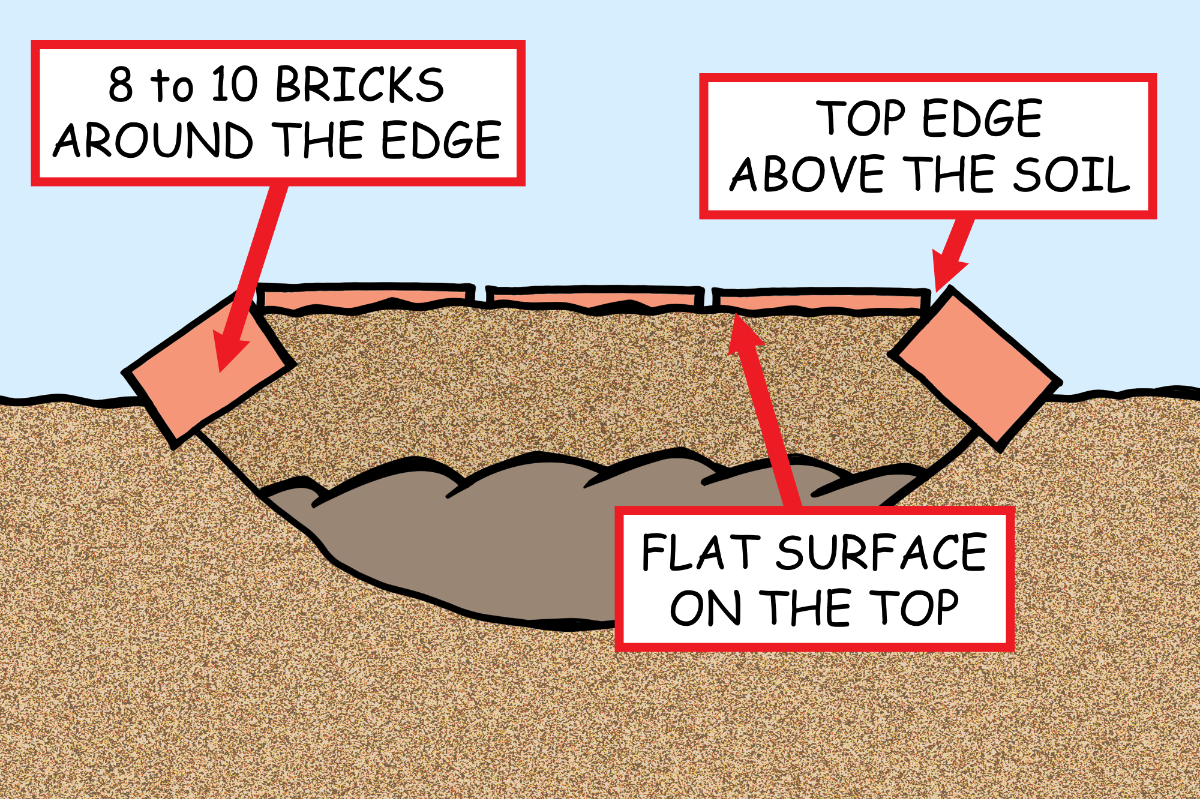
Placing bricks around the edge of the mound helps keep the shape of the mound and allows the top of it to be levelled.   Water is less likely to run off level ground.  The bricks also act as heat sinks by absorbing heat during the day and giving it off slowly at night when the air temperature drops.  This heat sink keeps the microclimate of the mound just that little bit warmer at night.

Building a pumpkin brick mound
  • BUILD UP A MOUND AS PER THE INSTRUCTIONS ABOVE FOR BUILDING A PUMPKIN MOUND

  • PLACE 8 TO 10 BRICKS AROUND THE SIDES OF THE MOUNT ON A SLIGHT ANGLE
    Partially push the bricks into the soil but leave the outside slope of the bricks exposed to sunlight.

  • FLATTEN THE TOP OF THE MOUND SO THAT ITS SURFACE SITS JUST BELOW THE INSIDE TOPS OF THE BRICKS

  • PLANT AS PER THE PLANTING INSTRUCTIONS ABOVE

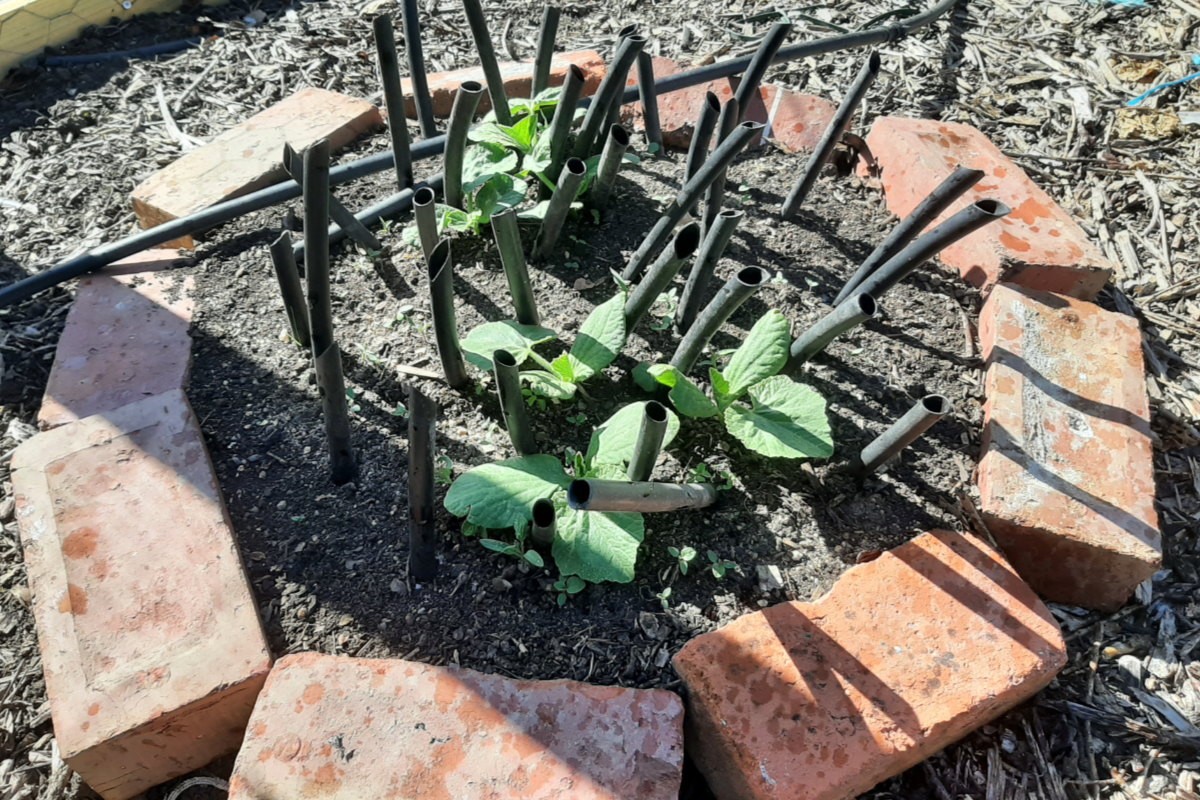
A pumpkin brick mound just prior to thinning the seedlings (sown as seeds) down to two seedlings.  The Polypipe sticks are there to stop blackbirds scratching up the seedlings.

RELATED POSTS