Spreading mulch on vegetable beds offers many benefits, but mulch also has some negative side effects. The Seasonal and Stages mulching processes maximise the benefits of mulching while minimising the negative side effects.
Placing mulch on vegetable beds reduces evaporation (resulting in less watering) adds valuable nutrients and organic matter and inhibits weeds. However, mulch also reduces soil temperature (not good in early spring when soil needs to be as warm as possible), conceals pests such as small slugs and increases the risk of fungal diseases. For a detailed explanation of the pros and cons of mulching vegetable beds see: The Advantages And Disadvantages Of Mulching Vegetable Beds.
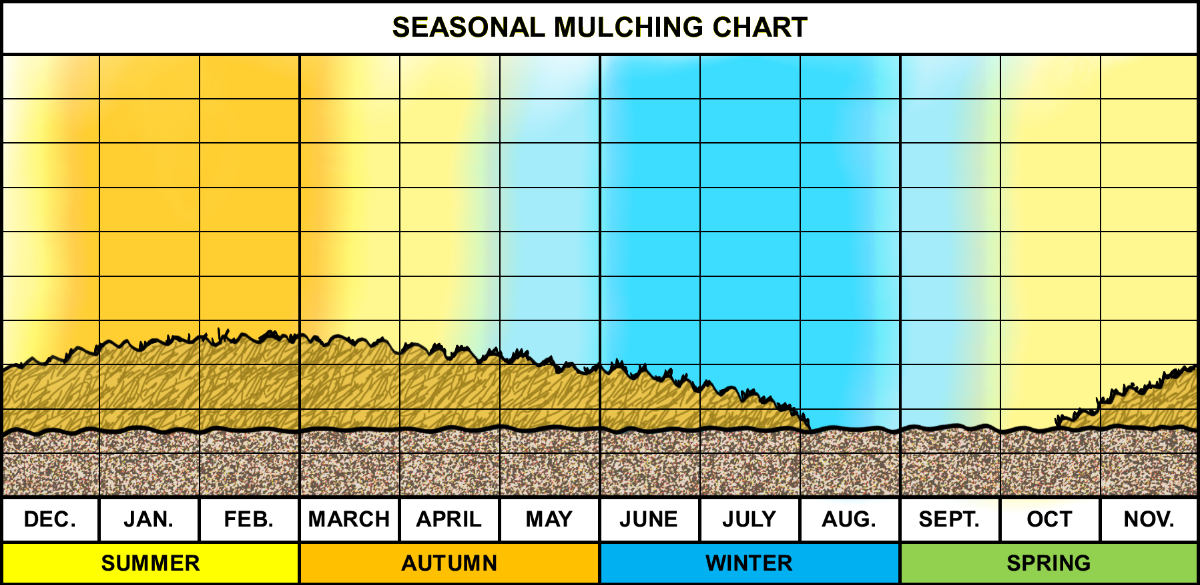
This involves applying either no mulch at all or mulch to varying degrees of thickness depending on the season, as detailed below.
- From late winter through to mid-spring do not apply any mulch (to maximise soil temperature).
- In late spring and summer mulch should be applied thickly (to reduce evaporation and inhibit weeds).
- From early Autumn through to mid-winter continue to apply mulch, but not as thickly as in summer (this is done mainly to add organic matter to your vegetable beds).
When and how much mulch is applied will vary depending on whether your garden is in a cool mountainous, mild coastal or arid inland area. The wetter and colder the climate the longer the period when you should apply no mulch. If you are not sure then use this rule of thumb: If the surface soil is drying out quickly in sunny weather then it is time to start mulching.
- When sowing any seeds directly or planting seedlings always plant into bare ground, as per the stages mulching practice (see details below).
- If a vegetable bed is being fallowed cover it with a thick layer of mulch regardless of the season.
Always sow seeds and plant seedlings into bare soil. Apply mulch only after the planted seeds and seedlings have grown tall enough (about 20 t0 25 cm high) to have mulch spread around their base without touching the lower leaves.
- Delay applying mulch from late winter until mid-spring, as per the seasonal mulching practice described above.
- Apply either no mulch or only a very light layer of mulch if garlic or onions are being grown as they are susceptible to fungal diseases, which thrive in mulch. Beds growing these vegetables should have little or no mulch applied to them even in high summer.
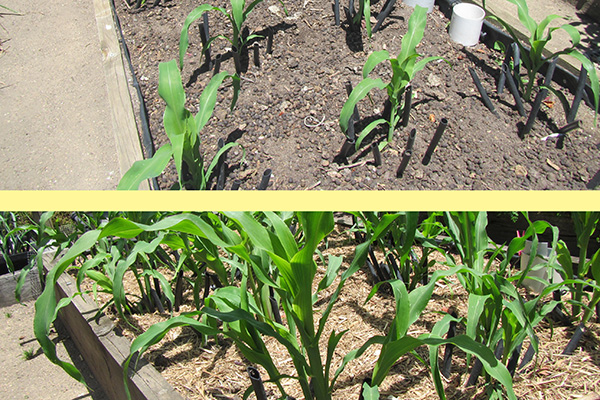
TOP: Corn seedlings that were planted into bare soil. Heat loving plants such as corn do particularly well when planted into bare soil as the soil will be warmer than mulched soil, corn growing in warm soil will grow more quickly than if the soil is cooler.
BOTTOM: Larger corn plants with the soil they are growing in covered with mulch. Once the hot weather arrives mulch turns from a disadvantage to an advantage as it reduces evaporation and inhibits weeds. The soil will still be cooler under the mulch than bare soil, but once the weather is hot even mulched soil will be warm enough to promote plant growth.
The practices of seasonal and stages mulching of vegetable beds may not be suitable for other vegetable gardening styles (such as no dig) but whatever vegetable gardening style you use it is important to keep in mind the impact mulch has on soil temperature.