Growing fruit trees in pots is a useful way to maximise the space you have available to grow food in your back yard. This page looks at the advantages and disadvantages of growing fruit trees in pots as well as some pointers to help you choose the best pots for your circumstances.
ADVANTAGES
CAN BE PLACED ON HARD NON SOIL SURFACES
Such as patios or decking.BE BETTER PROTECTED
Frost and cold sensitive trees in pots can be better protected from the elements as they can be placed in sheltered spots such as patios or verandas.ARE PORTABLE
They can be moved around the garden at different times of the year or when circumstances in your garden change.ARE TRANSPORTABLE
Pots can be moved to another property or even another part of the country. This is particularly useful if you are in temporary accommodation or renting.THE SOIL WARMS UP MORE EASILY
Pots, especially if they are black, absorb heat more readily than the ground, making the soil in pots warmer than the nearby ground. Warm soil promotes greater growth.
Soil in pots is usually warmer than the ground as pots absorb the sun’s heat more efficiently. Warmer soil encourages more vigorous plant growth. Pots are better able to take advantage of materials that store radiant heat such as concrete patios or brick walls.
DISADVANTAGES
- DRY OUT MORE QUICKLY
Trees in pots are more prone to water stress than ones in the ground as soil in pots dries out more quickly.
- CAN BE EXPENSIVE
Especially if using earthenware pots. - LOSE HEAT MORE QUICKLY ON COLD NIGHTS
If the soil in a pot freezes on a sub-zero night it has the potential to damage or even kill some trees. - REQUIRE MORE FERTILISER
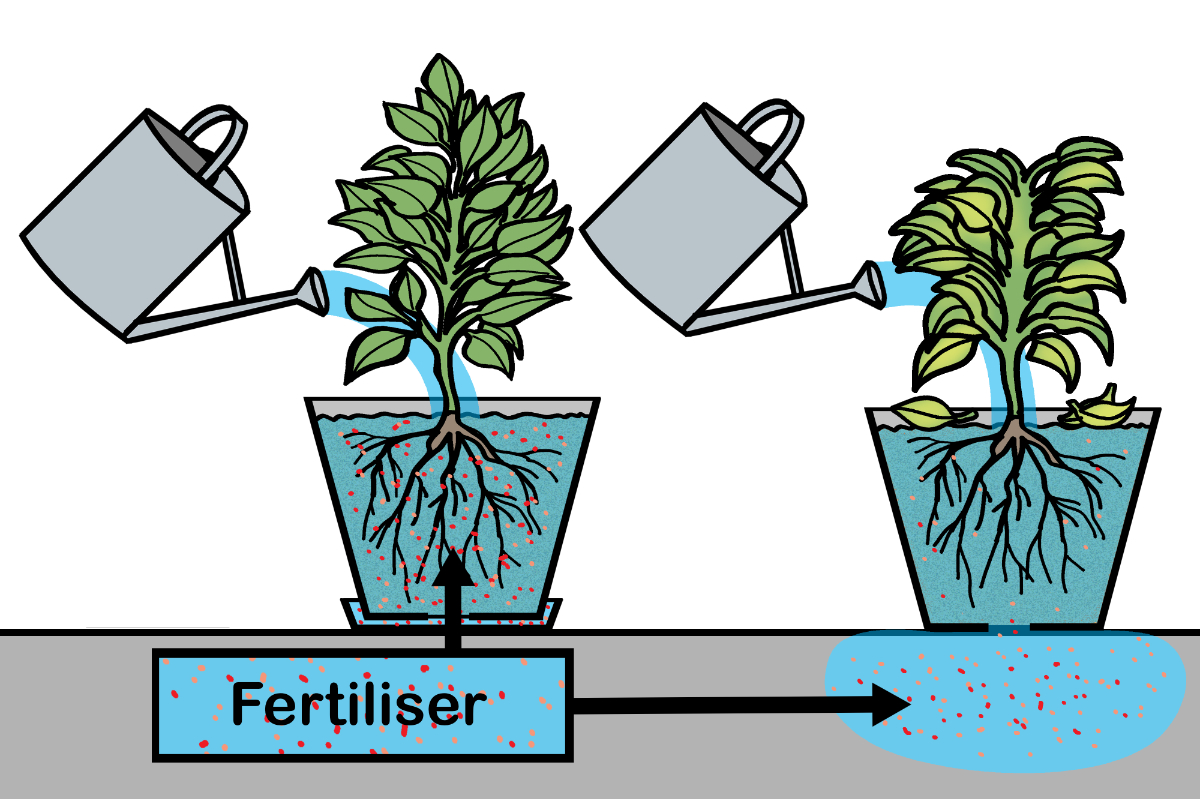
Most trees in pots require both more and more regularly applied fertiliser than ones grown in the ground due to their roots being more restricted and the increased risk of nutrients leaching out of the soil as water drains through the pots .
There is an increased risk of nutrients leaching out of the soil as water drains through the pot. It is important that pots have a saucer under them to trap excess water.
ADVANTAGES SUMMARY
ADVANTAGES
- CAN BE PLACED ON HARD NON SOIL SURFACES
- BE BETTER PROTECTED
- ARE PORTABLE
- ARE TRANSPORTABLE
- SOIL IN POTS WARMS UP MORE EASILY
DISADVANTAGES SUMMARY
DISADVANTAGES
- DRY OUT MORE QUICKLY
- CAN BE EXPENSIVE
- LOSE HEAT MORE QUICKLY ON COLD NIGHTS
- REQUIRE MORE FERTILISER
Pots dry out more quickly than the ground. And the smaller the pot the more quickly it will dry out. To reduce the risk of drying out it is best to use as bigger pots as possible.
Though note that the larger the pot the harder it will be to move. The size of pot can also vary depending on the tree being grown. Some varieties of fruit tree can be grown in a smaller pot than others, especially if the tree is a dwarf variety.
The smaller the pot the quicker it will dry out. For this reason it is best to use larger sized pots where possible.
Pot trollies are useful as a pot on a pot trolley can be more easily moved. This is especially so for heavy pots that cannot be easily lifted. Trollies also reduce the risk of damage to the surface below by minimising the contact surface area. This is particularly useful for pots on decking.
Though note that it is important that the carrying capacity of the trolley match the weight of the pot. Placing a heavy pot on a lightweight trolley can result in damage to the trolley’s wheels.
LEFT: Plastic pot on a lightweight pot trolley. RIGHT: Earthenware pot on a heavy-duty trolley.
As plants in pots need more frequent watering than plants in the ground it is a really good idea to water them using an automatic watering system. Though note that there is no such thing as a truly automatic watering system, they all need to be monitored for line blockages and regularly adjusted to match the changing climatic conditions.
LEFT: Adjustable flow trickler watering a pot. RIGHT: Simple tap timer. With a combination of adjustable flow tricklers or drippers and a tap timer it is possible to consistently supply the right amount of water to your pots.


