
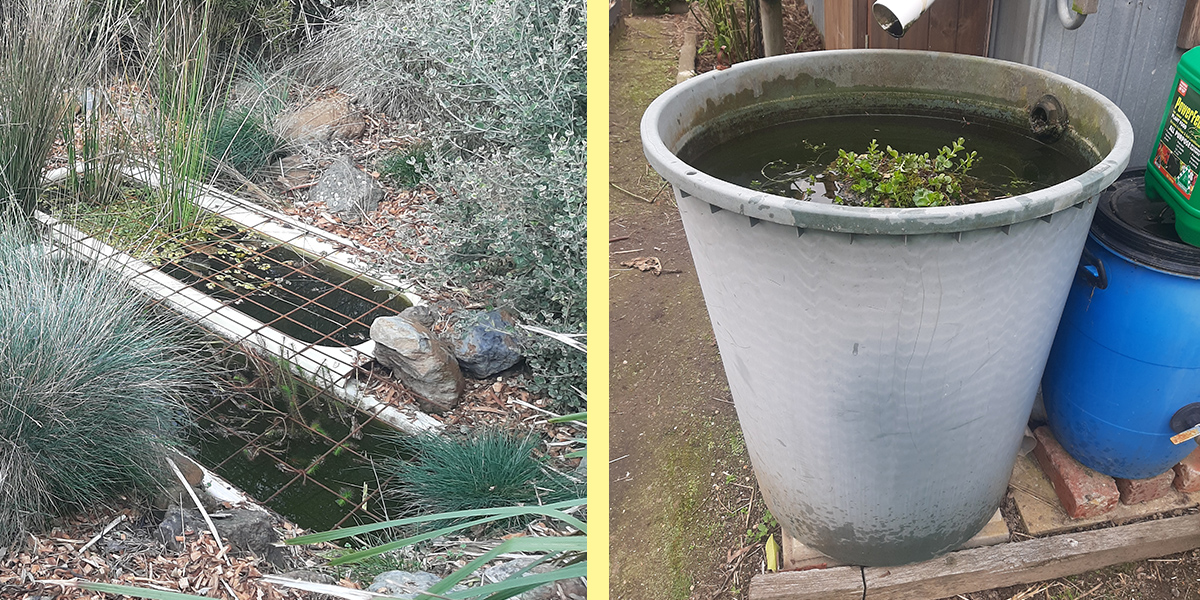
If you have ponds or water containers such as dipping drums in your garden they can be sources for mosquitos to breed in. This page looks at how you can prevent them from breeding.
The common mosquito species in Australia include Aedes notoscriptus, Culex quinquefasciatus, and Culex annulirostris, with Aedes notoscriptus being particularly prevalent in urban areas. At best they can be a nuisance but (depending on where you live in Australia) they can carry dangerous viruses including Ross River virus, Japanese encephalitis and Dengue fever.
The female mosquito lays her eggs directly on or near water. The eggs can survive dry conditions for a few months. The eggs hatch in water and a mosquito larva or “wriggler” emerges. The larva of most mosquito species surface to breathe air. They then transform into a pupa “tumbler” just before emerging as adult. Mosquito larvae primarily feed on algae, bacteria, and other microorganisms present in the water where they live.
Mosquitos have evolved to take advantage of temporary water, which means they are poor swimmers and have little defences against fish or predatory aquatic insects. Where fish or such insects are present no or only small numbers of mosquito larva will reach maturity.
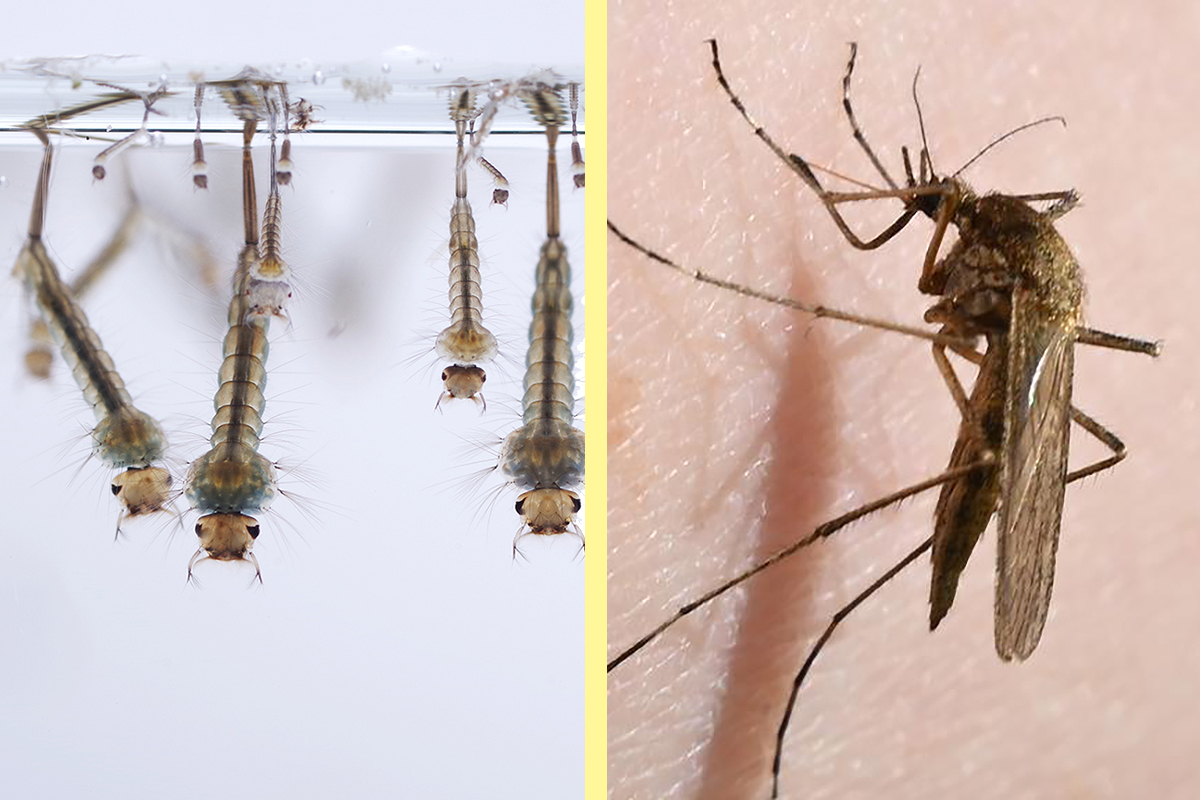
LEFT: Mosquito larva, commonly known as wrigglers. RIGHT: An adult mosquito feasting on the skin of a human. Photos courtesy of the internet.
Fish offer the easiest way to stop mosquitoes breeding in your ponds and water containers. The fish listed below are ones that I have in my ponds and dipping drums today or have had in the past.
Goldfish are extremely hardy as they can live in low oxygenated and poor quality water. They can also handle extremes in water temperature. Goldfish can be visually quite pleasing as they often swim around just below the surface of the water. They are also relatively cheap to buy and will readily breed in a pond if the conditions are right.
The main drawback of goldfish is that they prey on tadpoles, so they are not suitable if you want to encourage frogs to breed in your pond. They also can be easy prey to cats and birds, especially if they are brightly coloured (easier to see).
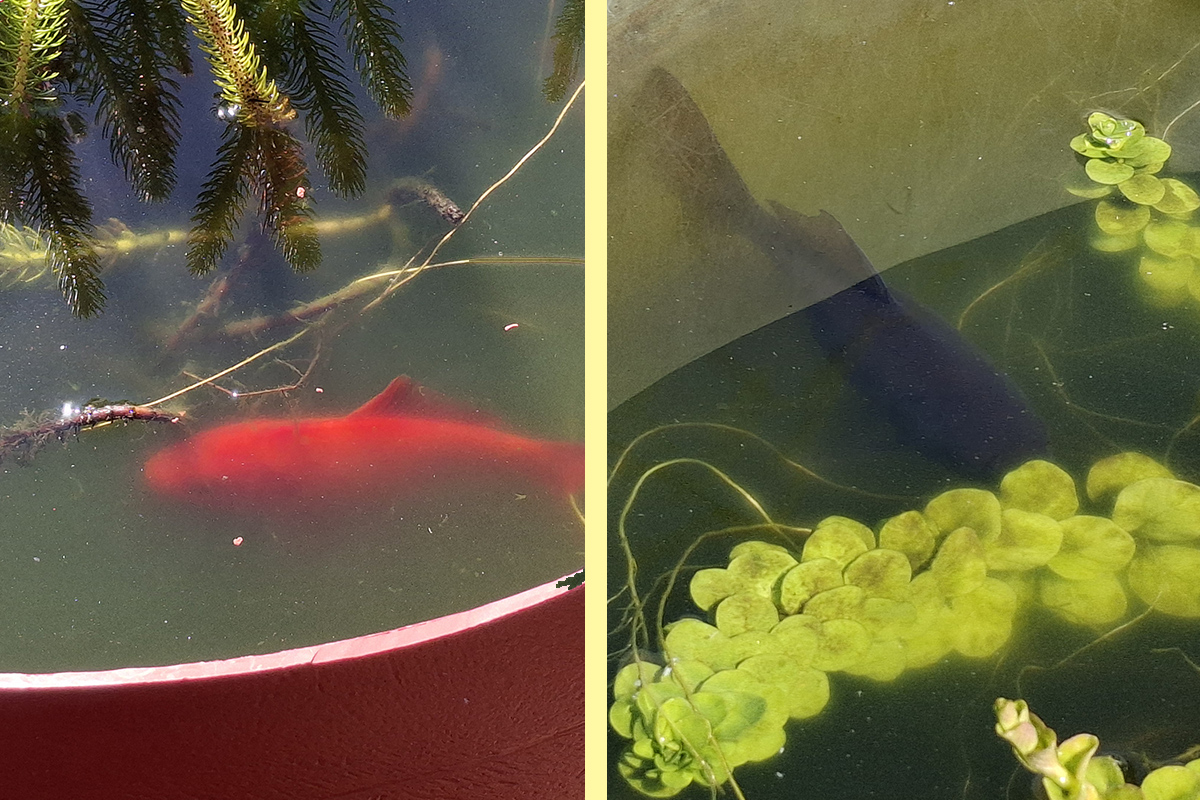
LEFT: An orange goldfish in one of my dipping drums (used to dip my watering can in to draw water. RIGHT: A black goldfish in another dipping drum. Black goldfish are harder to see, making them less likely to fall prey to cats or birds.
A hardy Australian Native fish that will breed in ponds if the conditions are good and there is plenty of aquatic plants. Due to their small mouth size pygmy perch find it difficult to consume frog eggs or tadpoles, making them a good choice for frog ponds.
However Southern Pigmy Perch are expensive to buy and at times unobtainable. As they are shy and mainly inhabit the mid-level of the water column they are rarely seen.
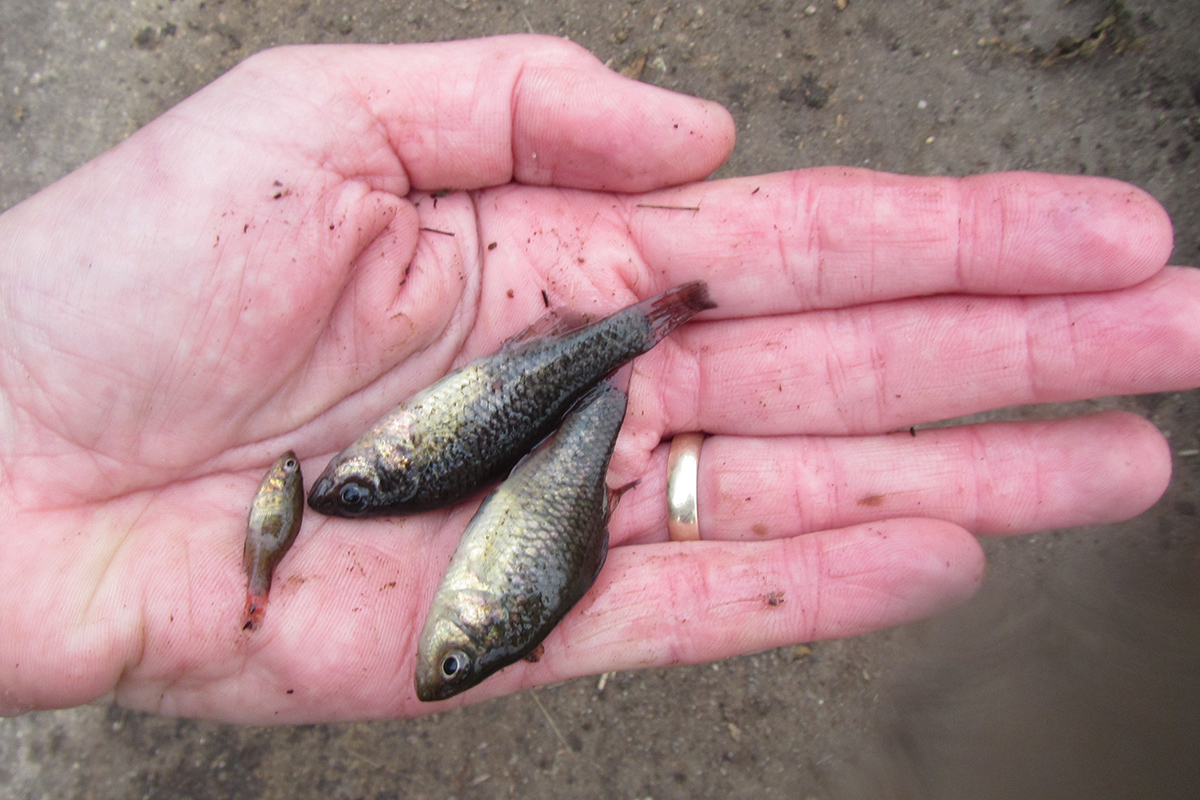
Two mature and one immature Southern Pigmy from one of my bathtub ponds.
Mosquito fish (Gambusia) is a hardy introduced fish species that will thrive in a small pond environment. They are widespread in Australia and can usually be obtained by going down to your local swamp or creek and scooping some up with a dip net.
However Mosquito fish are now listed as a restricted noxious fish and it is illegal to keep them in Australia without a permit. As the name implies they will eat mosquito larva, but they will also eat tadpoles and other small fish species. While I have kept them in the past I no longer do so and I do not recommend them as a pond fish.
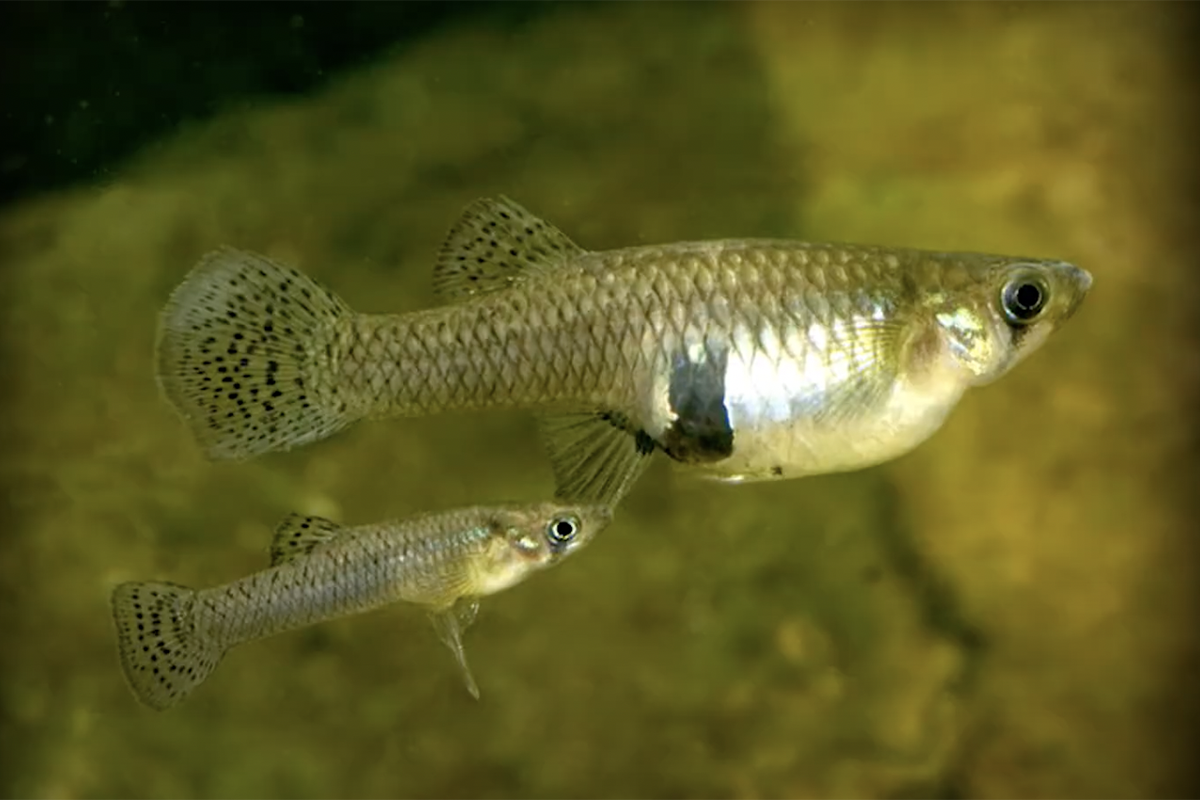
Female (larger ) and male mosquito fish. As they are restricted noxious fish I do not recommend using them as pond fish to control mosquitos. Photo courtesy of the internet.
Japanese rice fish are a native of Japan and are a popular aquarium fish. I kept Japanese rice fish in a bathtub pond in my greenhouse for some years before replacing them with Southern Pigmy Perch. As they are small and have small mouths they are unlikely to prey on tadpoles or tadpole eggs. During the time that I had them they did breed in small numbers.
While they can withstand very cold water their preferred temperature range is 15 to 28 °C. As outdoor water temperatures in winter in Ballarat drop below 15 °C I doubt that they would do well in an outdoor pond in Ballarat but they thrived in my greenhouse pond.
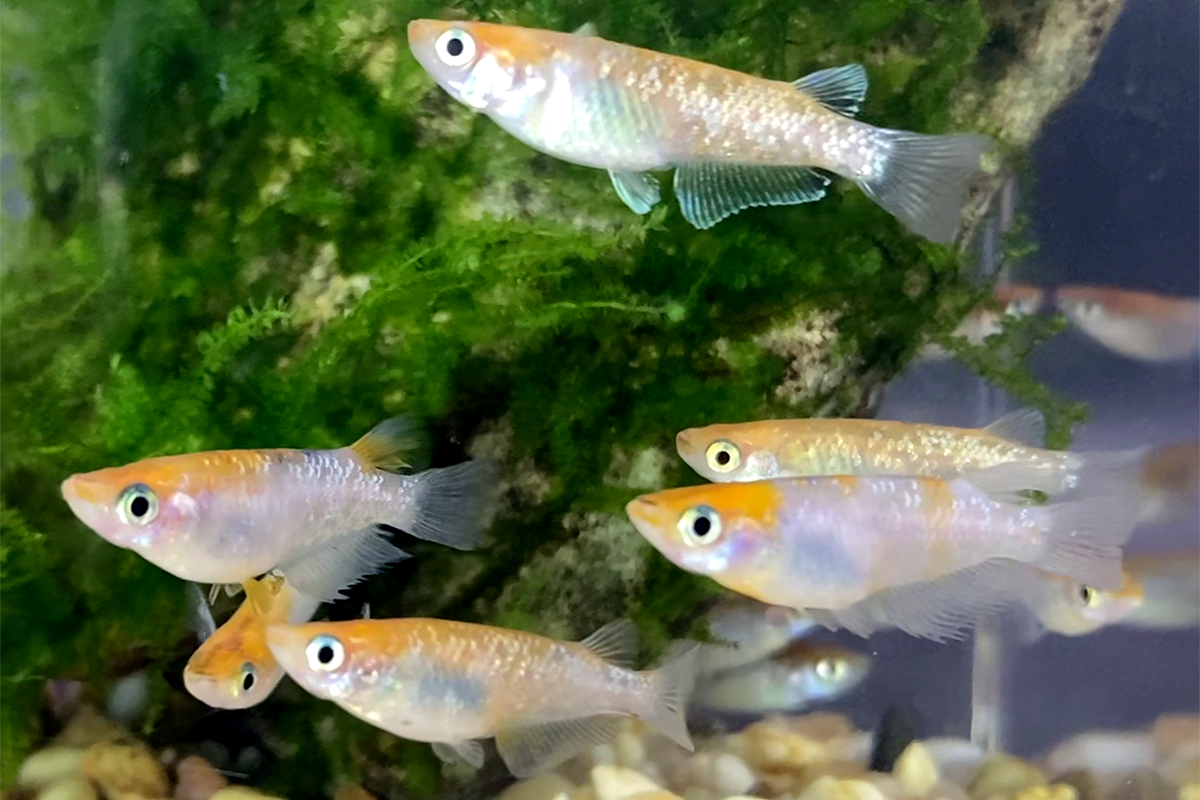
Japanese rice fish. A pretty fish that will keep mosquito numbers down in a pond without preying on tadpoles or tadpole eggs. Photo courtesy of the internet.
There are other fish species that would be suitable as pond fish but I have only listed ones above that I have had personal experience with. Fish like White Cloud mountain minnows and some of the Australian Rainbow fish species (to name just two) would also be suitable. But these two would be better suited to a warmer climate than Ballarat.
While the threat introduced fish species pose to the environment varies depending on the species in question it is a good practice never to put introduced fish species into a pond if there is any chance that the pond may be inundated by floodwaters from a nearby creek or river.
The problem with using fish to control mosquitos is that there is evidence that some species of frogs avoid laying eggs in ponds with fish in them. So if you want to maximise the likelihood of frogs breeding in your pond it is best to use predatory aquatic insects to control mosquitos in place of fish.
There are a number of aquatic predatory insects that will eat mosquito larva including backswimmers, water scavenger beetles, giant water bugs, dragonfly and damselfly naiads. In time such insects will populate a newly established pond to a point that they will control mosquito larva numbers, but in the meantime mosquitos will take full advantage of that water to breed up in large numbers.
However you can reduce the time it takes for these predatory aquatic insects to populate a pond by artificially introducing them, which I describe as inoculating the pond.
To do this all you have to do is get a couple of buckets of water from an established pond or swamp, preferably one where you know there are no large predatory fish (which will reduce the numbers of aquatic insects in the water) and poor that water into your pond. There is no need to target specific predatory aquatic insects as, if the pond is rich in aquatic life, one or two buckets of its water will contain enough aquatic insects to establish a thriving population of them in your pond in a relatively short time.
Collecting aquatic insect laced water from Pauls Wetland in Ballarat. Note that the swimming aquatic insects visible in the bucket in this video are just the larger ones, a bucket of water from a healthy pond will be teaming with numerous aquatic insects from the large and visible right down to microscopic size.
Though inoculating your pond with aquatic insects is an excellent way to prevent mosquitos from breeding while at the same time maximising the chance that frogs will breed in it you have to take extra care in terms of water quality. Some things to consider are:-
NOT SUITABLE FOR WATER CONTAINERS THAT ARE FLUSHED WITH RAINWATER
My main dipping drum is filled from a downpipe connected to the garage, which means that it is regularly flushed out with large doses of rainwater. I have found that aquatic insects to not do well in these conditions, in fact the only species that can handle such extremes in water quality are goldfish.
USE ONLY TANK WATER TO TOP UP YOUR POND
Aquatic insects are particularly sensitive to chlorinated water. If you do not have access to tank water then allow the chlorinated water to stand in a container for two to three days (this will dissipate the chlorine) before adding it to your pond or add a dechlorinating solution when filling your pond with chlorinated water.
BOOST STOCKS OF AQUATIC INSECTS WHEN CLEANING THE POND
If you have to empty and clean your pond use as much of the water taken from the pond (will contain aquatic insects) to refill it after cleaning and boost aquatic insect numbers with a bucket or two of collected pond water.
ADD MORE COLLECTED POND WATER IF MOSQUITO ARE LARVA PRESENT
Add more collected pond water if mosquito larva are present in numbers. though note that when first inoculating a pond with predatory aquatic insects it may take some weeks before insect numbers build up enough to eradicate the mosquito larva.
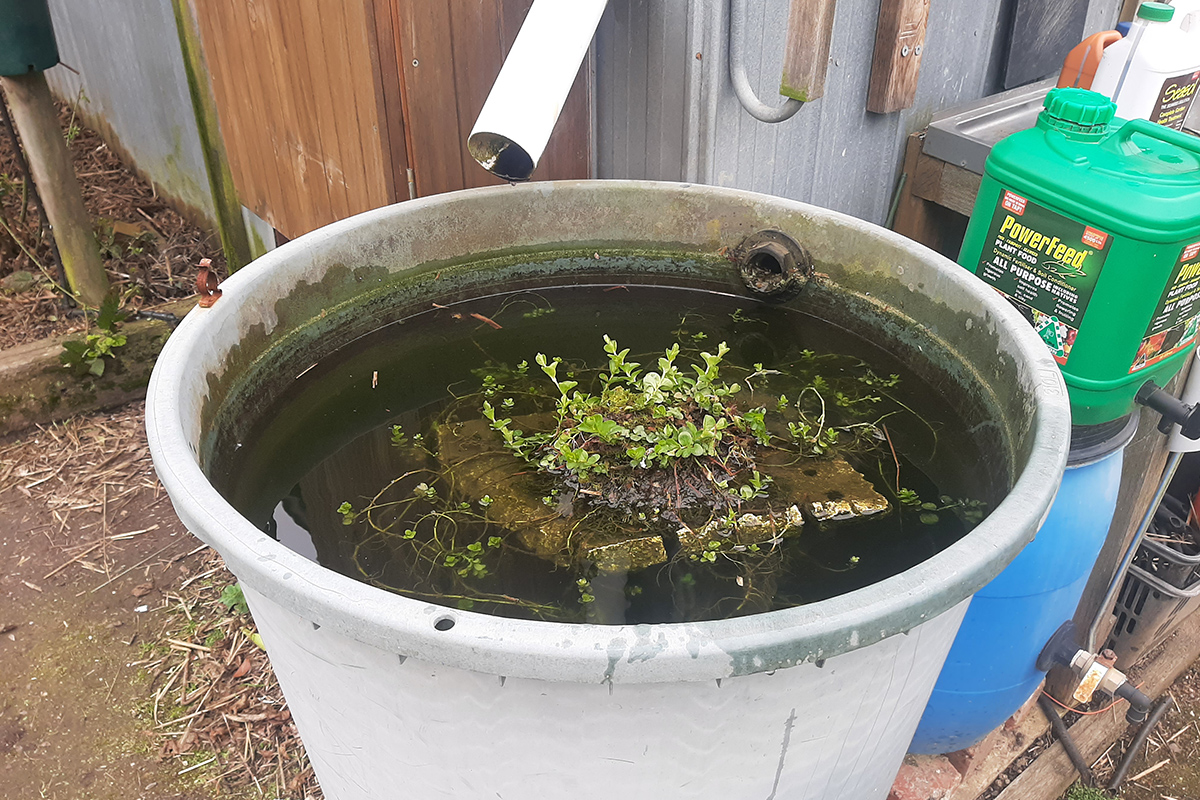
My main dipping drum showing the downpipe that supplies water from the garage roof. During a heavy downpour the tank can be completely flushed out via the overflow outlet. The only fish I have found that can withstand such flushes are goldfish. My one attempt to inoculate this dipping drum with predatory aquatic insects ended up in failure.


