Couch grass is a tough perennial weed that if left unchecked can completely choke A vegetable bed. This page offers some techniques for effectively removing it.
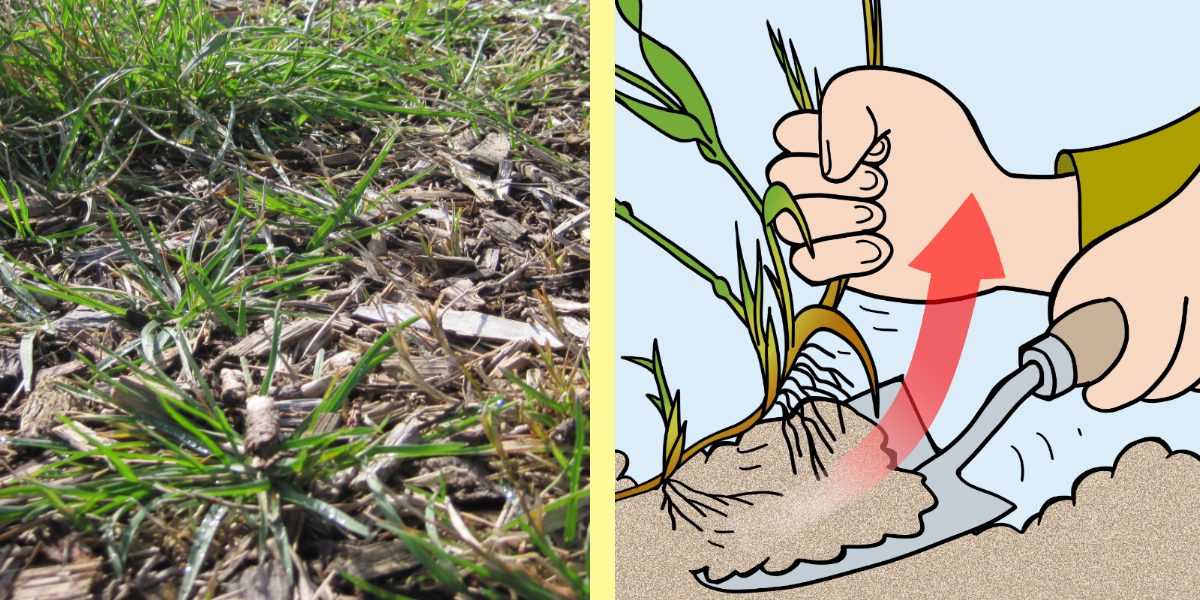
Couch grass is a common perennial species of grass native to most of Europe, Asia, and northwest Africa. While it makes a good drought resistant lawn it presents a serious weed problem in vegetable garden beds. It grows very quickly in warm weather and loves soft, sandy, or heavily mulched soils. It can be difficult to control as even the tiniest piece of stem left in a garden bed will quickly develop into a new plant. If left unchecked couch grass will completely choke a vegetable bed. The one positive is that it does not produce seeds, so if you can completely remove it from a vegetable bed it is relatively easy to keep out.
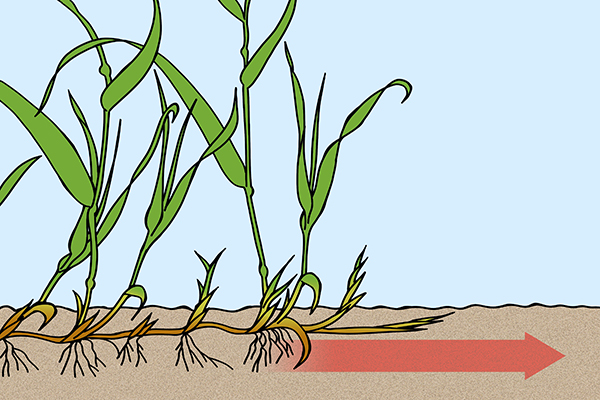
Couch grass spreads by sending out runners under the soil which will then resurface nearby. The good news is that couch does not produce seeds, so if you can remove it completely it is relatively easy to control by creating barriers at the edges of the vegetable bed to keep couch runners from re-entering.
A common mistake many gardeners make is to try and pull couch directly out on the surface or to dig it in with a hoe.
As the couch stems break off easily, trying to pull them out usually leaves much of the root system in the ground to regrow again. And turning it under with a hoe may in fact help spread the couch as each small piece of stem left in the soil will grow into a new plant. Unlike many weeds, disturbing its root system won’t greatly hinder couch.

When removing couch grass it is important that you remove every scrap of plant and root, pulling out just the stems or chopping up the plant with a hoe does little to retard it’s growth.
With care it is possible to remove couch by hand, especially if you have soft or sandy soil. Though the effected bed needs to be empty of established plants. For this reason couch is best removed in winter when the beds are more likely to be fallow.
START AT THE EDGE OF THE AREA INFESTED WITH COUCH GRASS AND DIG DOWN TO THE EDGE OF A COUCH CLUMP TO BELOW THE ROOT STRUCTURE
USE A TROWEL TO HELP YOU LOOSEN THE ROOTS, THEN GENTLY HAND PULL THE CLUMP OUT IN ONE PIECE WITH SLOW STEADY PRESSURE
You will notice runners attached to the clump heading off in various directions. Follow these runners along, digging and lifting as you go, until you reach the next clump.
If a runner breaks then try to find it in the soil and continue the process. The aim is to remove sections of couch in as large a piece as possible in order to avoid leaving little pieces of couch in the ground.REPEAT THE PROCESS UNTIL THE BED IS CLEARED
If there is a preexisting raised bed border then you will have to make sure you remove all the couch from under the base of that border. Ideally it is best to temporarily remove the border, replacing it when the weeding is completed.AFTER YOU HAVE REMOVED ALL THE RUNNERS TURN THE SOIL OVER WITH A FORK LOOKING FOR ANY MISSED PIECES OF COUCH
Do this two or three times over the next couple of weeks to try and remove every last piece.REGULARLY CHECK THE BED FOR AT LEAST TWO MONTHS AFTER THE FIRST WEEDING AND REMOVE ANY REMNANT COUCH SHOOTS
CREATE A BARRIER AROUND THE BED TO STOP COUCH GROWING BACK INTO IT
This can be done by digging a trench around it to a depth below the couch root line (about 25 centimetres) and then regularly checking the trench for any shoots growing into it from the outside. An alternative is to put an impervious barrier, such as a gravel path, between your vegetable bed and the couch.

Use a trowel to help you loosen the roots, then gently hand pull the clump out in one piece with slow steady pressure.
For larger areas it might be better to smother the couch as this method involves less digging. It does however take longer to remove the couch.
DIG A TRENCH AROUND THE VEGETABLE BED YOU WISH TO REMOVE THE COUCH FROM
Make sure the trench is deep enough to sever all couch runners coming in from the outside. It also needs to be wide enough so that paper and mulch can be placed over the inner wall of the trench while still leaving a gap at the bottom. If the vegetable bed has a pre-existing raised bed border then temporarily remove it.COVER THE TOP AND SIDES OF THE SECTION WITH A THICK LAYER OF NEWSPAPER AND TOP IT OFF WITH A LAYER OF MULCH TO A DEPTH OF AT LEAST TEN CENTIMETRES
The key is to make the cover thick enough to ensure that no light gets to the couch plants below and strong enough so no runners can push through to the surface. The mulch is to stop the newspaper drying out and blowing away. Lengths of wood or bricks can be placed on top of the mulch at regular intervals as added protection against the newspaper being dislodged. Cardboard can be used in place of newspaper, but it will take longer to break down to a point where it can easily be turned into the soil.MONITOR THE BED FOR ANY SIGNS OF COUCH SHOOTS
If any are spotted then pull them out (no need to remove their root bases) and cover that area with more paper and mulch. Also monitor the outside of the trench for signs of couch shoots trying to grow back into the vegetable bed.LEAVE THE BED UNDISTURBED FOR AROUND FOUR TO SIX MONTHS
The aim is to ensure that all the couch under the newspaper is dead. By then the paper should be sufficiently rotted down to be turned with a fork.TURN THE BED WITH A FORK, REMOVING ANY VISIBLE REMAINS OF THE COUCH
If you see any living couch then use the hand removal method to get rid of it as described above.CONTINUE TO MONITOR THE BED FOR REMNANT PATCHES OF COUCH FOR ANOTHER FEW MONTHS
By then the couch should have been completely removed.CREATE A BARRIER AROUND THE BED TO STOP COUCH GROWING BACK INTO IT
For more information see: Keeping Couch Grass Out Of Vegetable Beds.

Illustration showing how to cover a couch infected vegetable bed with newspaper and mulch.
An alternative to smothering couch with newspaper and mulch is to cover it with black builders plastic.
TRENCH THE BED AS PER THE INSTRUCTIONS FOR SMOTHERING COUCH GRASS WITH NEWSPAPER AND MULCH
COVER THE BED WITH TWO LAYERS OF BLACK BUILDERS PLASTIC
You can use just a single layer, but there must be no holes in it to let sunlight through. If you cannot cover the entire bed with a single sheet of plastic, then overlap two sheets by at least 30 centimetres.WEIGH THE PLASTIC DOWN WITH BRICKS OR LENGTHS OF WOOD
Take particular care to weigh down the edges of the plastic lying in the trench.LEAVE THE PLASTIC ON FOR AROUND FOUR TO SIX MONTHS
REMOVE THE PLASTIC AND FINISH OFF THE BED AS PER POINTS 5. 6. AND 7. OF SMOTHERING COUCH GRASS WITH NEWSPAPER AND MULCH
But lift a small section of the plastic and check whether the couch is dead first. If there are still signs of life replace the plastic and wait another few weeks.