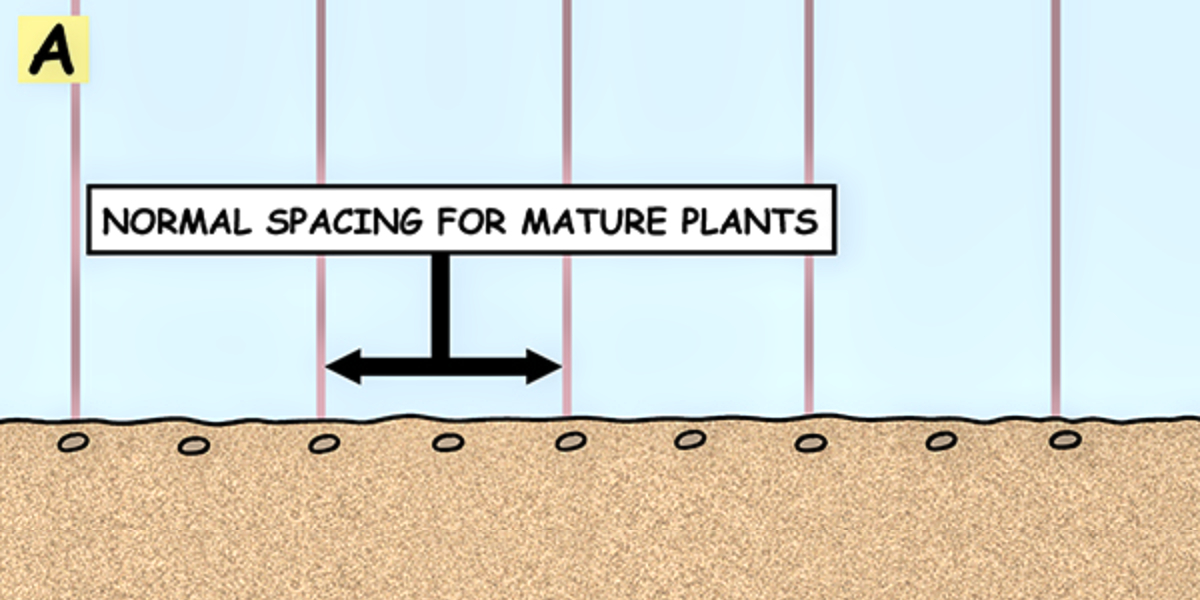
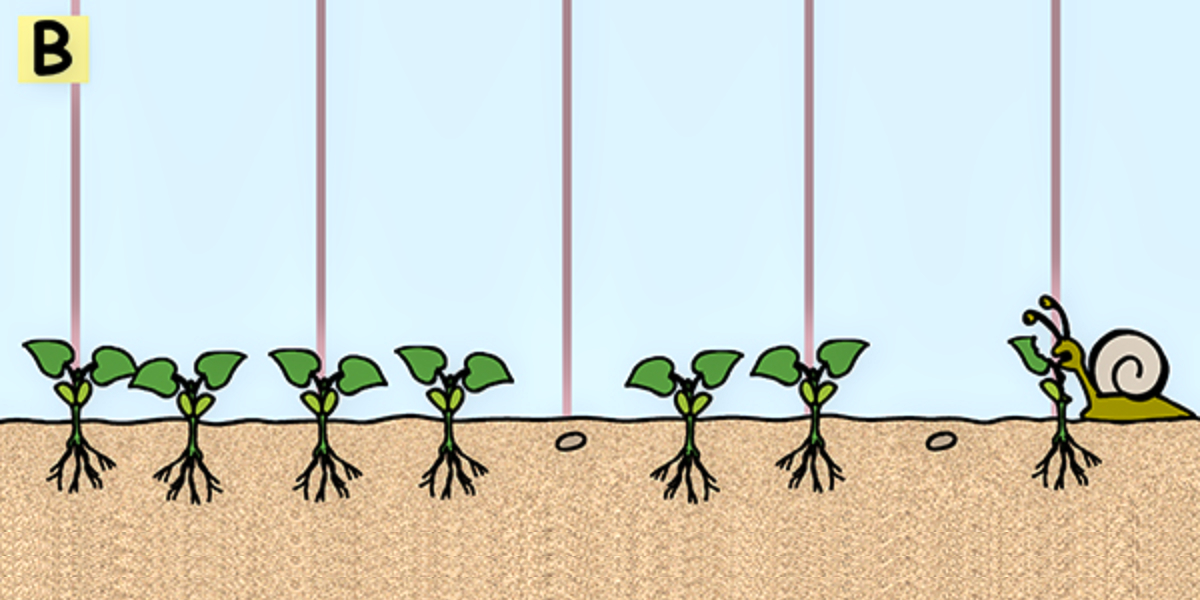
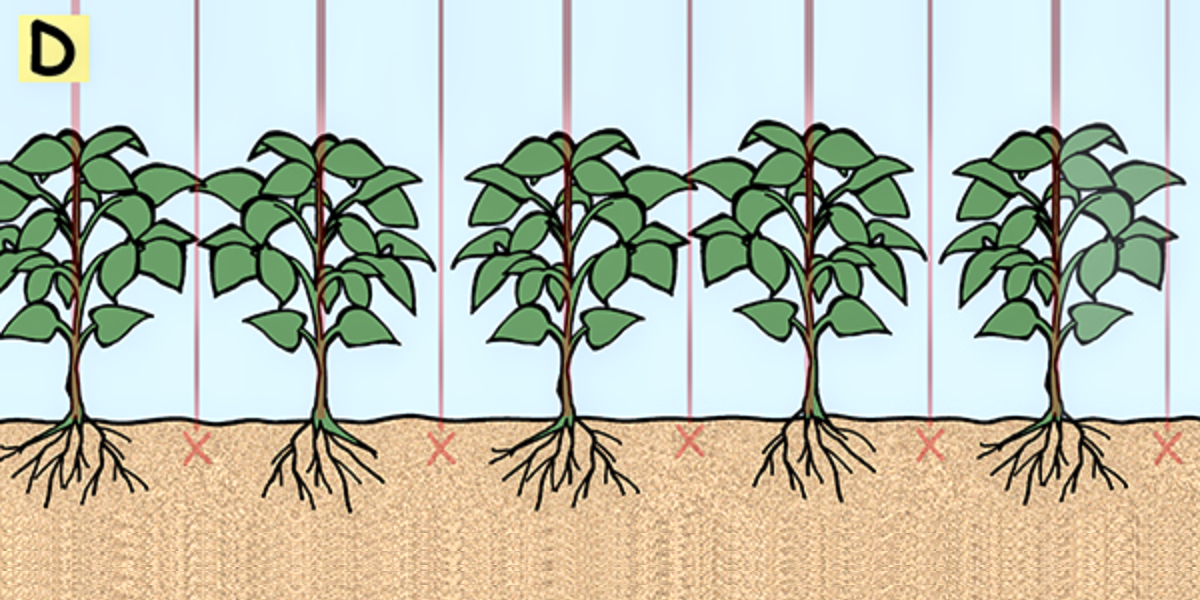
When planting seeds it is good practice to plant double the recommended number of seeds in a given area to allow for seeds that fail to germinate or are eaten by pests such as slugs and snails. This method of planting large seeds is particularly useful if the seeds being planted have a poor germination rate (EG old seeds) or you are having a serious problem with pests.
Plant the seeds at half the distance recommended on the seed packet or planting guide.
Some seeds will not germinate and others may be eaten or damaged by pests as they grow.
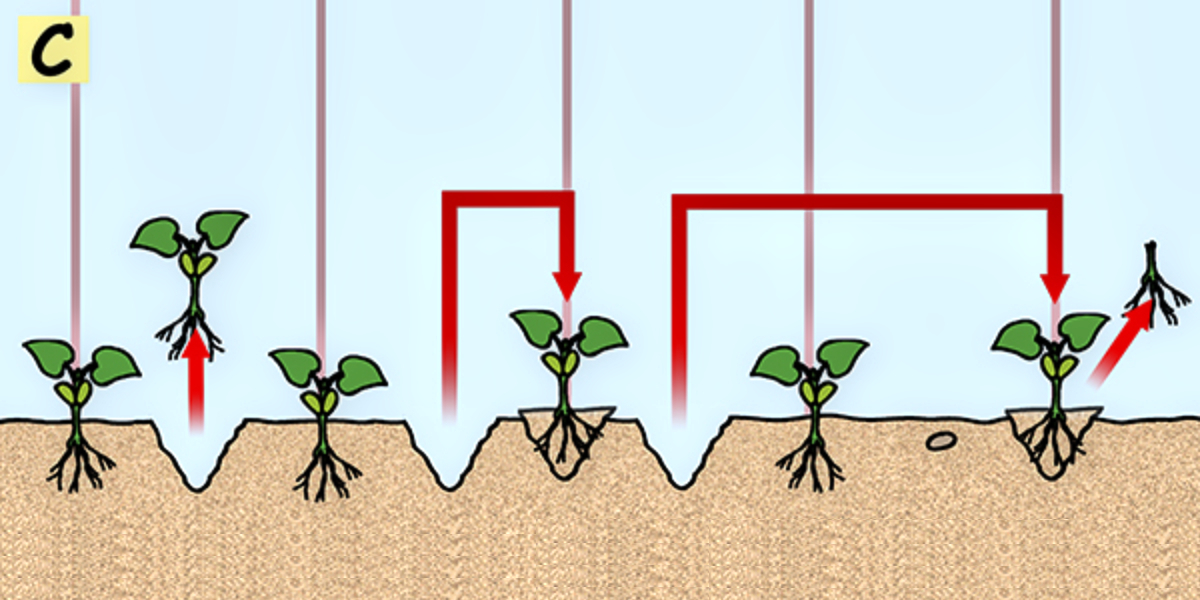
When the seedlings are six to eight centimetres high thin out to the desired spacing for the mature plants. If there are gaps in the row caused by seeds that didn’t germinate or plants eaten by pests then transplant some of your unwanted seedlings to these gaps. Note that the seedlings of large seeds do not transplant easily. When transplanting take a large section of soil around the seedling to be moved to ensure that there is minimal damage to its root structure.
By the time the seedlings have matured into adult plants they should be evenly spaced at the correct distance with no gaps in the line.
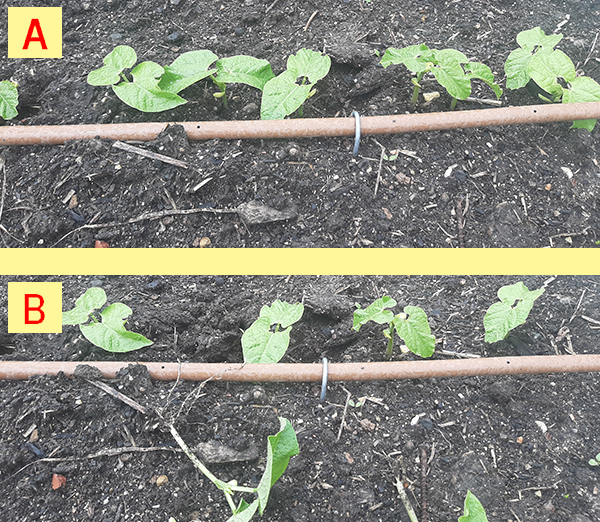
A: Bean seedlings before thinning, some of them are too close together. B: The seedlings after thinning. The removed seedlings are left as decoys to lure slugs and snails away from the remaining seedlings left in the ground.
Some gardeners might think that planting double the number of seeds then thinning them to the correct number is a waste of seeds but I believe it is a bigger waste to have to replant a bed because not enough of the seedlings survived. Though this strategy is more economical when you save your own seeds (as I mostly do) as saved seeds are only a fraction of the cost of bought seeds.