Given the right climate conditions carrots will readily germinate and grow in the open, but they will get a higher strike rate if they are covered in the early stages of their growth as this offers better moisture and temperature control. It also reduces the risk of damage caused by slugs and snails.
When carrot seeds are germinating and in their early small seedling stage of growth they are at their most vulnerable. If the soil dries out or soil temperatures drop too low at night there is a risk of damaging or even killing the seedlings. These emerging small seedlings are also extremely vulnerable to slug and snail damage.
Covering your young emerging carrots creates a microclimate where the soil moisture and temperature levels are more stable. It also acts as a barrier between the carrots and marauding slugs and snails.
Protecting emerging carrot seeds with a plank or an old sheet have been mainly used by traditional vegetable gardeners to germinate parsnip seeds but these methods can also be applied to carrots.
Using the plank or sheet covering protection methods
- Cover each row of sown carrot seeds with planks of wood or the entire bed with an old bedsheet or towel
- After about a week check each day to see if the carrot seeds are pushing through the soil. Remove the planks or sheet once the emerging carrot seedlings are clearly visible.
The main disadvantages of these methods is that you cannot see the germinating carrot seeds without lifting the planks or sheet. You also must remove the planks or sheet as soon as the seedlings emerge to give the seedlings access to sunlight. However, when the carrot seedlings are just emerging is the time when they are most vulnerable to marauding slugs and snails
This method involves covering a newly sown carrot bed with a sheet of shadecloth that is held just above the ground with lengths of polypipe.
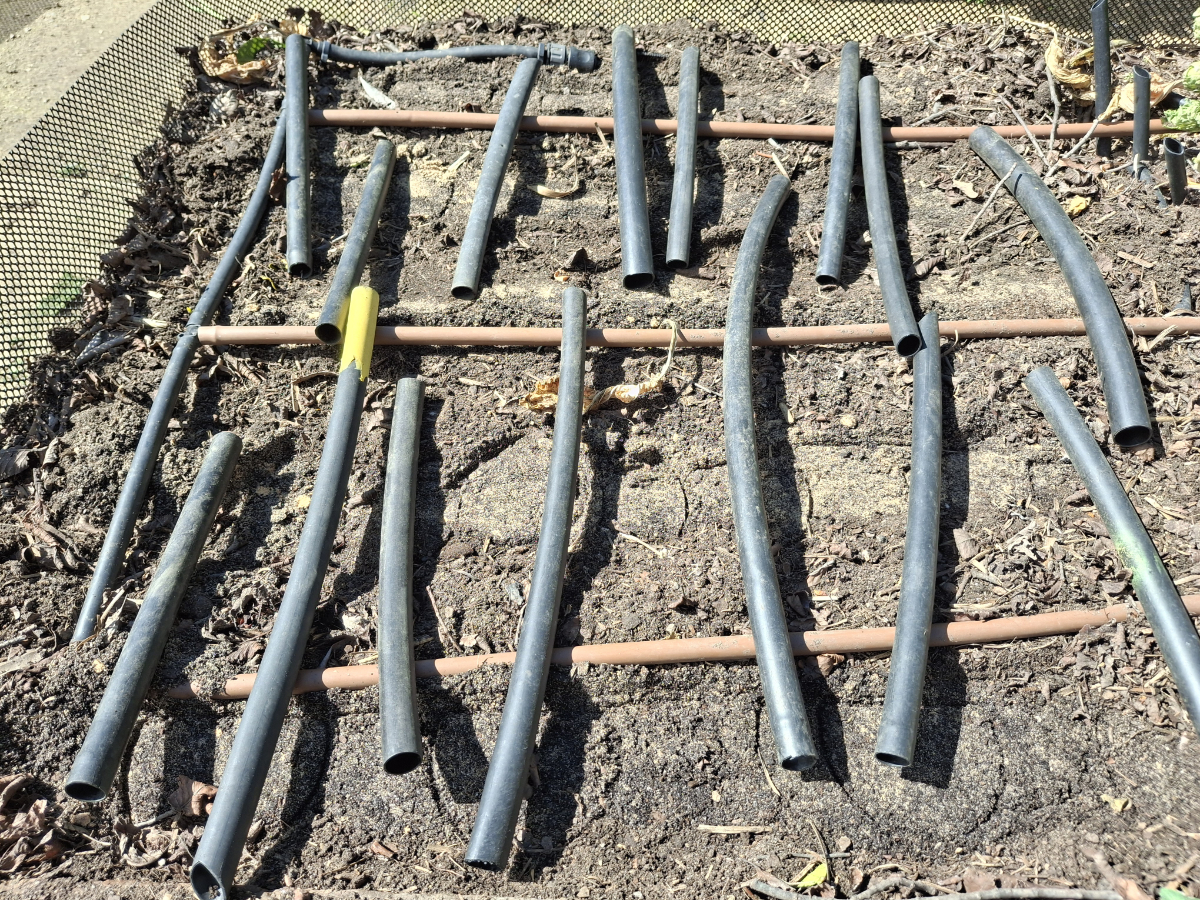
PLACE LENGTHS POLYPIPE ON TOP OF THE BED AT RIGHT ANGLES TO THE ROWS OF SOWN CARROT SEEDS
The polypipe is to keep the shade cloth slightly off the ground. I usually use 19 mm polypipe but 13 or 25 mm polypipe are also suitable. Sticks or other types of pipe can also be used. For more information how to sow carrot seeds see: Growing Carrots.
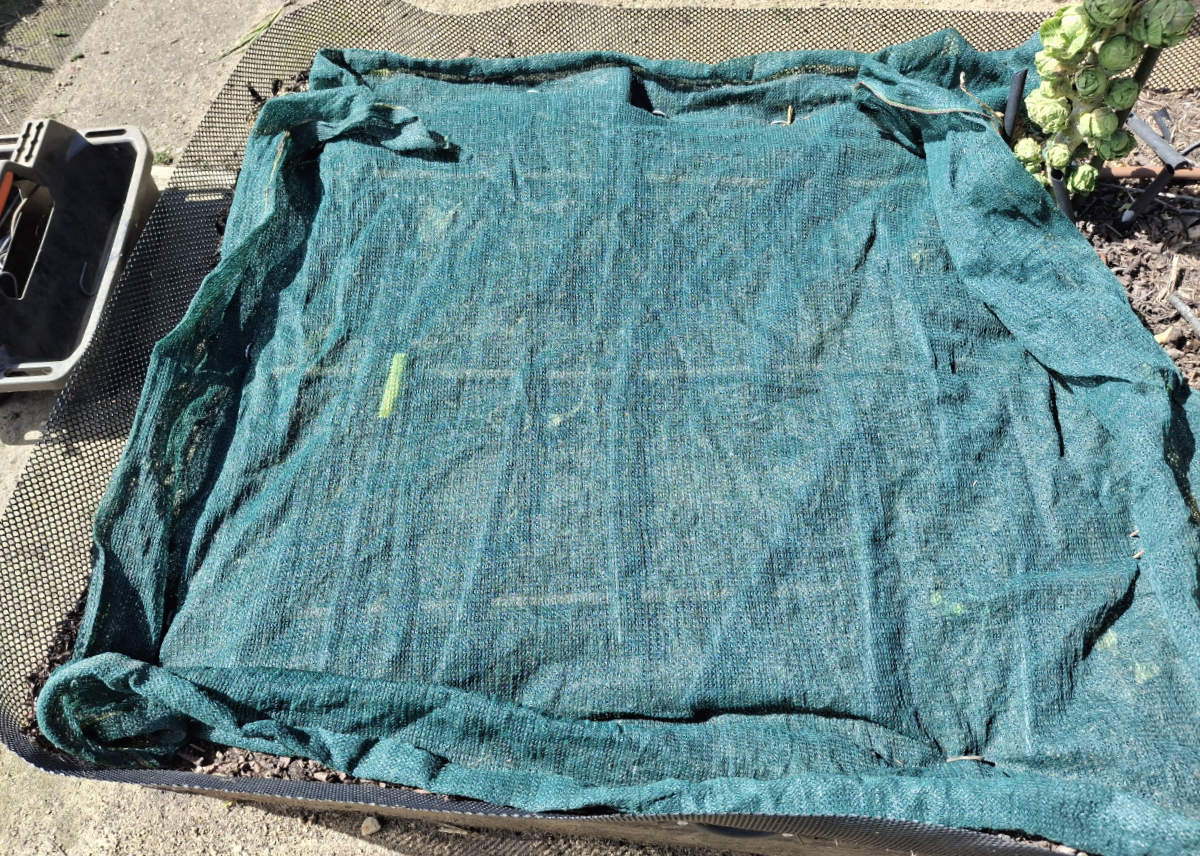
COVER WITH A LENGTH OF 50% SHADECLOTH
70% shadecloth can also be used but I have found 50% shadecloth to be better for vegetable gardening purposes.
PIN THE EDGES OF THE SHADECLOTH WITH WEED MAT PINS SO THAT THE CLOTH IS STRETCHED TIGHTLY OVER THE POLYPIPE STICKS
Lengths of wood or star pickets can also be used to pin the shade cloth down.
If there are lots of slugs and snails around then bury the edges of the shade cloth in the soil so that the emerging carrot seedlings are sealed in. Although pinning the shade cloth at the edges usually gives enough protection against slugs and snails.
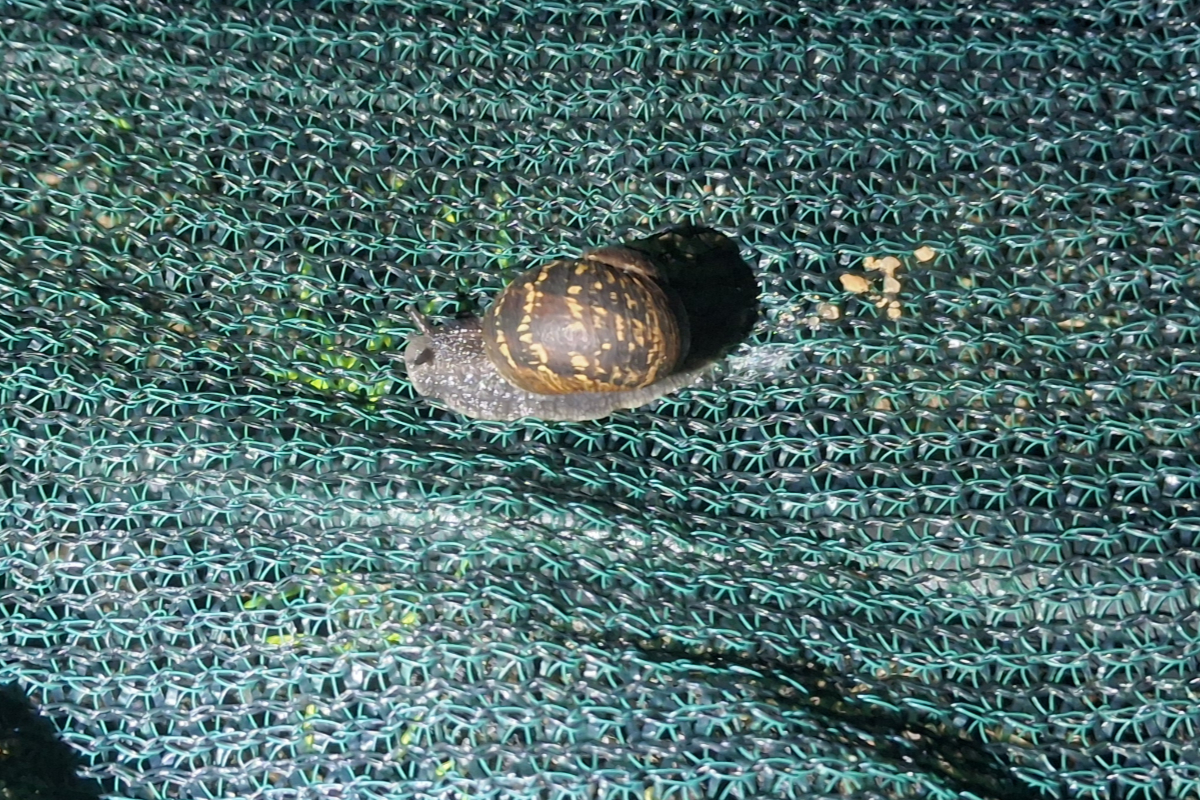
Snail crossing shadecloth suspended over young carrot seeds. As well as regulating temperatrue and moisture levels shadecloth acts as a pretectve barrier at night against slugs and snails.
Remove the shadecloth when the carrot seedlings are bumping up against the bottom of the shadecloth. Then manage the bed as per normal for carrots. For more information see: Growing Carrots.
The main advantage of using the shadecloth covering protection method over the planks or sheet covering protection methods is that you can see the emerging carrot seedlings without having to remove the planks or cloth. Plus the gap that the polypipe sticks allows the carrot seedlings to grow much larger before having to remove the shade cloth. The larger the seedlings the less vulnerable they are to marauding slugs and snails.
Snail crossing shadecloth suspended over young carrot seeds. As well as helping to regulate temperature and moisture levels shadecloth acts as a protective barrier at night against slugs and snails.


