Growing stepped planted vegetables in pots is a good way to grow short cycle annuals. This post explains how I use pots to grow stepped planted vegetables.
Not all annual vegetables have the same growing characteristics. Some annuals (like tomato, capsicum and pumpkin) are only planted once at the start of a growing season as they will take the entire season to produce a crop. Others (like lettuce, rocket, bush beans, pak choi and coriander) can be planted multiple times during the growing season. They are what I describe as “short cycle annuals” and planting those multiple times in a season is called stepped planting.
While all short cycled vegetables can be stepped planted in the ground some of them will do better and are easier to manage when planted in pots.
Vegetables suitable for growing in stepped planted pots are short cycle annuals that do not grow too large. They include rocket, baby spinach, pak choi and lettuce.
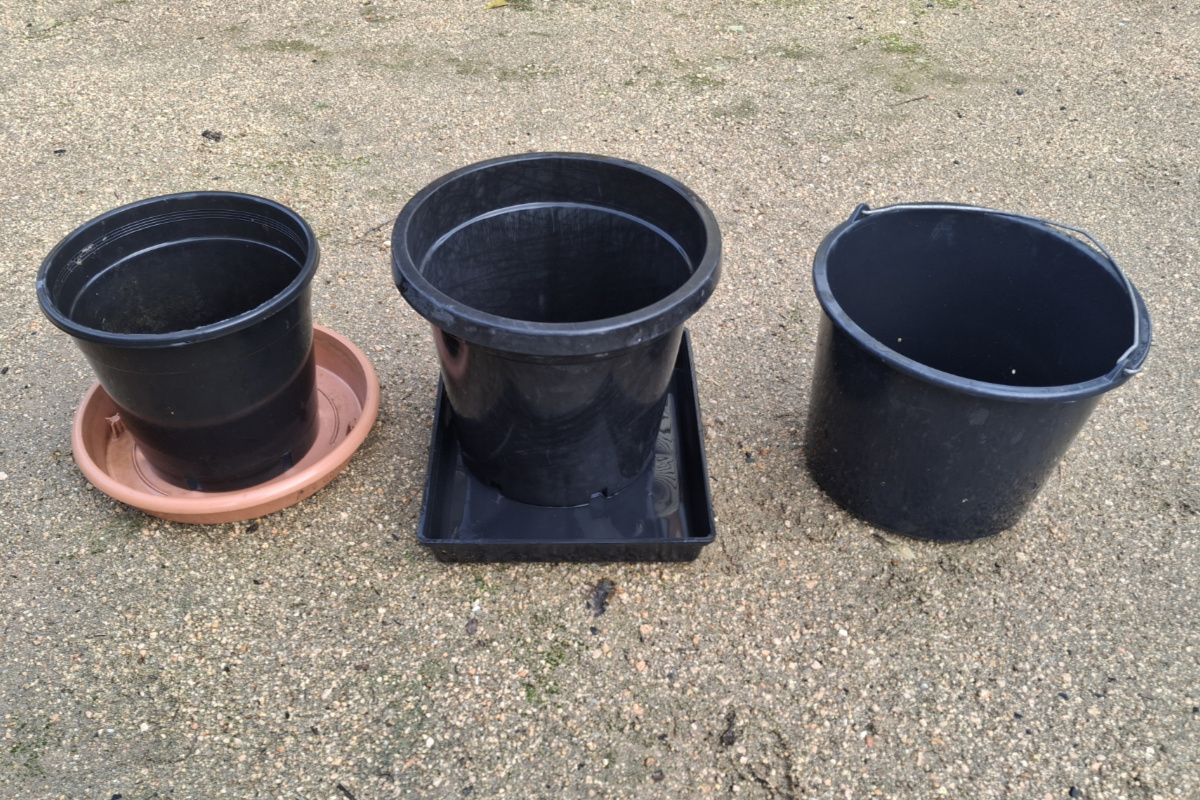
Pots suitable for use as stepped planted pots should be large enough that they do not dry out quickly but small enough so they can be easily moved. Below are examples of the pots that I commonly use as stepped pots.
LEFT: 25 cm black pot with an oversized saucer to hold a reserve of water in. I mostly use this sized pot to grow coriander.
CENTRE: 28cm pot with a seedling Hydro Tray (watertight) under it. I mostly use this sized pot to grow rocket and baby spinach.
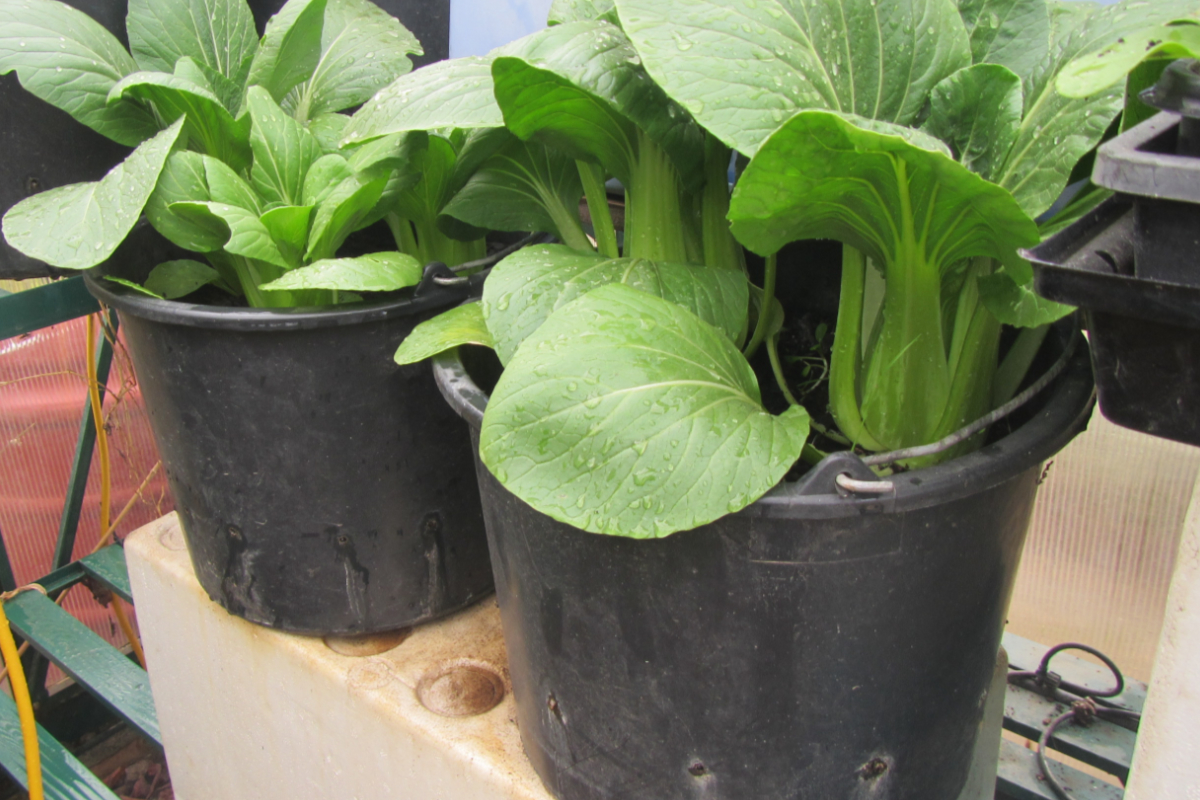
RIGHT: Wet pot. Used to grow pak choi in it. Wet pots keep soil sodden, which is ideal for growing pak choi. See Wet Pots for information on how to make and use them.
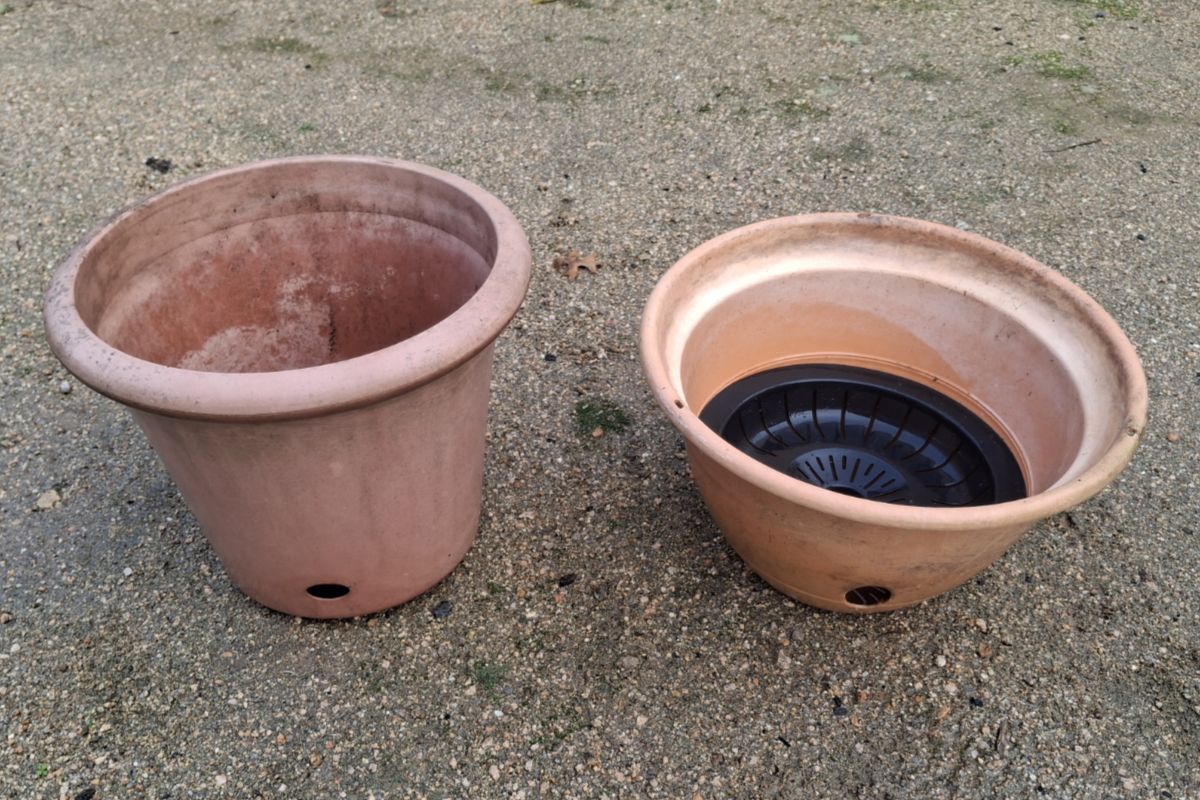
Two examples of Decor self-watering pots that I use to grow stepped planted vegetables. These pots have a water reservoir at their base to supply water to the plants.
- FILL THE POT WITH COMPOST OR GOOD QUALITY SOIL TO ABOUT THREE CENTIMETRES BELOW THE LIP OF THE POT
Potting mix can also be used but is more expensive and does not offer any real advantage. At this point you can mix in some fertilisers such as animal manure or blood and bone. - COVER THE TOP OF THE COMPOST/SOIL WITH ABOUT A CENTIMETRE OF SEED RAISING MIX
- SPRINKLE THE SEEDS OVER THE SEED RAISING MIX
This should be done at three or four times the recommended spacings for the vegetable seeds being sown. - COVER WITH A FURTHER CENTIMETRE OF SEED RAISING MIX AND WATER IN
- WHEN THE SEEDLINGS BEGIN TO EMERGE FEED THEM WITH REGULAR DOSES OF DILUTED LIQUID FERTILISER
Applications of liquid fertiliser should then be applied regularly throughout the life of the plants.
- FILL THE POT WITH COMPOST OR GOOD QUALITY SOIL TO ABOUT FIVE CENTIMETRES BELOW THE LIP OF THE POT
At this point you can mix in some fertilisers such as animal manure or blood and bone. - COVER THE TOP OF THE COMPOST/SOIL WITH THREE TO FOUR CENTIMETRES OF POTTING MIX
This layer of potting mix is not absolutely necessary but it will give the seedlings a better start and, as potting mix has been heat sterilized, there is unlikely to be any live weed seeds in it. - PLANT SEEDLINGS INTO THE POTTING MIX
The seedlings should be planted in the pots at less than the recommended planting distances but not too close to completely overcrowd them. - WATER THE SEEDLINGS IN WITH LIQUID FERTILISER
Applications of liquid fertiliser should then be applied regularly throughout the life of the plants.
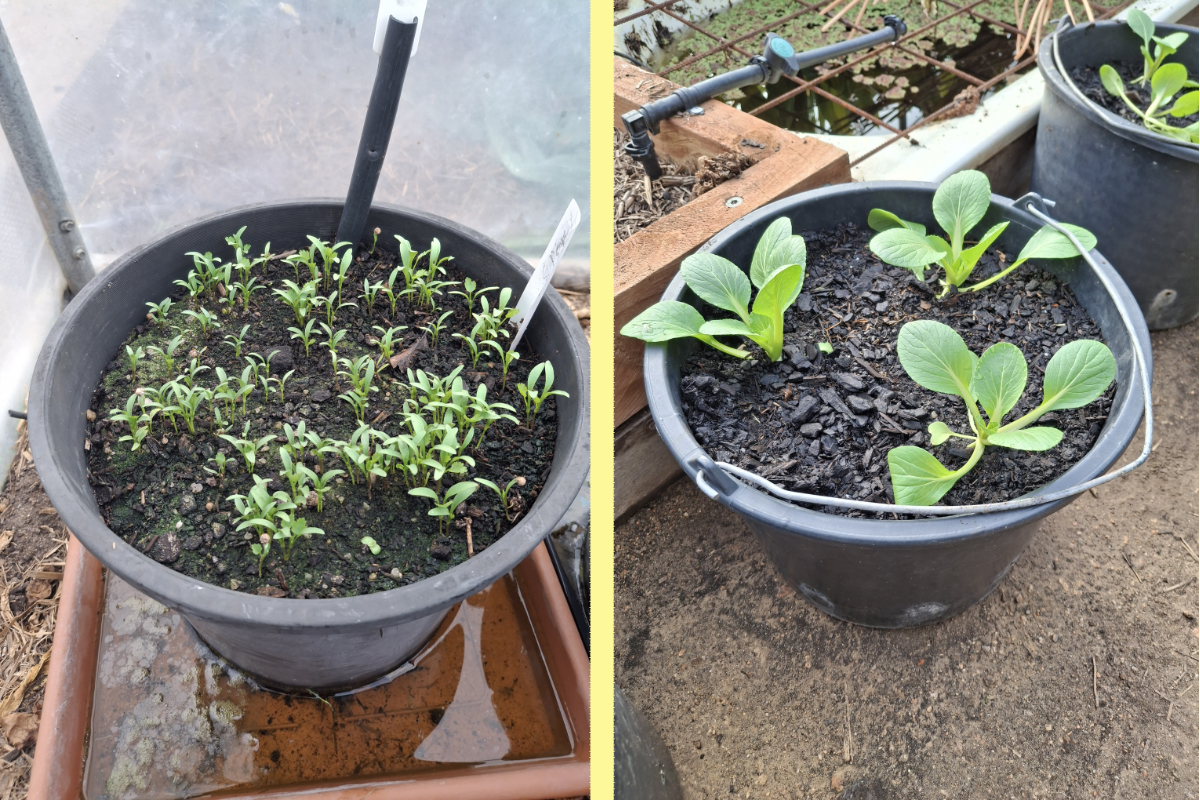
LEFT: Emerging coriander seedlings that were sown much more densely than the recommender distances for coriander.
RIGHT: Pak choi seedlings in a wet pot. They have been planted closer together than the recommended distance for pak choi of 15 to 30 cm apart.
Stepped pots Advantages
- HAVE WARMER SOIL
Pots, especially black pots have warmer soil than the surrounding ground, warmer soil makes plants grow more quickly. - ARE PORTABLE
Stepped pots can be moved around (in and out of greenhouses or polytunnels or to shaded areas) depending on the weather and time of year. - CAN BE PLACED ON HARD SURFACES
Stepped pots can be placed on hard surfaces such as concrete, gravel or decking. - IDEAL FOR RENTERS
Ideal for short term renters or renters prohibited from digging up the soil in their garden. - TAKE UP LITTLE SPACE
Which makes them ideal for small backyards. They can even be used in vertical gardens.
Stepped pots Disadvantages
- DRY OUT MORE QUICKLY
Plants will dry out more quickly grown in pots than ones planted in the ground so you have to be more vigilant about watering them. - HIGHER RISK OF DISEASES
Pots need to be thoroughly washed when reusing them to reduce the risk of soil borne diseases.
ADVANTAGES SUMMARY
ADVANTAGES
- HAVE WARMER SOI
- ARE PORTABLE
- CAN BE PLACED ON HARD SURFACES
- IDEAL FOR RENTERS
- TAKE UP LITTLE SPACE
DISADVANTAGES SUMMARY
DISADVANTAGES
- DRY OUT MORE QUICKLY
- HIGHER RISK OF DISEASES
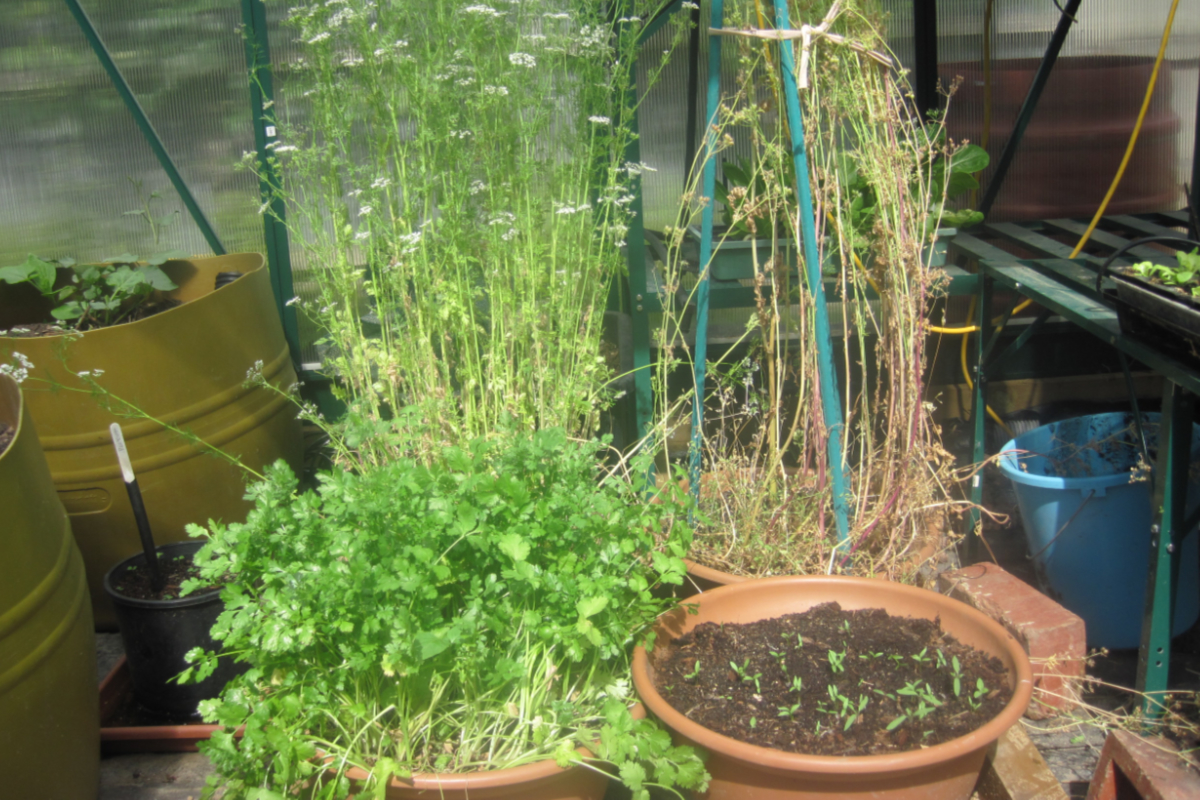
Four pots with coriander in various stages of growth. FRONT RIGHT: Coriander seedlings just coming up. FRONT LEFT: Coriander ready to harvest. REAR LEFT: Coriander going to seed. REAR RIGHT: Coriander that has gone to seed. Once the seed is harvested it will be used to repeat the process.
Green Pak choi growing in wet pots. These pots keep the soil sodden, which is ideal for growing Pak choi. See Wet Pots for more information on them.
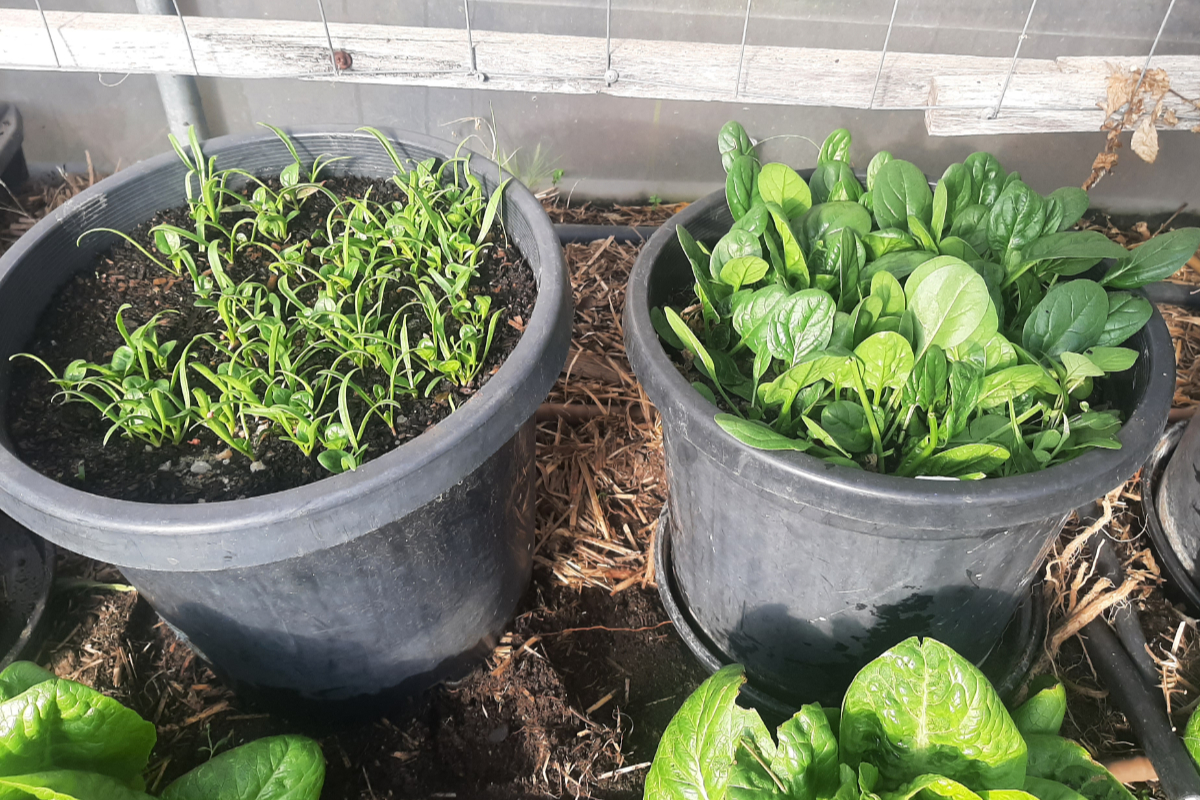
LEFT: Young baby spinach seedlings. RIGHT: Baby spinach that is ready to harvest.
Using stepped planted pots (outside in summer and in the greenhouse in winter) I get an almost uninterrupted supply of coriander, rocket, pak choi and baby spinach all year round.


