Search

Urban Food Garden

The Pros And Cons Of Different Types Of Pots.

Pots come in a variety of sizes and materials.  This page compares some of the different types of pots available on the market and what they are most suitable to be used for.

Factors to consider when purchasing pots

Weight

The bigger the pot the heavier the pot will be when full of potting mix, which means that larger pots are harder to move around than small pots.  Vegetables do not need a lot of space so they can be grown in relatively small pots.  Whereas fruit trees need a minimum pot size of 40 to 50 cm, even larger for more vigorous fruit trees.

Watering requirements

Smaller pots will dry out more quickly than larger ones, which means they will have to be watered more frequently.

The smaller the pot the quicker it will dry out.

shape

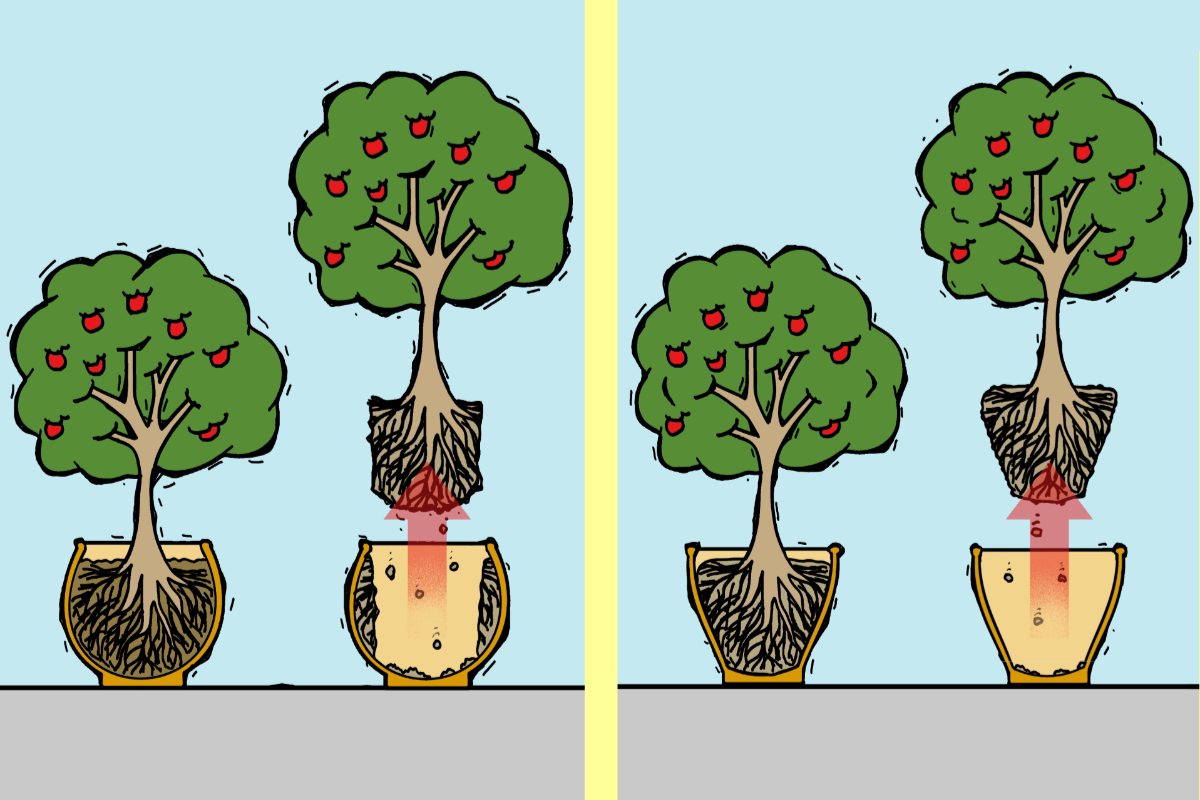
Potted trees and shrubs need to be repotted every few years if they are to maintain their vigour.  Cone shaped pots (widest at the top) are much easier to repot (especially if the plant in the pot is rootbound) than vase shaped pots (widest at the mid-point) as the roots will be difficult to squeeze through the smaller opening of a vase shaped pot.

LEFT: Removing a rootbound tree from a vase shaped pot.  RIGHT: Removing one from a cone shaped pot.  Rootbound trees are much harder to remove from vase shaped pots (widest at the mid-point) as some of the roots will have to be cut away to get the root base through the smaller opening.

Cost and durability

Prices of pots rage dramatically from the cheap small black plastic pots to the very expensive large earthenware and fiberglass pots.  But when considering the cost you also have to take into account the durability of the pot.  Plastic pots (particularly coloured ones) will eventually become brittle and break as UV sunlight degrades the plastic.  Whereas earthenware pots will last a lifetime, as long as they are not accidently broken.  

Black plastic pots

ADVANTAGES

  • GOOD UV STABILISATION
    All plastic pots begin to break down when exposed to sun but black plastic pots take much longer the break down than coloured ones.  That is because colour pigments are more susceptible to UV radiation than black pigment.

  • WEIGH LESS THAN EARTHENWARE POTS
    This makes them easier to move around when full as they don’t have the extra weight of earthenware pots.

  • BLACK POTS ABSORB MORE HEAT
    The warmer a pot’s soil is the more vigorous the plant growth.  Warmer soil is especially important for growing plants in spring and heat loving plants (such as eggplant and capsicum) in summer.

  • ARE CHEAPER THAN OTHER TYPES OF POTS
    They are by far the cheapest pots on the market, making them a good choice for the budget conscious.

DISADVANTAGES

  • THE PLASTIC EVENTUALLY BREAKS DOWN
    Although black plastic pots usually last longer than coloured ones they do not last nearly as long as earthenware pots.

  • LOSE MORE HEAT AT NIGHT THAN EARTHENWARE POTS
    Because plastic pots are thin skinned they lose heat more rapidly at night than earthenware pots.   Plants can be damaged in pots if the soil they are growing in freezes.

  • AESTHETICALLY NOT THAT PLEASING
    Black pots are not nearly as aesthetically pleasing as coloured plastic or earthenware pots

Different sized pots suitable for growing herbs and vegetables in.   LEFT TO RIGHT: 13 cm, 20 cm, 25 cm, and 28 cm pots.  FOREGROUND: Accompanying black saucers. These size pots are suitable for growing herbs and smaller vegetables such as rocket and lettuces.

Coloured plastic pots

ADVANTAGES

  • CHEAPER THAN EARTHENWARE POTS
    Although some upmarket coloured plastic pots can be pretty expensive generally they are much cheaper than earthenware pots.

  • WEIGH LESS THAN EARTHENWARE POTS
    This makes them easier to move around when full as they don’t have the extra weight of earthenware pots.

  • AESTHETICALLY MORE PLEASING THAN BLACK PLASTIC POTS
    Though generally not as pleasing to the eye as earthenware pots.

DISADVANTAGES

  • COLOURED PLASTIC POTS BREAK DOWN MORE QUICKLY THAN BLACK PLASTIC POTS
    Coloured pigments in a plastic pot make the plastic more susceptible to UV radiation causing the plastic to break down more quickly than black plastic pots.
  • LOSE MORE HEAT AT NIGHT THAN EARTHENWARE POTS
    Because plastic pots are thin skinned they lose heat more rapidly at night than earthenware pots.   Plants can be damaged in pots if the soil they are growing in freezes.
  • AESTHETICALLY NOT AS PLEASING AS EARTHENWARE POTS
    Although some coloured plastic pots can be quite stylish they are generally not as aesthetically pleasing as earthenware pots.

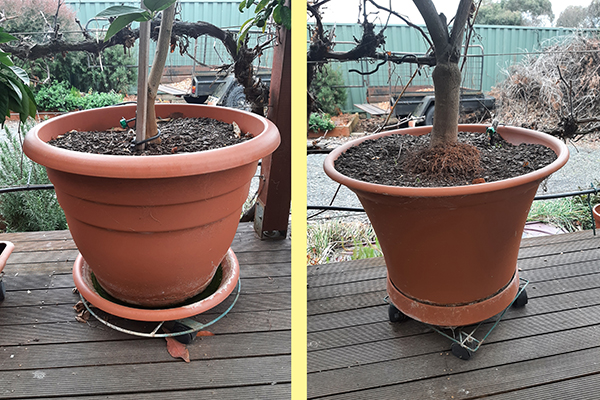
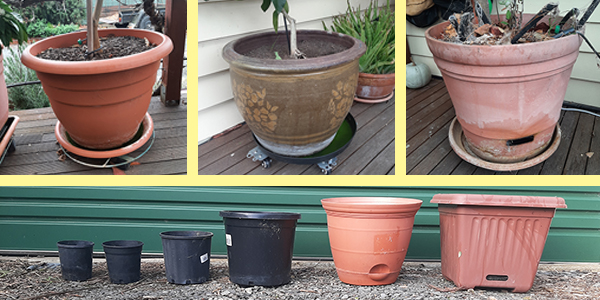
Coloured plastic pots are lighter than earthenware pots, making them more portable, but they break down more quickly than black plastic pots.  

self-watering plastic pots

ADVANTAGES

  • NEED LESS FREQUENT WATERING THAN STANDARD POTS
    Due to the water reservoir being larger than the water holding capacity of a standard saucer.

  • KEEPS THE MOISTURE LEVEL OF THE SOIL HIGHER AND MORE CONSISTENT
    Which is ideal for plants that like wet soil.

  • WEIGH LESS THAN EARTHENWARE POTS
    This makes them easier to move around when full as they don’t have the extra weight of earthenware pots.


  • AESTHETICALLY MORE PLEASING THAN BLACK PLASTIC POTS
    Though generally not as pleasing to the eye as earthenware pots.

DISADVANTAGES

  • KEEPS THE MOISTURE LEVEL OF THE SOIL HIGHER AND MORE CONSISTENT
    This can be a disadvantage for plants that prefer dryer well drained soil.

    COLOURED PLASTIC POTS BREAK DOWN MORE QUICKLY THAN BLACK PLASTIC POTS
    Coloured pigments in a plastic pot make the plastic more susceptible to UV radiation causing the plastic to deteriorate more quickly than black plastic pots.

  • AESTHETICALLY NOT AS PLEASING AS EARTHENWARE POTS
    Although some coloured plastic pots can be quite stylish they are generally not as aesthetically pleasing as earthenware pots.

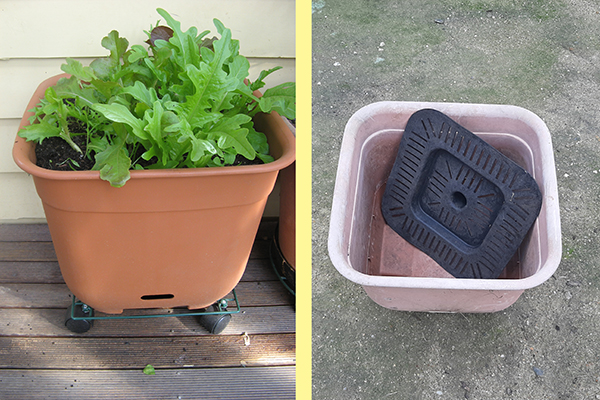
Self-watering pots have a reservoir of water at the base of the pot that the plant/s in the pot can draw upon.  LEFT: A self-watering pot with young picking lettuces in it.  RIGHT: Interior of a self-watering pot showing the divider that keeps the soil in the pot separate from the water reservoir. 

Earthenware pots

ADVANTAGES

  • AESTHETICALLY VERY PLEASING
    There is a solidness to earthenware pots that make plastic pots look fake and tinny.

  • LAST LONGER THAN PLASTIC POTS
    As long as you don’t accidentally break them they will last a lifetime.

  • RETAIN HEAT AT NIGHT MORE EFFICIENTLY THAN PLASTIC POTS
    The extra thermal mass of an earthenware pot keeps the soil warmer at night, reducing the risk of frost damage on very cold nights.

DISADVANTAGES

  • EXPENSIVE
    They are more expensive than most other types of pots.  Although small terracotta pots can be relatively inexpensive.

  • HEAVIER
    Their mass makes the much heavier than any other type of pots of comparable size.

  • MORE SUSCEPTIBLE TO BREAKAGE
    Although sturdy they can break if mishandled.

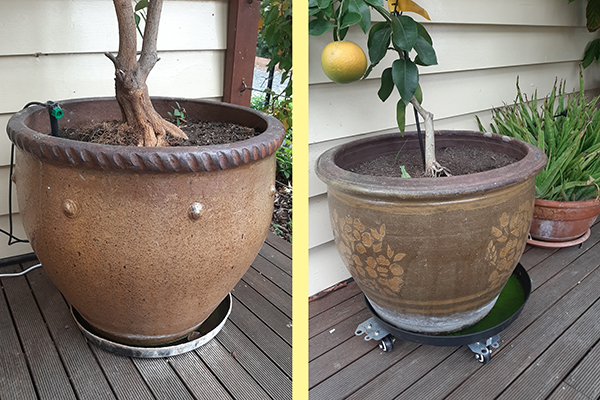
LEFT: Earthenware pot.  RIGHT FOREGROUND: Earthenware pot.  RIGHT BACKGROUND: Terracotta pot (type of earthenware pot using a specific clay mixture) with Aloe vera growing in it.  

Other pots on the market

There are many more types of pots available, including cascading pots, wall pots, wooden and metal pots, and pots made of composite materials that look like earthenware but weigh less.  However, as I have not used such pots and this website is based on my personal experiences, I have not included them in this article.

RELATED POSTS